

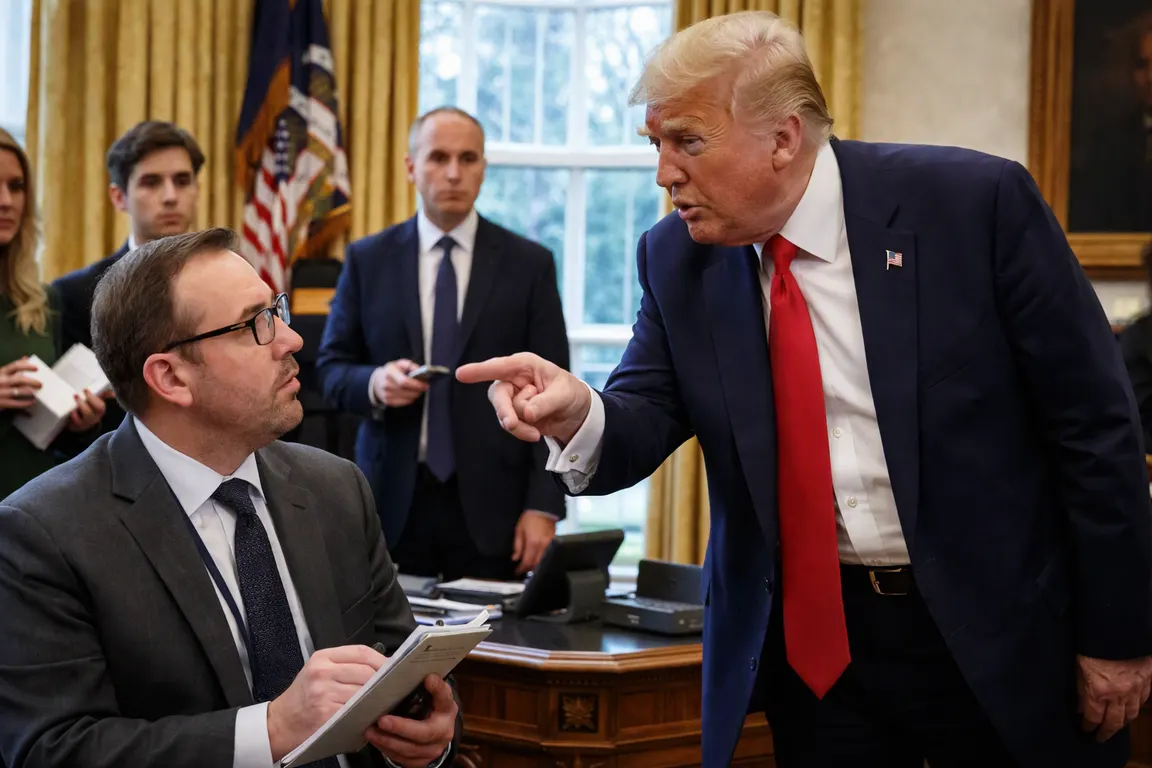
President Donald Trump confronted Independent reporter Andrew Feinberg in the Oval Office on Wednesday, asking, “Are you a sick person?” after Feinberg pressed him about a $25 million initiative the administration describes as a program to encourage private citizens to provide information that could lead to prosecutions of individuals deemed hostile to the government. The exchange highlighted the controversial snitch-for-Trump program.
The incident, reported by The Independent World, generated a surge of commentary on social‑media platforms. Users on Twitter, Facebook and other networks posted a mix of outrage at the president’s tone and defenses of his right to challenge a journalist they viewed as hostile. The outlet described the response as “strong,” but did not release specific numbers.
The White House says the program is intended to “incentivize” tip‑offs that could aid law‑enforcement investigations. Critics have labeled it a “snitch‑for‑Trump” scheme, arguing it could chill free speech and be used to target political opponents. No policy changes or legal actions followed the Oval Office encounter.
Some commentators extended the discussion to the president’s health, suggesting the remark was a “textbook dementia symptom.” Those observations were presented as speculation on social media and were not backed by medical professionals.
The incident underscores the tension between the executive branch and the press, a cornerstone of democratic accountability. Media organizations are watching closely, noting that a president’s willingness to use the Oval Office to deliver personal criticism may affect public confidence in transparent government communication.
White House reporters have faced increased scrutiny in recent months, and the confrontation highlights the practical risks journalists encounter when covering contentious topics. While the administration moves forward with the $25 million program, observers will monitor whether the episode signals a broader shift in presidential‑media relations.
The episode also raises questions about how officials interact with the press on policy matters. If a president publicly challenges a reporter over a program that involves private citizens providing potentially incriminating information, citizens may wonder whether information is being filtered or dissenting voices are being discouraged.
At present, the snitch-for-Trump initiative remains in place, and no immediate changes to its structure or oversight have been announced. The long‑term impact of the Oval Office confrontation on press freedom and public trust in government remains to be seen.