

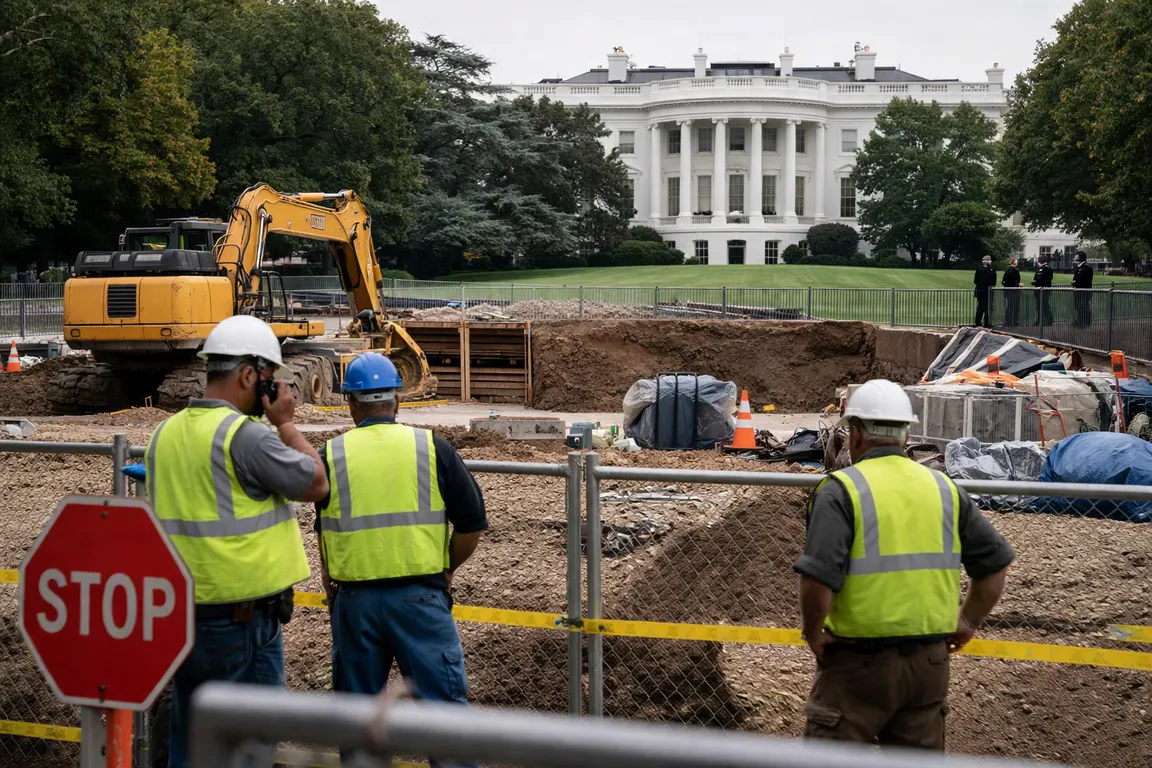
A federal appeals court has ordered the halt of construction on a White House ballroom project, citing the need for congressional authority. The decision highlights the importance of congressional approval for such projects and the potential implications for executive power.
The court's ruling emphasizes that the president needs congressional authority to move forward with the White House project, with a two-judge majority stating that the decision to construct a ballroom is for Congress to decide. This development raises questions about the limits of executive power and the role of Congress in overseeing such projects.
The project's halt may have implications for the administration's ability to carry out construction projects without congressional approval, potentially affecting White House staff and visitors. The case may potentially lead to a Supreme Court showdown, with the exact next steps unclear.
The appeals court's decision underscores the need for congressional oversight, leaving the administration to consider its next move. As the case moves forward, the key question remains: what are the implications of the appeals court's decision for the administration's construction plans and the balance of power between the executive and legislative branches of government.
The ruling is significant because it clarifies the role of Congress in approving construction projects at the White House. The administration had argued that the project was necessary for official business, but the court disagreed, stating that the decision to construct a ballroom is a matter for Congress to decide.
The project's halt is likely to have significant implications for the administration's plans to renovate and expand the White House. The administration will need to work with Congress to secure approval for any future construction projects, which could lead to delays and increased costs.
The case is being closely watched by lawmakers and constitutional scholars, who see it as a test of the limits of executive power. The outcome of the case could have far-reaching implications for the balance of power between the executive and legislative branches of government.
The appeals court's decision is a reminder that the Constitution grants Congress the power to approve or reject construction projects at the White House. The administration will need to work within these constitutional limits to achieve its goals, rather than trying to circumvent them.
In conclusion, the halt of the White House ballroom project is a significant development that highlights the importance of congressional oversight and the limits of executive power. The case is likely to have far-reaching implications for the administration's construction plans and the balance of power between the executive and legislative branches of government.