

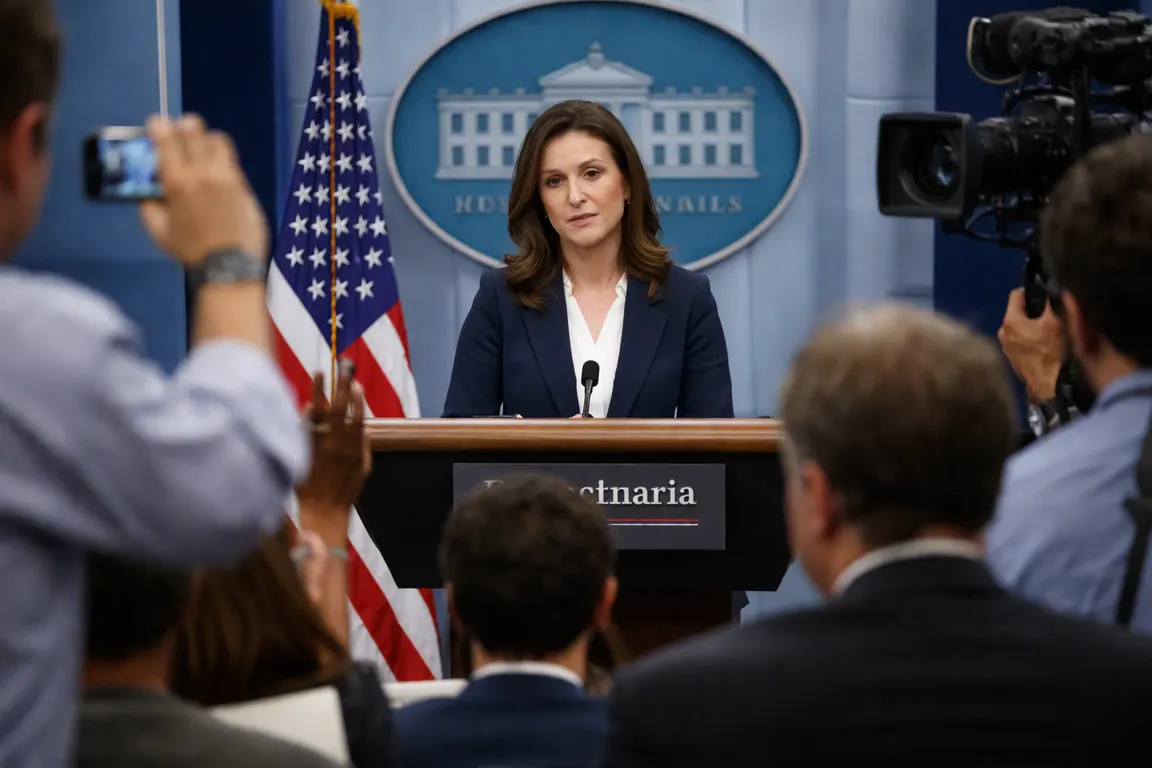
President Donald Trump’s appointment of Katie Zacharia as White House press secretary ended after just five days, adding to a pattern of White House press secretary turnover that raises concerns about the stability of official communications.
Zacharia, a lawyer with limited press‑room experience, was hired in early November without documented input from chief of staff Andrew Feinberg, according to The Independent World. Within days, reporters questioned her qualifications, and on day five Trump asked her to "reconsider" the role. Al Jazeera said she was "transitioning out," while The Independent World and the New York Post described the exit as a firing. The White House has not issued a statement clarifying whether she resigned, was dismissed or left by mutual agreement.
Frequent changes at the top of the communications team can disrupt the flow of official information. Reporters rely on a stable press office for accurate briefings; each turnover forces staff to reset schedules, rewrite talking points and rebuild relationships with the press corps. The result can be mixed signals to the public and eroded confidence in the administration’s statements.
The episode is not unprecedented. Communications director Anthony Scaramucci served less than two weeks in July 2017, and national security adviser Michael Flynn lasted just over three weeks in early 2017. Both short stints generated headlines and raised questions about internal cohesion.
For journalists, the lack of a consistent point of contact creates practical challenges. Verifying information often requires multiple sources, and the absence of a permanent press secretary can delay the release of statements on legislation, regulatory actions or emergency measures. The public may receive contradictory or incomplete information, which can diminish trust in government communications.
Inside the White House, staff morale appears to be affected. The Independent World highlighted the omission of chief‑of‑staff input in Zacharia’s hiring as evidence of fragmented decision‑making. Such fragmentation can impede the crafting of coherent messages and reduce the efficiency of the communications operation.
The administration has not announced a successor. Observers expect a new press secretary to be named within days, but the selection process will likely be scrutinized for speed and transparency. Until a stable figure assumes the role, the White House’s ability to convey policy details—from budget proposals to public‑health guidance—remains uncertain.
The rapid turnover underscores a broader question: whether the revolving‑door pattern of short‑lived aides will become a persistent feature of the Trump administration and what impact that may have on the reliability of official information delivered to the American public.