

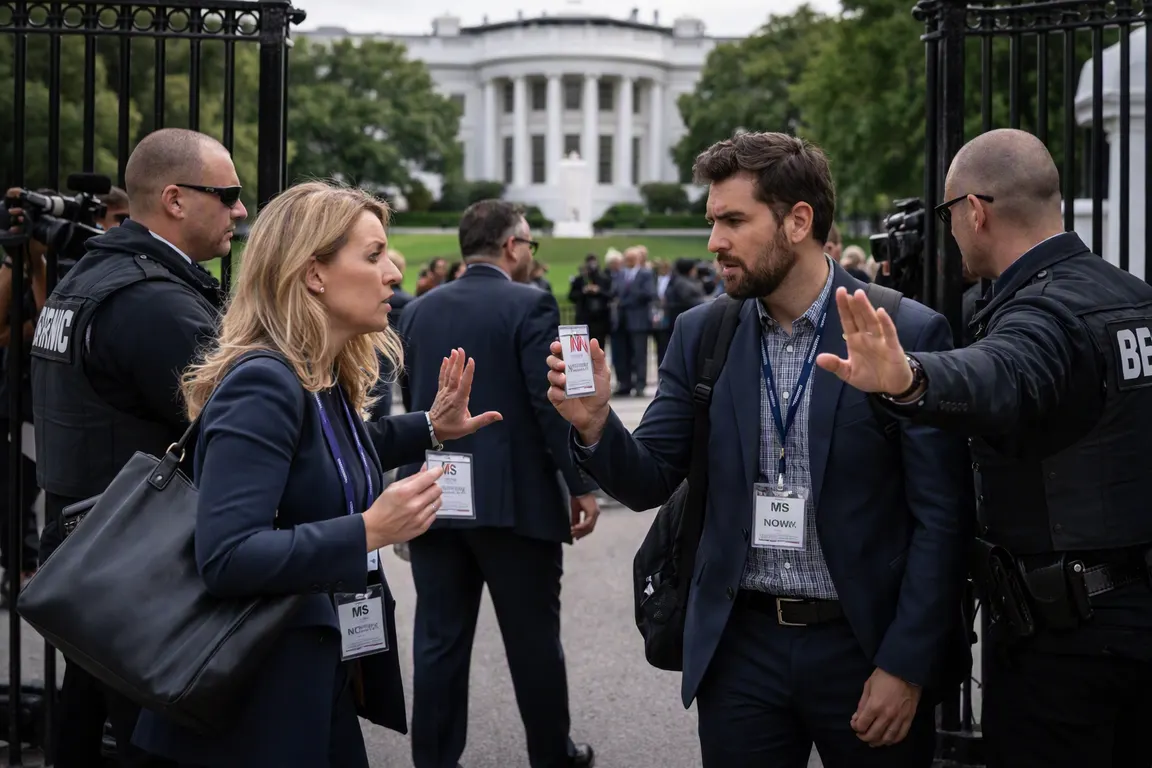
The White House revoked press credentials for reporters from CNN, MS NOW and Politico on Saturday, barring them from the executive residence after President Donald Trump announced a ban on the three outlets the day before.
Trump told reporters on Friday that he was “sick of” their coverage and would “ban” them. The following morning, White House security collected the journalists’ passes and turned them away. MS NOW said it would take “any and all steps necessary to defend our First Amendment rights.” CNN and Politico condemned the move as an infringement on press freedom. No formal White House policy or legal justification for the ban was cited.
The action marks the first time a sitting president has ordered the revocation of White House credentials for major national news organizations. While the administration can issue and suspend passes, that authority has traditionally been exercised for security reasons, not editorial disagreements. Legal scholars note that the president’s power to revoke credentials is not absolute and could be subject to judicial review under the First Amendment. “The administration cannot simply bar access because it dislikes coverage,” said Georgetown constitutional law professor Emily Rivera. “Any restriction must meet a compelling government interest and be narrowly tailored.”
Without on‑site access, the three outlets will have to rely on secondary sources, press releases and remote briefings, which could limit the immediacy and depth of their reporting. Media watchdogs, including the Reporters Committee for Freedom of the Press, called the action “a direct assault on the free flow of information to the public.” The episode also raises the specter of self‑censorship by other news organizations seeking to avoid similar treatment.
The White House has not issued an official statement beyond Trump’s remarks, and no internal memo outlining the decision‑making process has been released. In the coming days, the affected outlets are expected to explore legal avenues, while civil‑rights attorneys prepare potential challenges. Congressional leaders from both parties have expressed interest in reviewing the administration’s credentialing procedures, though no hearings have been scheduled.
The incident underscores a growing tension between the executive branch and the press and leaves unanswered how long the denial will remain in effect. As courts consider whether the president’s unilateral revocation of press badges violates constitutional protections, the broader media landscape watches for signs of how far the administration will go in regulating access to the nation’s most powerful office.