

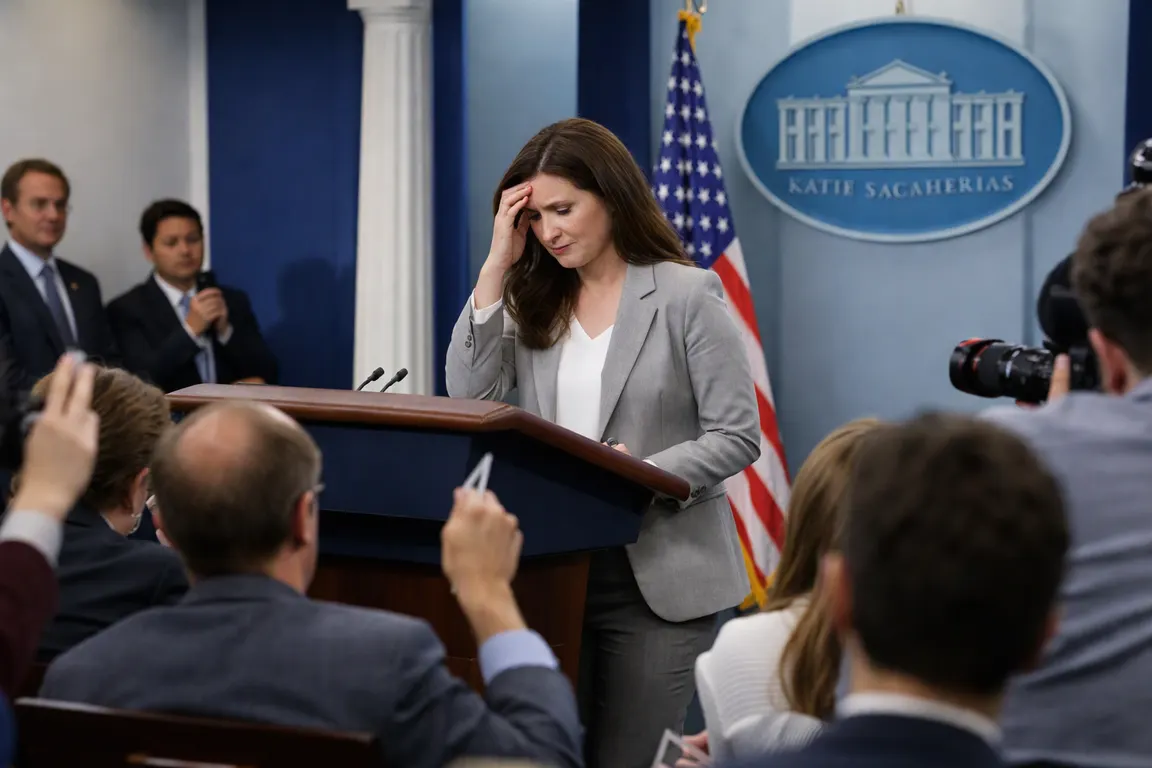
White House press secretary Katie Zacharia concluded her inaugural briefing after about 14 minutes, cutting the session short after a White House briefing gaffe in which she referred to President Biden as “my husband” before correcting herself.
The brief contained no policy announcements. Reporters were left without updates on health, safety or economic measures, raising questions about the administration’s ability to provide clear, timely information.
Zacharia, who took over the role on Friday after Karoline Leavitt’s departure in August, faced immediate scrutiny. The short, awkward briefing was noted by several outlets, and no official statement has explained why it ended early.
During the exchange, Zacharia’s slip quickly spread online, prompting commentary that ranged from bemusement to criticism of the White House’s communication readiness. The Independent World, which has covered the story extensively, highlighted Zacharia’s recent stint at the Department of Homeland Security and her prior involvement in a fringe theory linking bananas to a hidden agenda.
While the gaffe itself does not involve policy, the lack of substantive content—especially on issues that affect public safety and the economy—underscores a gap in the flow of information. Journalists rely on the press secretary to convey official positions, clarify policy details and address emerging threats. An early termination without explanation leaves reporters without guidance and the public without reassurance.
Zacharia’s background has come under renewed scrutiny. Her brief tenure at DHS placed her in a department that handles critical infrastructure and emergency response, but critics argue that experience in that arena does not automatically translate into the communication skills needed for daily White House briefings. Her association with the banana conspiracy theory, documented in earlier reporting, fuels skepticism about her judgment and the vetting process for senior communications roles.
The episode may affect newsrooms that depend on timely briefings for accurate reporting. Perceived credibility gaps can encourage speculation and amplify misinformation, especially as the administration navigates public‑health guidance and economic policy adjustments.
At present, the White House has not issued a clarification regarding the abrupt end to the briefing or any omitted content. Observers expect future briefings to be closely monitored for signs of corrective action, whether through more structured sessions, additional spokespersons or internal reviews of communication protocols.
Key unanswered questions remain: why the briefing was cut short, how Zacharia’s background will shape future messaging, and what steps the administration will take to restore confidence in its public dialogue.