

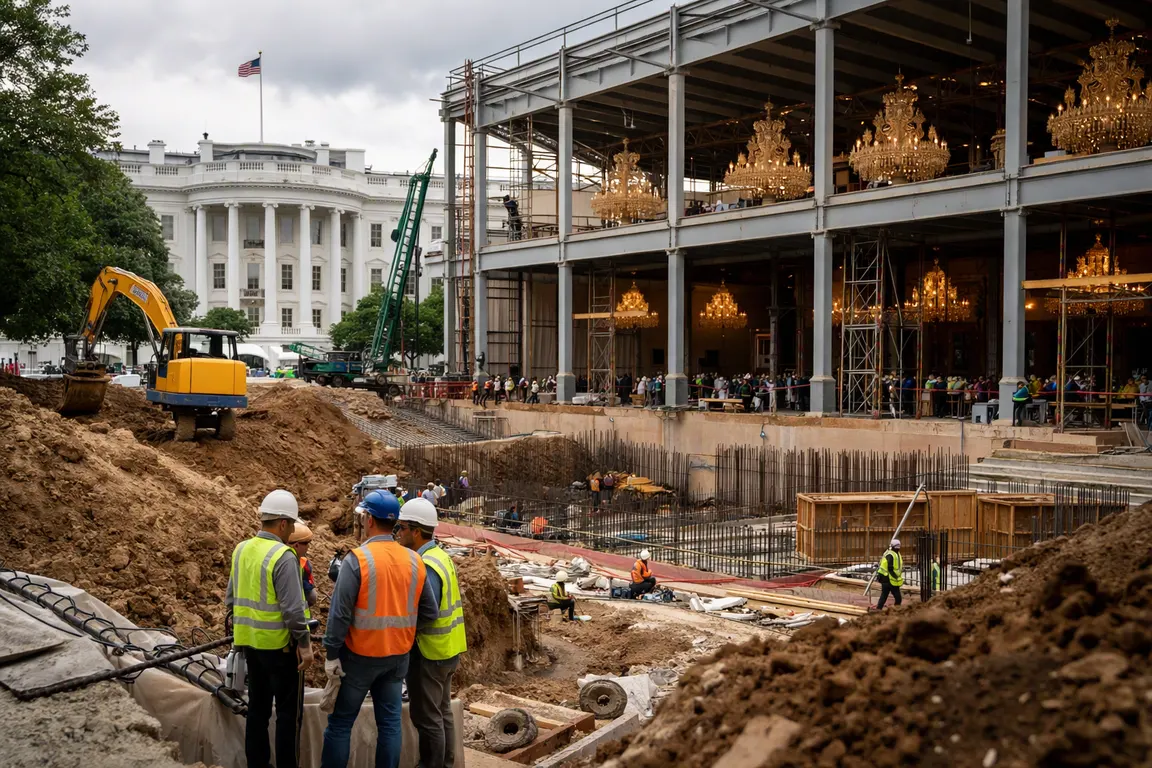
The White House ballroom cost is estimated at $100 million as officials begin construction of a 90,000‑square‑foot space in the East Wing for a state dinner with Chinese President Xi Jinping. The venue, described as “golden,” has no disclosed funding source, raising questions about how federal money is allocated for ceremonial purposes versus other priorities.
At roughly the size of a small supermarket, the new ballroom would be one of the largest additions to the White House in decades. The East Wing, traditionally used for staff offices and the first family’s private quarters, will house the new space, which is said to feature extensive gold‑leaf detailing.
The state dinner, held on Thursday, brought together President Donald Trump, President Xi, senior U.S. officials and a handful of billionaire business leaders, according to the Wall Street Journal. The guest list underscores the diplomatic weight of the event and signals an effort to showcase U.S. openness to Chinese investment.
Building a large, opulent room inside a historic complex requires additional structural work, security clearances for contractors and coordination with White House staff. Officials have not detailed how construction will affect daily operations, such as office relocations or visitor routing.
Critics argue that spending hundreds of millions on a single ceremonial room diverts resources from infrastructure repairs, cybersecurity upgrades or social programs. Supporters contend that a state‑of‑the‑art venue enhances the United States’ ability to host foreign dignitaries, yielding diplomatic and economic benefits that are hard to quantify.
The White House has not provided a completion date, only that the ballroom will be finished after the Xi dinner. The lack of a public schedule may prompt congressional oversight committees to seek greater transparency on costs and scheduling.
As the golden ballroom takes shape, the debate over fiscal responsibility versus diplomatic prestige is likely to continue. Whether the space will become a regular venue for future state events and how its expense will be balanced against other federal needs remains an open question.