

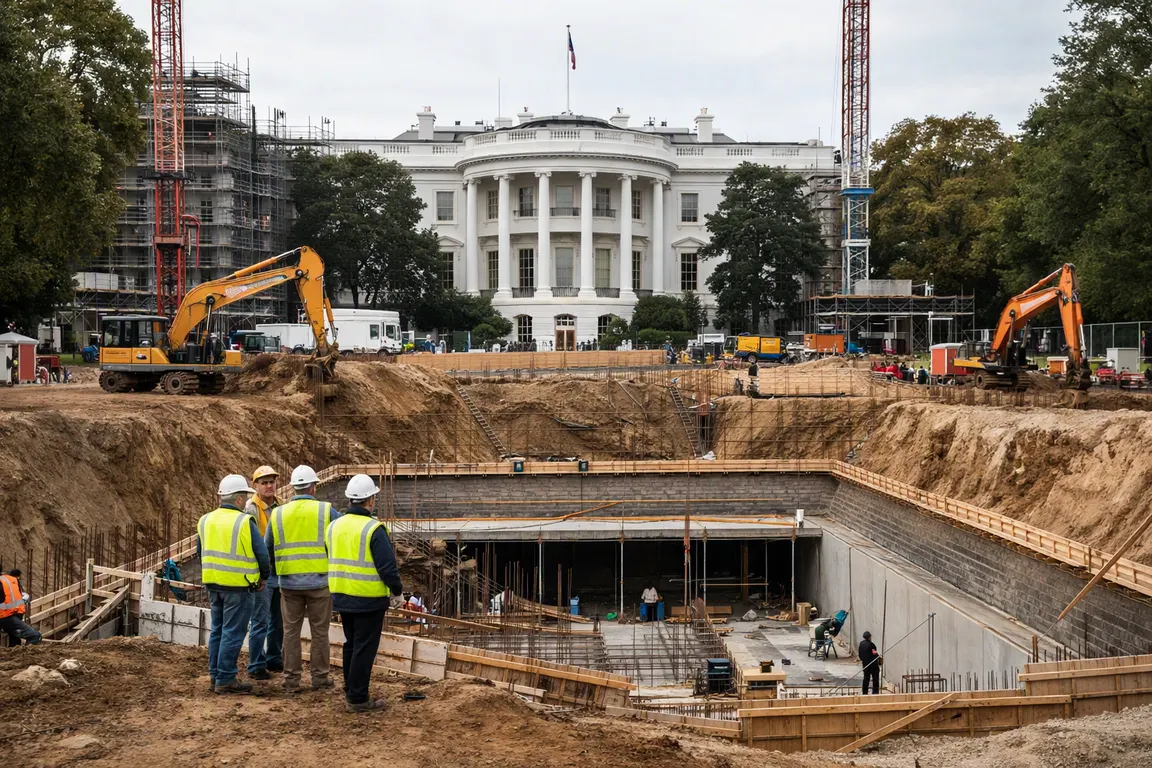
The U.S. Supreme Court on Monday voted 5‑4 to lift a lower‑court order that had halted construction of a new White House ballroom bunker, clearing the way for the $400‑$600 million renovation to resume.
The case was brought by the National Trust for Historic Preservation on behalf of Washington resident Alison Hoagland, who argued the additions would cause irreversible damage to the historic core of the capital. The Court’s majority ruled the Trust lacked standing, treating the dispute as a procedural matter rather than addressing the project’s legality. Chief Justice John Roberts joined three liberal justices in a dissent warning that the executive branch may be proceeding without explicit congressional approval.
Construction began last year after demolition of part of the East Wing to make room for the new facilities. A federal district court had blocked work on the ballroom while allowing the bunker portion to continue; the appellate court upheld that partial injunction. Earlier this month the Court issued a limited order permitting some work, and Monday’s decision removes the stay entirely.
Cost estimates vary. Al Jazeera reported a $400 million price tag, while the Manila Times cited figures up to $600 million. Both outlets note that claims of wholly private financing have been disputed, and no definitive breakdown of taxpayer contribution has emerged. The uncertainty has fueled debate over fiscal transparency as the federal budget faces competing priorities.
The standing issue remains unresolved. The Court’s dismissal leaves open the possibility that a plaintiff with a different legal theory could re‑file, or that Congress could act to clarify its authority over White House alterations. The dissent underscores that, absent clear statutory authorization, the executive branch’s unilateral expansion could set a precedent for future projects.
Historic‑preservation advocates say the ballroom, intended for official functions and private events, threatens the integrity of the White House’s historic fabric. They also argue the underground bunker, framed as a security enhancement, raises questions about the balance between national‑security needs and public‑heritage protection. Supporters point to job creation, improved security for staff and visitors, and increased resilience of the building.
With the stay lifted, construction crews are expected to resume work, but the administration has not disclosed a detailed financing plan. Lawmakers are likely to request information on how much of the $400‑$600 million budget will be covered by federal funds, and congressional oversight hearings are anticipated.
The Supreme Court’s decision resolves the immediate procedural impasse but leaves substantive questions unanswered: who may sue to protect historic sites, whether Congress has authorized the expansion, and how much of the cost will ultimately be borne by taxpayers. The answers will shape not only the White House’s physical future but also the legal boundaries of executive construction projects.