

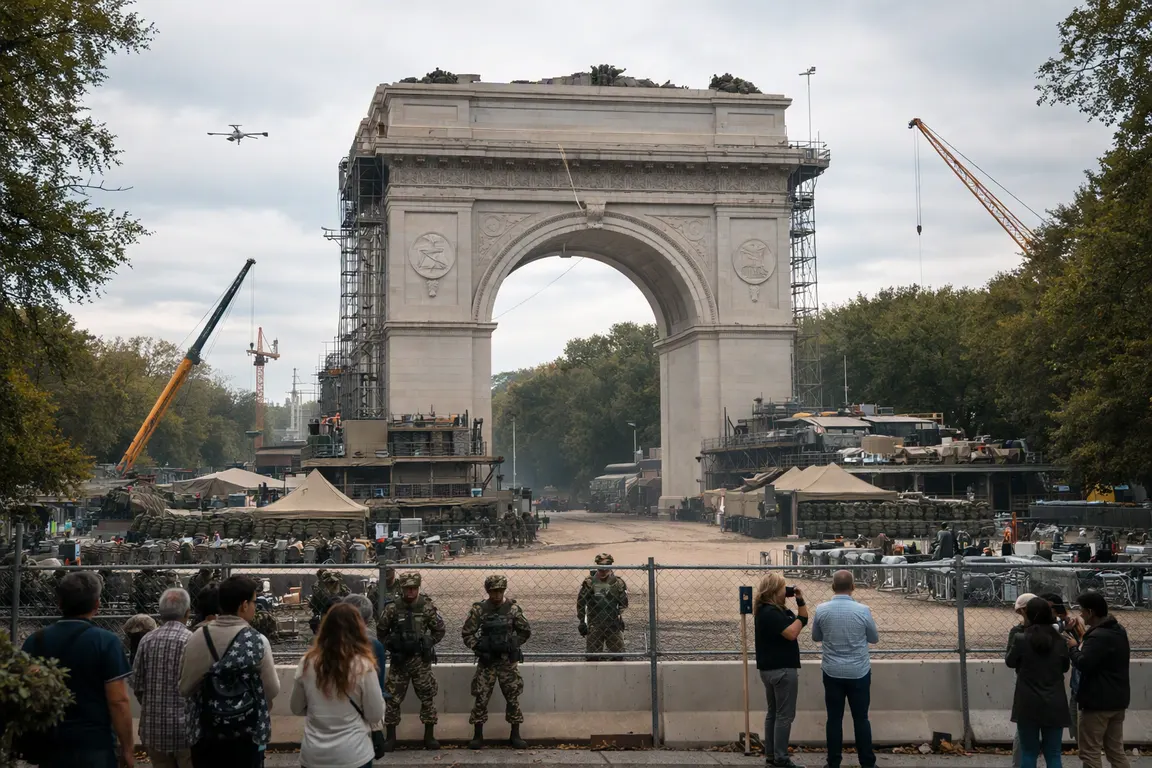
The White House announced Sunday that the long‑delayed 250‑foot triumphal arch planned for Washington, D.C., will be rebranded as a "top‑grade Military Complex/Trumphal Arch" intended to house attack drones, ammunition and sniper positions. The shift moves the project from a purely aesthetic debate to one centered on national‑security and fiscal responsibility.
If the redesign proceeds, the monument would serve as a weapons‑storage facility on federally owned land overseen by the National Capital Planning Commission (NCPC). That raises questions about how taxpayer dollars would be spent on construction, equipment integration and ongoing security, as the administration has not released a cost estimate.
President Donald Trump posted the change on Truth Social, and the story was picked up by NBC News and The Guardian. The post cites a "strong request" from the military, but no Department of Defense official has confirmed such a request, and independent verification is lacking.
Historic‑preservation groups, local officials and several members of Congress have opposed the arch for years, arguing that its design and location would mar the capital’s visual landscape and exceed budget limits. The new military framing appears to be an attempt to revive a stalled public‑works effort that has struggled to secure congressional appropriations.
The NCPC would need to conduct an environmental review, hold public hearings and coordinate with multiple agencies before any construction could begin. Funding remains unclear; prior attempts to finance the monument have faltered in the appropriations process, and the lack of a documented budget fuels concerns that hidden costs could fall to the federal deficit.
Safety considerations are significant. Storing live ammunition and operating attack drones in a densely populated district would require expanded security zones, potentially restricting pedestrian pathways and vehicle routes. Federal law‑enforcement and military units would have to allocate resources to protect the site, which could strain existing security operations in the capital.
Preservationists warn that fortified structures could compromise the arch’s architectural integrity, while urban planners point to possible traffic disruptions and the need for emergency‑response protocols tailored to a weapons depot in a civic space.
The proposal’s next step is a formal NCPC review to assess compliance with zoning, historic‑preservation and environmental standards. Concurrently, Congress would need to consider any appropriations legislation authorizing construction and operational costs. Until either body makes a definitive decision, the arch remains a contested vision that pits national‑security rhetoric against unresolved fiscal and safety concerns.
Key unanswered questions include whether any military branch has officially endorsed the conversion, how much the project will cost and how it will be funded, and what regulatory hurdles must be cleared. Those answers will shape the debate as Washington’s planners and lawmakers weigh the merits of turning a monument into a potential weapons hub.