

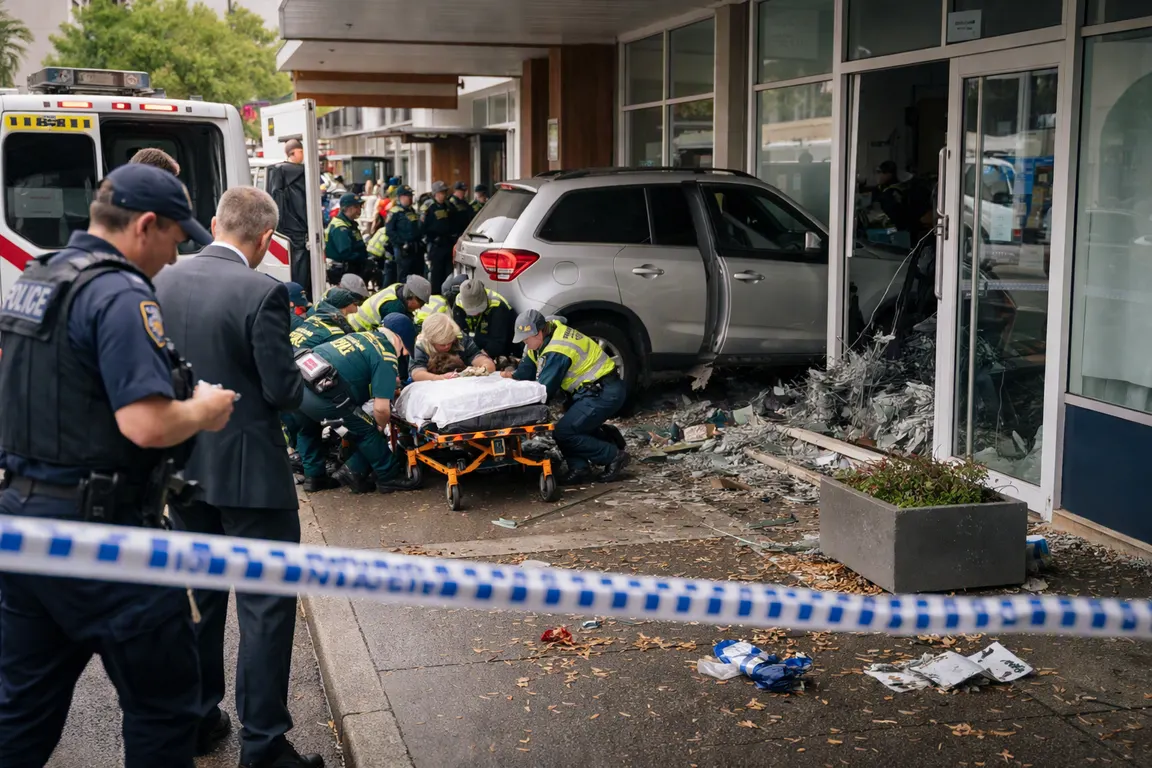
A 43‑year‑old man was arrested on Monday after a vehicle attack on MP Helen Haines outside her constituency office in Wangaratta, Victoria, leaving the lawmaker in critical condition.
State police, the Australian Federal Police, the Australian Security Intelligence Organisation and the Joint Counter‑Terrorism Taskforce have been deployed to investigate, highlighting the complexity of protecting elected officials in regional centres.
Haines, the member for Indi, was taken to hospital while emergency crews secured the scene. Melbourne’s Major Collision Investigation Unit was sent to analyse the crash dynamics. Police said there is no evidence of an ongoing public threat and are treating the event as an isolated incident pending further inquiry.
Victoria Police confirmed the suspect, identified only by age, was detained at the scene and remains in custody. No motive or prior connection to the MP has been disclosed.
Premier Daniel Andrews said he was “deeply appalled” by the attack. Prime Minister Anthony Albanese confirmed the involvement of federal agencies and expressed his thoughts to Haines and her family.
The joint response is unusual for a regional assault. AFP and ASIO’s participation indicates authorities are considering a range of possibilities, from a personal grievance to a broader security concern, although no terrorist motive has been established. The Joint Counter‑Terrorism Taskforce’s role reflects protocol for any violent act that could affect national representatives, regardless of location.
For Wangaratta residents, the incident raises immediate safety questions. Police have reassured the community that there is no continuing danger, but they warned that security assessments for other MPs in similar regional settings may be revisited. Local authorities are reviewing access controls around government offices and are considering temporary measures such as increased patrols and visible signage to deter vehicle‑based threats.
The attack also highlights the limited protective infrastructure for public officials outside capital cities. While MPs in Canberra benefit from dedicated security details, those serving rural and regional electorates rely on standard police response. Security experts say the event could prompt a review of funding for barriers, surveillance and rapid‑response protocols for regional offices.
Haines remains in critical condition, and her ability to resume parliamentary duties is uncertain. Her office has not set a timeline for her return, and constituents are awaiting updates on both her health and the investigation.
Police indicated a comprehensive risk assessment for the Wangaratta area will be completed in the coming days, with a formal report expected to inform any policy adjustments at state and federal levels. The key unanswered questions are the suspect’s motive and whether systemic gaps in MP protection need to be addressed.