

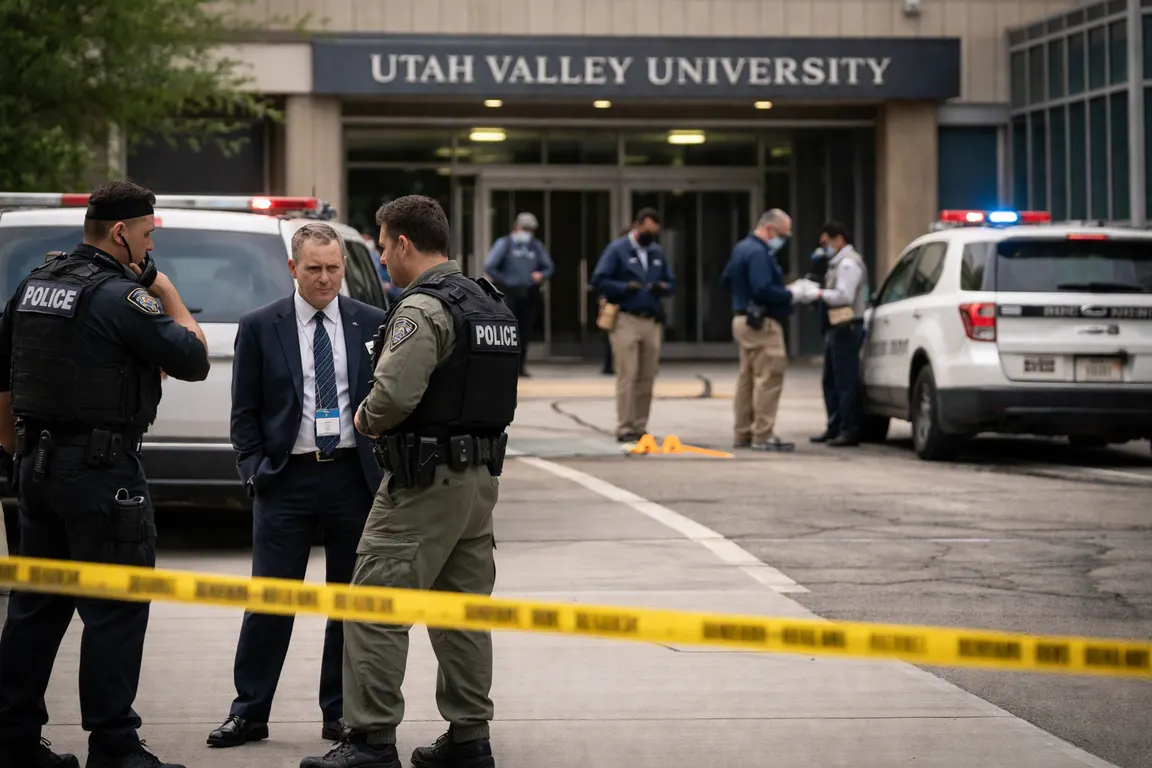
An independent after‑action report released in early October 2025 concluded that Utah Valley University security lapses allowed a sniper to kill Turning Point USA leader Charlie Kirk on Sept. 10, 2025. The review, commissioned by UVU and conducted by an external security consultancy, identified eight critical failures.
The university did not conduct a formal security assessment or produce a written event action plan, despite concerns raised weeks before the talk by staff and the Orem police chief. No line‑of‑sight analysis was performed to identify potential sniper positions, even though the courtyard is flanked by rooftops. Campus police were operating below recommended staffing levels and did not deploy bag checks, metal detectors, or drone monitoring of the surrounding rooftops.
Key security decisions were deferred to Turning Point USA, which insisted on an outdoor venue during an August 2025 planning meeting despite reservations from university officials. Coordination with the speaker’s private security and local law‑enforcement partners was absent, leaving a critical gap in threat mitigation.
The event drew roughly 3,000 attendees. According to the report, the shooter fired from a rooftop about 400 feet (122 meters) away, a distance that could have been flagged as high risk with proper line‑of‑sight analysis. The shooter, Tyler Robinson, surrendered on Sept. 11 and now faces aggravated murder charges that carry a possible death‑penalty sentence. Kirk’s family has filed a wrongful‑death notice.
UVU President Dr. Mark H. Anderson said the university “takes the findings seriously” and will “review all recommendations to strengthen our safety protocols.” The administration pledged to develop a written security plan for future events, increase campus police staffing, and explore metal detectors and aerial surveillance for large outdoor gatherings.
Turning Point USA confirmed it was aware of staff concerns but maintained that an outdoor setting aligned with its mission to engage students in an open environment. The organization has not been named as a defendant in any civil action, though legal scholars note the wrongful‑death claim could extend liability to entities that shared decision‑making authority.
Higher‑education leaders are watching the UVU case closely. The American Association of University Administrators has announced a task force to examine the report’s recommendations and develop best‑practice guidelines for event security. If adopted, campuses may reallocate funds toward security personnel, screening equipment, and aerial‑monitoring technology.
The report leaves several questions unanswered. It does not specify who ultimately approved the outdoor location, nor does it detail communication between UVU’s security office and the speaker’s private team. It also stops short of assessing whether similar lapses exist at other institutions that host high‑profile speakers.
As the wrongful‑death claim proceeds and the criminal case against Robinson advances, UVU is expected to hold a public hearing on the report’s recommendations and formally revise its event‑safety playbook. The outcome could set a precedent for how colleges balance open discourse with the responsibility to protect attendees, a balance many institutions will be forced to reevaluate in the months ahead.