

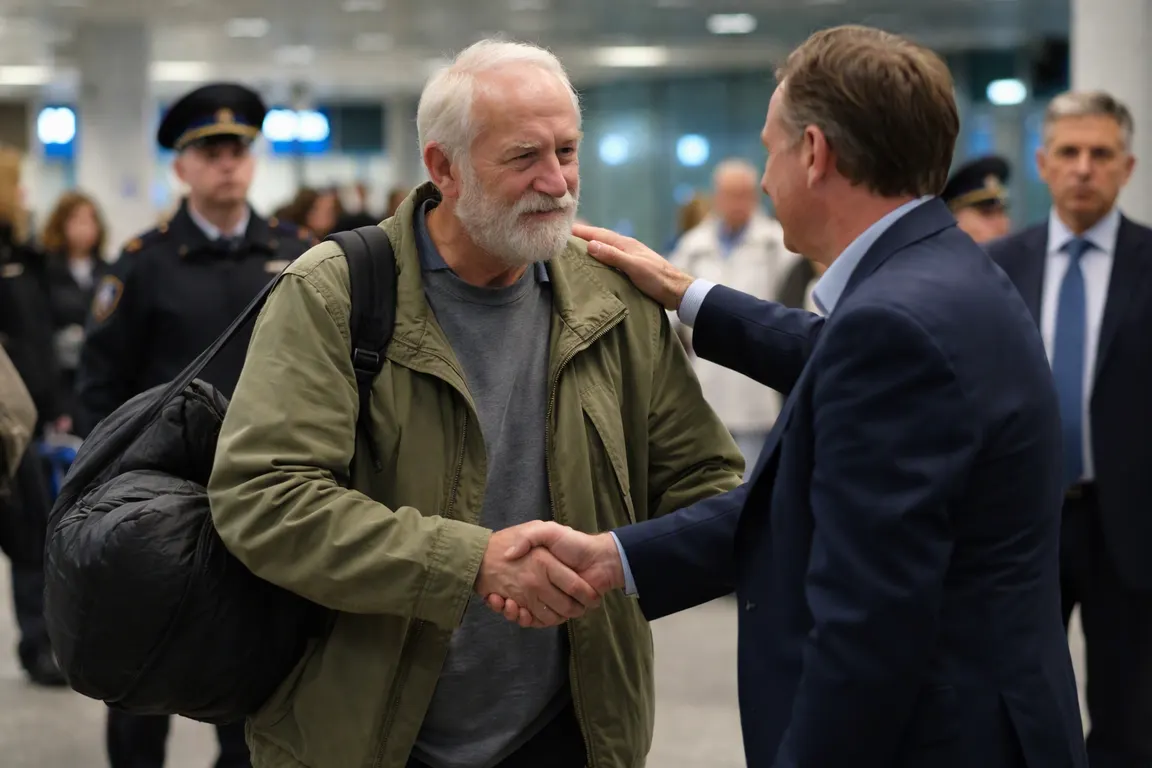
A retired American teacher, Stephen Hubbard, was released at St. Petersburg’s Pulkovo Airport on Wednesday as U.S. envoy Steve Witkoff wrapped up a meeting with President Vladimir Putin. Hubbard, who had been sentenced to nearly seven years for allegedly fighting as a mercenary in Ukraine, is the second U.S. citizen freed by Moscow in two months, following Marine veteran Robert Gilman’s release in August.
The timing coincides with President Donald Trump’s recent moves to ease sanctions on Russia and approve a limited diesel‑import deal. Analysts say the overlap suggests detainee releases could be part of a broader diplomatic shift that may affect the Ukraine war, U.S. credibility and the roughly two dozen Americans still held in Russia, according to the Foley Foundation.
Hubbard’s case stemmed from a closed 2024 trial that resulted in a six‑year, ten‑month sentence on mercenary‑related charges. Russian officials have not offered new evidence or a formal pardon; Kremlin spokesperson Dmitry Peskov said the decision was based on “humanitarian considerations” after a review of individual cases. Witkoff thanked Putin at the airport, and the Kremlin indicated it was ready to resume trilateral peace talks involving the United States and Ukraine.
The release occurs against a backdrop of policy moves that some observers describe as a softening toward Moscow. On Oct. 16, 2024, Trump signed legislation named after Sen. Lindsey Graham that waived certain sanctions and authorized a limited Russian diesel import. The administration has also relaxed restrictions on drone support to Ukraine, a change critics argue could benefit Russia. Trump told reporters he discussed Hubbard’s case directly with Putin, suggesting personal attention at the highest level.
Media reactions vary. The Wall Street Journal called the release a humanitarian act that does not change Russia’s overall stance toward U.S. interests. RealClearPolitics framed it as evidence of “warmer ties,” citing Putin’s description of the gesture as humanitarian. The Manila Times linked the decision to Trump’s broader policy shifts, a causal link the WSJ disputes. The differing tones highlight uncertainty about whether the release reflects genuine goodwill or a calculated lever.
For Hubbard’s family, the benefit is immediate: he returns home after more than a year in custody, and his wife and adult children expressed relief. The broader impact on U.S. diplomatic credibility remains unclear. If Moscow begins to tie future releases to sanctions relief or energy deals, Washington could face pressure to concede on issues influencing the Ukraine conflict and global energy markets. Conversely, a pattern of releases without explicit quid pro quo could bolster U.S. leverage in negotiations for the remaining detainees.
The fate of the two dozen Americans still detained in Russia remains uncertain. Their cases range from espionage accusations to alleged involvement in the Ukraine conflict, all subject to Russia’s opaque legal process. Whether the current diplomatic thaw will yield additional releases is an open question.
U.S. officials indicated that Witkoff will return to Moscow later this month to discuss the broader detainee issue and the status of the proposed trilateral peace talks. The outcome of those talks will likely determine whether Hubbard’s freedom is a one‑off humanitarian act or the start of a new negotiating framework that could reshape U.S.–Russia relations amid the ongoing war in Ukraine.