

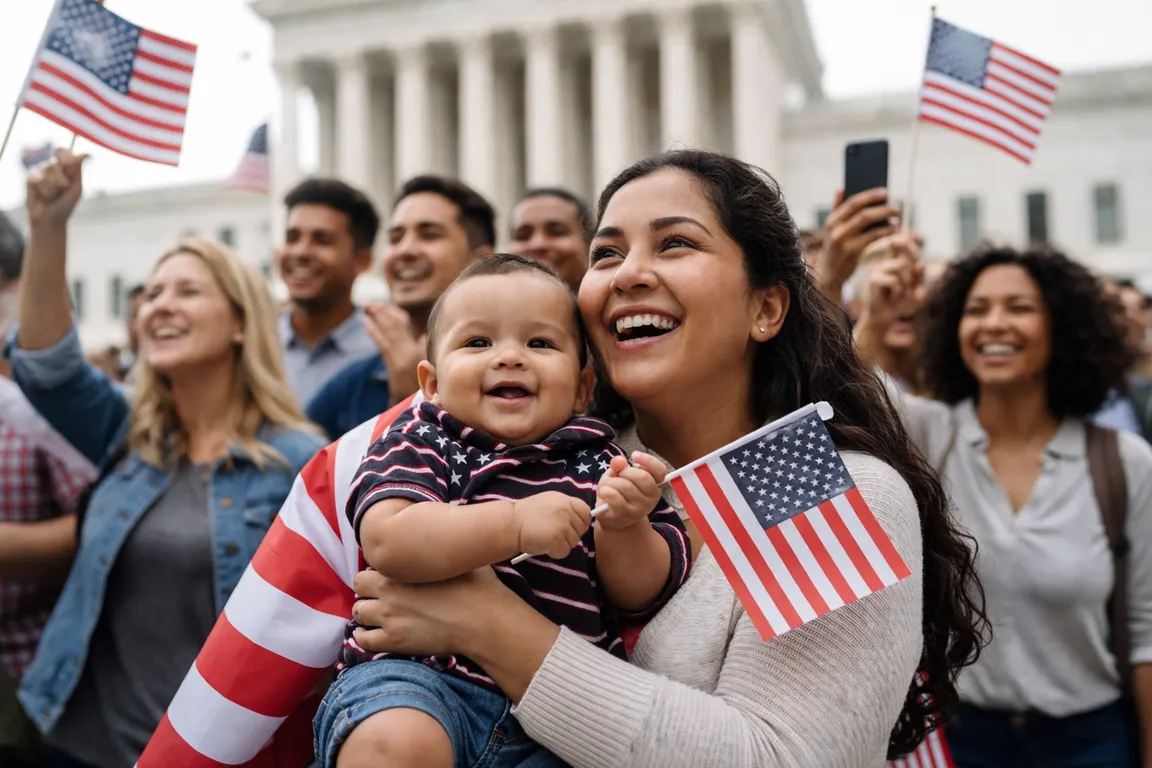
The US Supreme Court has upheld birthright citizenship, ensuring that nearly all people born in the United States are automatically granted citizenship, regardless of their parents' immigration status. This decision deals a significant blow to President Donald Trump's anti-immigrant agenda and has significant implications for immigration policy and American identity.
The Supreme Court blocked President Donald Trump's executive order to end birthright citizenship, stating that 'Children born in the United States to parents unlawfully or temporarily present are 'subject to the jurisdiction' of the United States and are citizens at birth under the Fourteenth Amendment's Citizenship Clause.' This ruling affects the lives of thousands of people born in the US to undocumented or temporary resident parents.
A recent NBC News poll found that Americans are split on the question of whether being born in the U.S. is central to American identity, revealing stark partisan divides on the issue. The poll's findings highlight a divide in public opinion on the issue of birthright citizenship and what it means to be 'truly American.' As the Supreme Court affirms the principle of birthright citizenship, the country is left to grapple with what it means to be 'truly American' in an era of deepening partisan divides.
The ruling will likely have significant consequences for President Trump's anti-immigrant agenda, which has been a central piece of his platform. The decision raises important questions about the future of immigration policy in the US and how it will impact the lives of those affected. With the Supreme Court's ruling, the focus will now shift to how the decision will be implemented and what it will mean for the thousands of people who will be impacted by it.
The Supreme Court's decision is a significant development in the ongoing debate over immigration policy and American identity. As the country moves forward, it will be important to consider the implications of this ruling and how it will shape the lives of those affected. The ruling is a reminder that the issue of birthright citizenship is complex and multifaceted, and that it will continue to be a topic of debate in the years to come.