

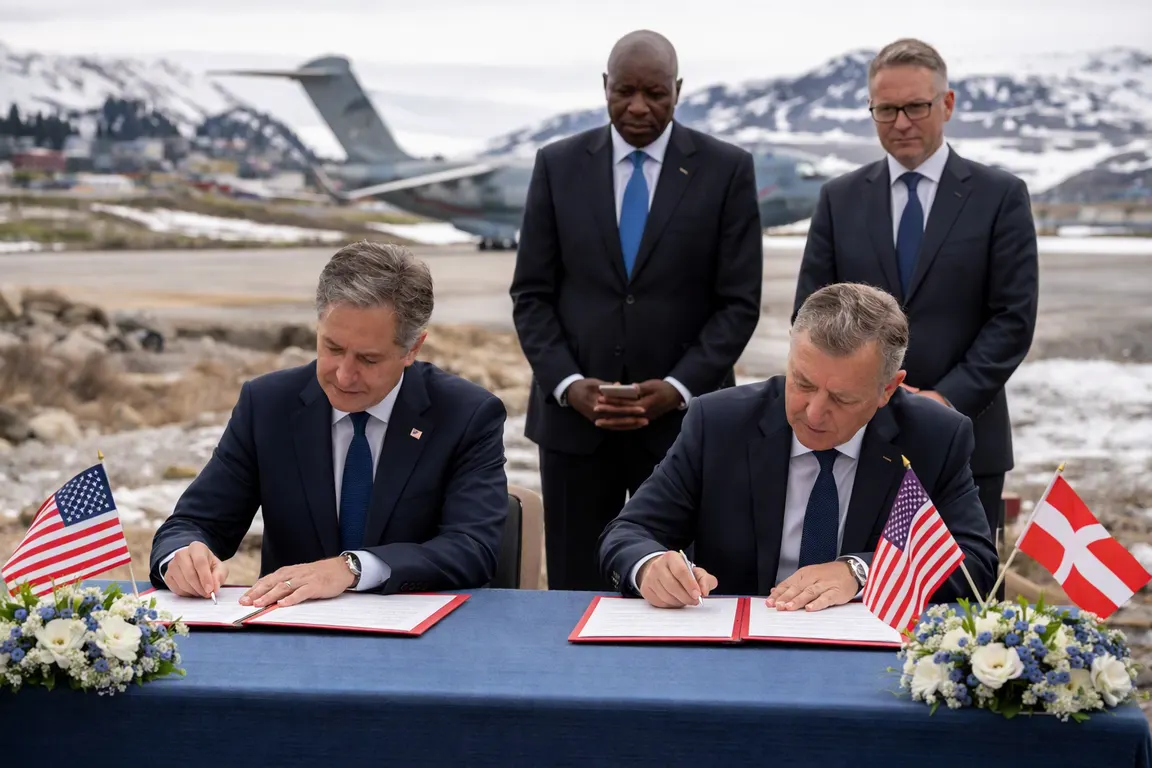
Washington and Copenhagen announced a bilateral security agreement that gives the United States limited access to Greenlandic infrastructure while leaving sovereignty with Denmark. The U.S. Greenland security deal, concluded after months of undisclosed talks, marks a quiet shift from former President Donald Trump’s public push to purchase the island.
The Arctic is rapidly becoming a contested zone for military presence, resource extraction and new shipping routes. By securing cooperation with Denmark, the United States gains a forward position for surveillance and rapid deployment without the political fallout of an outright purchase or annexation.
Negotiations began in the wake of Trump’s 2020‑2021 campaign to buy Greenland. Under the agreement, the United States will receive "security cooperation and limited access" to facilities that support Arctic operations, according to an Al Jazeera report. Denmark retains formal sovereignty, and the autonomous Greenlandic government was not consulted before the public announcement, a point noted by The Independent World.
Analysts say the deal is a scaled‑back version of Trump’s ambition. The former president argued that owning Greenland was essential to deter Russian and Chinese activity in the high north. The current pact stops short of any territorial claim, offering instead a framework for joint use of existing infrastructure such as airfields and radar sites. No timeline or detailed operational plan was disclosed, leaving the exact scope of U.S. activities unclear.
Strategically, Greenland sits above the Arctic Circle and straddles emerging sea lanes that could shorten routes between Europe and Asia as ice recedes. Control of airfields and surveillance assets would allow the United States to monitor Russian naval movements and Chinese commercial ventures, while also providing a staging point for humanitarian or disaster‑response missions. Denmark, a NATO ally, gains a security guarantee that reinforces its Arctic policy.
The agreement raises practical questions for Greenland’s Inuit population. Increased military activity could bring construction, noise and environmental risks to remote communities already concerned about climate change and resource development. At the same time, a security umbrella may reassure shipping and mining firms that the corridor will remain stable, potentially spurring investment in ports and extraction projects.
For U.S. defense planners, the pact offers a foothold that could be expanded in future negotiations. For Danish officials, it creates a diplomatic balancing act: they must coordinate American operations while preserving sovereignty and responding to Greenlandic concerns.
Unresolved issues remain. The lack of concrete details makes it uncertain which facilities will host U.S. personnel, how many troops might be stationed, and what oversight mechanisms will govern joint activities. Greenland’s local government has not issued an official response, and its leaders may seek clarification on the scope of any construction or operational presence.
The next step is likely a series of technical talks to flesh out the security provisions and establish a monitoring framework acceptable to Denmark and, ideally, to Greenlandic authorities. Until those details emerge, the agreement stands as a modest but significant recalibration of U.S. Arctic strategy, showing how Washington can pursue strategic goals without the overt flash of a purchase or annexation.