

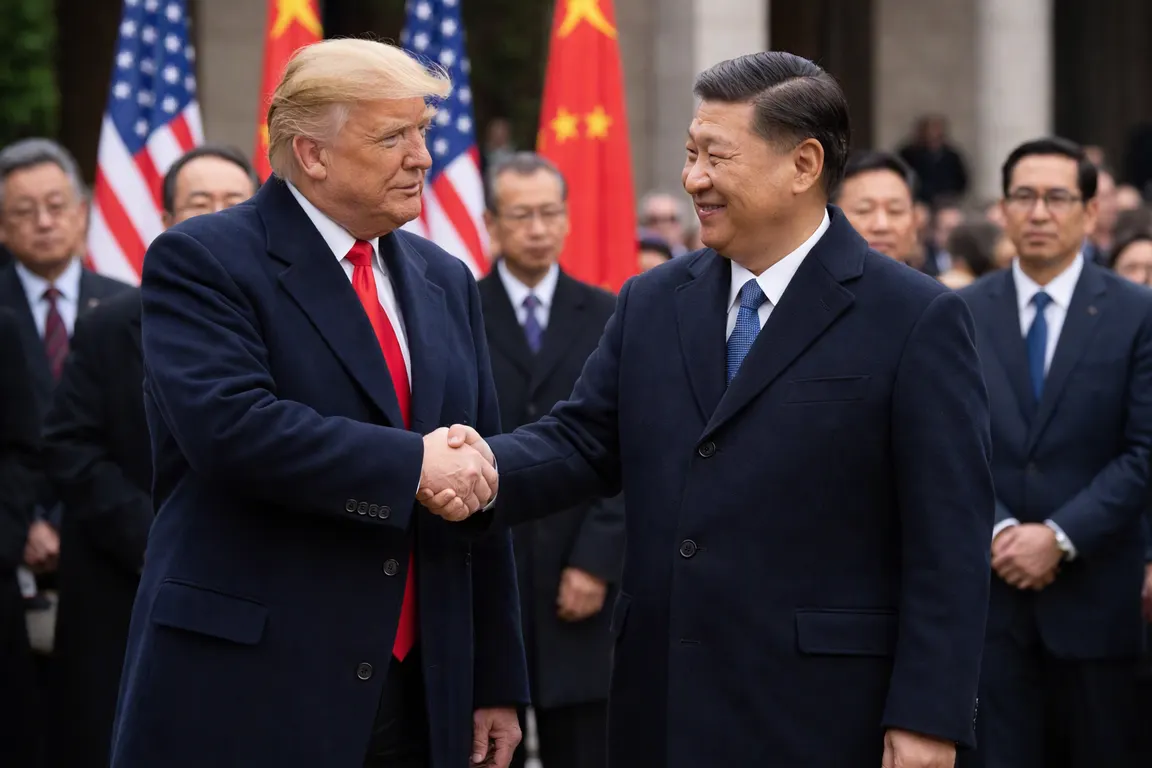
President Donald Trump and Chinese President Xi Jinping wrapped up a week‑long state visit Thursday with a two‑month extension of the U.S.-China trade truce, the only concrete agreement announced.
The extension buys businesses another two months of tariff stability while the United States heads into a midterm election season dominated by rising gasoline prices and growing public concern over artificial‑intelligence regulation. Voters are focused on economic stability and technology policy, leaving the limited outcome of the visit as a brief window of trade certainty amid broader unanswered questions about AI governance and bilateral cooperation.
Protesters gathered outside the White House as Xi arrived, chanting “Xi Jinping is not welcome” and “Free Hong Kong,” underscoring domestic opposition to the Chinese leader’s presence. Inside, Trump and First Lady Melania welcomed Xi and First Lady Peng Liyuan before a state dinner attended by roughly three dozen guests, including tech CEOs Elon Musk, Tim Cook, Jensen Huang and Sam Altman, according to the Manila Times. The dinner featured a custom‑made bald eagle statue presented to Xi and a tour of a newly built $400 million ballroom and helipad; Xi later rode Marine One to view the helipad.
Both leaders issued statements emphasizing “peaceful coexistence” and reiterating that artificial intelligence must remain “under human control.” Xi restated Beijing’s red lines on Taiwan, AI and the Iran conflict. No specific AI‑cooperation agreements were disclosed, and observers described the trip as “spectacle over substance,” noting the absence of major policy breakthroughs.
The two‑month trade truce extension now runs until January, offering short‑term stability for companies that rely on U.S.–China supply chains. Importers and exporters have welcomed the continuity, but analysts warn the temporary measure does little to resolve underlying tariff disputes that could resurface once the extension expires.
The presence of leading technology executives highlights the economic stakes of the bilateral relationship. While their attendance does not confirm any imminent collaboration, it underscores the importance of AI and semiconductor markets to both governments. Industry watchers will monitor whether informal dialogues during the visit translate into future coordination or competition in these sectors.
Republican lawmakers face mounting pressure ahead of the midterms, where high gas prices and backlash against AI applications feature prominently in voter concerns. Critics have framed the lavish reception—including the eagle statue and new ballroom tour—as a political distraction that diverts attention from domestic challenges. The White House defended the visit as an effort to keep diplomatic channels open amid heightened geopolitical tension.
The trade truce is set to lapse in January, at which point further negotiations will be required to prevent a resurgence of tariffs. Whether the brief extension and the high‑profile AI dialogue will influence policy discussions before the election remains uncertain, leaving businesses and voters to watch for the next round of U.S.–China talks.