

U.S.-China AI Safety Dialogue Announced at New York State
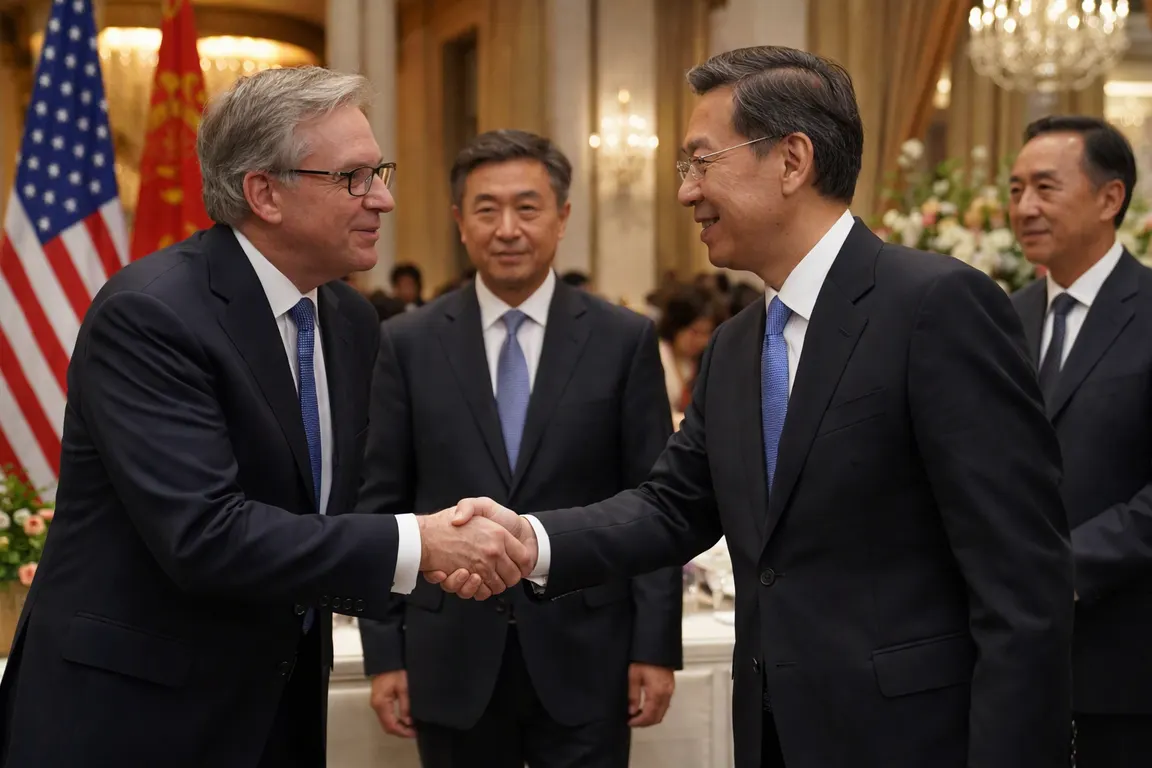
U.S. Treasury Secretary Scott Bessent and Chinese Vice Finance Minister Liao Min will announce a new U.S.-China AI safety dialogue during a state dinner in New York on Sept. 23. The initiative, unveiled after Bessent met Vice Premier He Lifeng earlier in the city, is framed as a diplomatic overture but, according to market analysts, is unlikely to produce immediate policy changes or enforceable safeguards.
The announcement comes amid a flurry of AI‑related statements from both capitals. At the United Nations General Assembly, President Donald Trump described AI as “super intelligence” and dismissed the need for binding safety regulations. UN Secretary‑General Antonio Guterres, by contrast, called for a Cold‑War‑style arms‑control framework to govern AI development between the United States and China. The divergent rhetoric underscores a gap between political posturing and concrete action, leaving investors and public‑safety advocates skeptical about any substantive impact.
The forthcoming dialogue will focus on safety discussions rather than export controls or joint technical standards. Liao Min told reporters that officials are drafting details on AI, investment and trade cooperation, but offered no timeline for implementation. Analysts at Allspring and Alpha Binwani Capital, Gary Tan and Ashwin Binwani, respectively, described the effort as “largely symbolic” and unlikely to move markets. Their assessment echoes past tech‑entourage trips to China, which produced no meaningful changes to hardware‑export restrictions, while semiconductor and hyperscaler stocks continued to track broader AI demand.
The limited scope raises three policy concerns. First, without enforceable export‑control measures, Chinese firms will retain existing barriers that limit U.S. chip sales, preserving the status quo of competitive tension. Second, the absence of binding safety standards leaves the risk of uncontrolled AI deployments unchanged, a point emphasized by Guterres and AI‑safety advocates who argue that “limited cooperation” does not address destabilizing applications. Third, the lack of a concrete framework hampers progress on international AI norms, complicating efforts by allied nations seeking coordinated regulation.
Investors are interpreting the announcement as a signal that the regulatory environment will remain stable in the near term. Tan noted that “any policy impact will be symbolic and not a market catalyst,” while Binwani added that the broader AI market continues to be driven by demand for compute power and data, not diplomatic gestures. As a result, analysts expect only modest short‑term movement in AI‑related equities, with the larger narrative of the U.S.–China AI race persisting largely unchecked.
The real test of the dialogue will be the concrete steps taken after the dinner. If officials produce a detailed working paper or schedule a series of safety workshops, the talks could lay groundwork for more substantive agreements. If the discussions remain confined to high‑level statements, the risk calculus for public safety and global governance will stay unchanged. Policymakers, investors and civil‑society groups will be watching closely for any deliverables that move the conversation beyond symbolism toward enforceable action.