

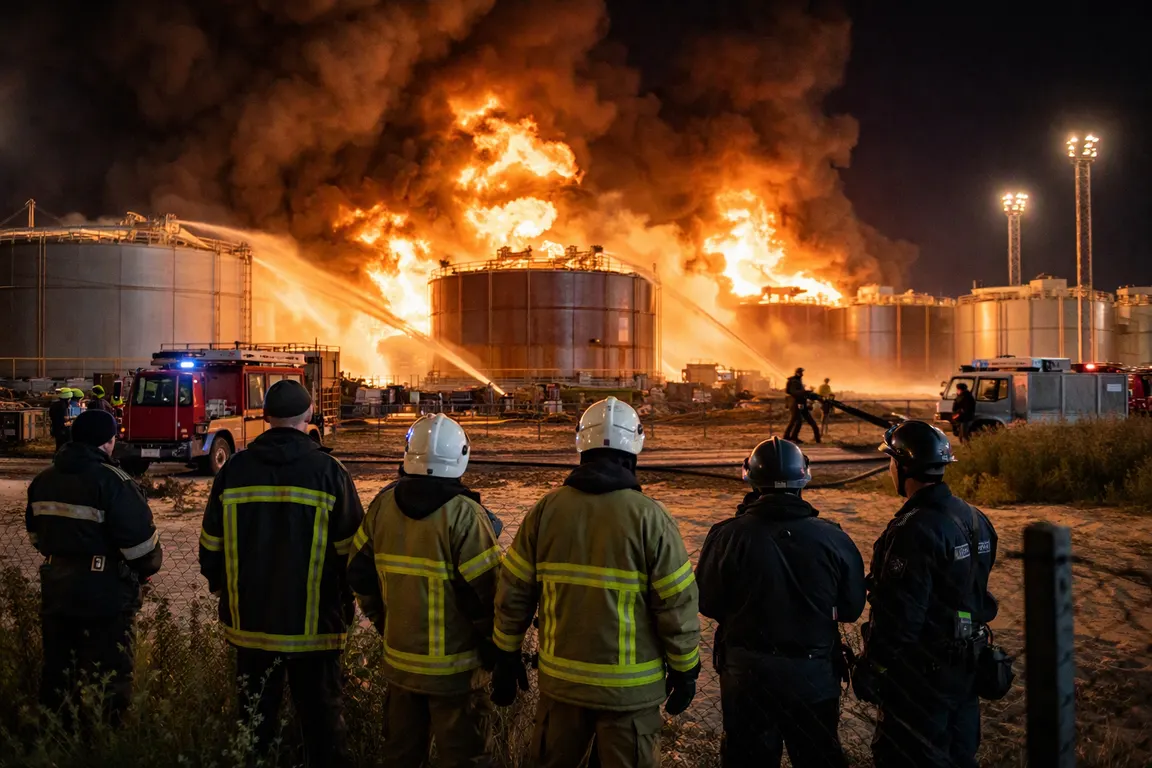
Ukrainian‑operated drones set fire to the NZPP Rostovsky terminal in Rostov‑on‑Don on the night of Oct. 10, just hours after President Donald Trump announced a deal to import up to one million tons of Russian diesel. The strike puts the newly announced U.S. procurement policy at the center of an escalating energy‑war front.
By lifting sanctions that barred Russian diesel exports and committing to a multi‑stage purchase, the United States has opened a revenue stream that Kyiv says will fund Moscow’s war effort. The attack on a terminal that handles between 3.5 million and 7.5 million tons of refined products each year raises immediate questions about market stability, Russia’s financing, and the risk of further kinetic retaliation.
Trump detailed the agreement on his Truth Social account on Oct. 10: an initial shipment of more than 300,000 tons, a second tranche of 500,000 tons in November, and a final million‑ton delivery thereafter. The move removes the sanctions that previously prohibited Russian diesel sales to the United States, a decision framed as a response to rising fuel prices ahead of the mid‑term elections. Within hours, users linked to Ukrainian open‑source intelligence posted video on X showing flames and smoke at the Rostovsky facility, a key maritime export point for diesel, fuel oil and marine gasoil.
Ukrainian President Volodymyr Zelenskyy condemned the deal, warning that the influx of diesel revenue would “bankroll” Russia’s war and could prompt further attacks on Ukrainian infrastructure. European leaders, while reaffirming support for Kyiv, announced emergency diesel releases to temper price spikes, underscoring the market pressure the deal creates for both U.S. and European consumers.
Analysts say the convergence of three stressors—U.S. diesel imports, renewed Russian export capacity, and ongoing disruptions in the Strait of Hormuz—creates a “nightmare scenario” for global refining markets. Goldman Sachs energy analyst Nikhil Bhandari notes that the immediate impact on diesel prices is mixed. In the United States, a new supply source could ease short‑term price pressure, but the erosion of sanctions may invite counter‑measures that drive longer‑term costs higher. In Europe, additional Russian diesel offers temporary relief from a tightening market, yet political backlash over aiding Moscow could prompt policy reversals.
The extent of physical damage to the Rostovsky terminal remains unverified. Russian authorities have not confirmed the strike, and independent verification of the OSINT footage is pending. ZeroHedge reported the attack as a direct retaliation for the Trump‑Putin deal, while The Independent World noted that the two events are not explicitly linked. Without an official damage assessment, the immediate effect on Russian export volumes is uncertain, but any disruption at a hub that moves millions of tons annually could shave revenue from Moscow’s war chest.
The episode illustrates how a trade decision can become a battlefield flashpoint. As U.S. lawmakers debate the legality and strategic wisdom of the diesel agreement, market participants are watching for signs of further escalation. Whether the Rostovsky strike prompts additional Ukrainian attacks on Russian energy infrastructure, or whether Washington revises its procurement policy in response to security concerns, will shape fuel markets and geopolitical calculations in the weeks ahead.