

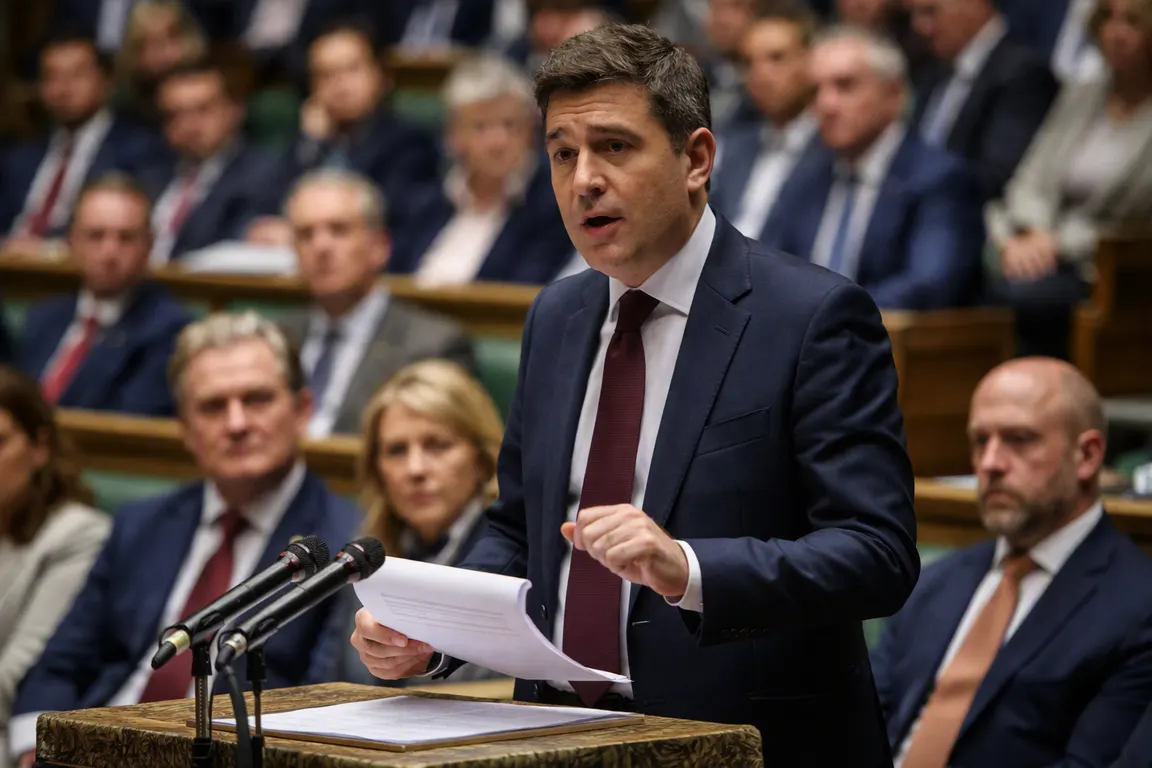
Prime Minister Andy Burnham used his maiden speech in the House of Commons to outline a three‑part reform agenda that could reshape water renationalisation in the UK, defence spending and the country’s climate strategy.
Burnham said the government will commission a review of the water sector and consult stakeholders on "all possible solutions" to bring it back into public ownership. He described the current system as a "leaking monument" to privatisation. No timetable was given, but the review would lay the groundwork for possible legislation that could change pricing, service standards and the regulator’s remit.
A second headline pledge was to raise defence spending to 3 % of gross domestic product by 2030. The target, announced alongside the appointment of John Healey as chancellor, would require a steady increase in the defence budget over the next decade. Analysts note that meeting the goal could boost contracts for shipbuilders, aerospace firms and regional defence hubs, while adding to the public‑sector fiscal burden.
On climate policy, Burnham said he will attend the COP31 summit in Turkey and adopt a "pragmatic" approach to energy supply. He left open the possibility of approving the Jackdaw gas field, a move that could improve short‑term gas security but may conflict with the UK’s net‑zero objectives. Energy companies now face uncertainty as they balance new gas projects against pressure to expand renewable capacity.
The speech also touched on constitutional reform. Burnham signalled willingness to consider electoral reform and promised greater devolution and public control of essential services, but said any change would require consensus in the next election. No specific bills were tabled, leaving the timetable for reform unclear.
Burnham framed the agenda as a correction of "wrong turns" taken during the Brexit process and the Thatcher era, arguing that past policies have constrained growth for four decades. The Guardian highlighted those remarks, while the BBC noted a clash with Conservative MP Kemi Badenoch, who warned against "more government control, more taxes and more politicians."
For water customers, renationalisation raises questions about future tariffs and service reliability. Defence contractors stand to benefit from higher spending, but the impact on household finances remains to be quantified. Energy firms must navigate the tension between gas development and green‑energy targets, a balance that will shape investment decisions in the coming years.
The next step is parliamentary debate. While Burnham’s speech set out intentions, the proposals will need detailed bills, committee scrutiny and votes in the Commons. How quickly the government can move from promise to policy, and whether it can secure cross‑party support for reforms ranging from water ownership to electoral change, will determine the real impact of this inaugural agenda.