

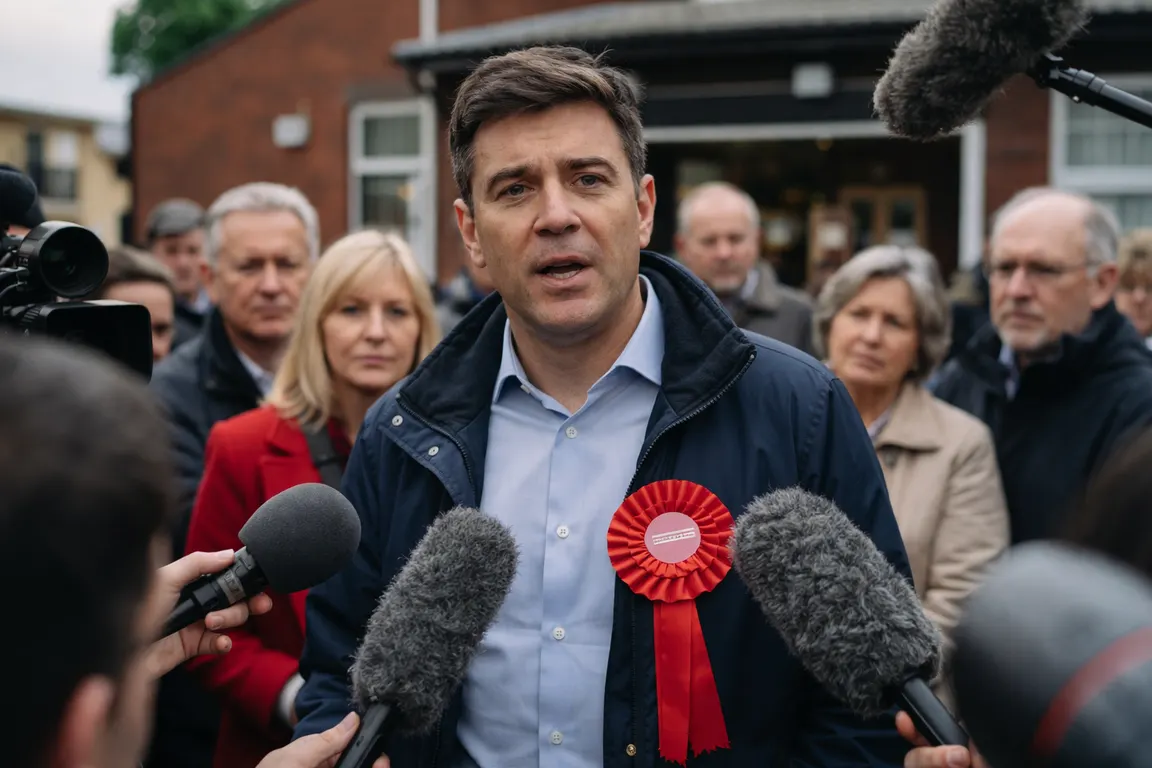
Andy Burnham's victory in the Makerfield by-election has set the stage for a potential challenge to Keir Starmer's leadership of the UK Labour Party. Burnham won with 54.8% of the vote, a significant margin that could allow him to mount a credible challenge to Starmer. The by-election was held in northwestern England, a region where Labour has traditionally been strong.
The outcome of this challenge could determine the future of the Labour Party and potentially impact the country's political stability, economy, and public services. Starmer has vowed to fight on and not walk away from his job, despite struggling with low popularity ratings. The next national election is due in 2029, and the Labour Party's internal divisions could affect its chances.
There is disagreement among Labour lawmakers about whether Starmer should step down, with some urging him to consider his position and others supporting him. Burnham, the mayor of Greater Manchester, has been seen as a potential rival to Starmer for some time. The implications of Burnham's by-election victory are significant, and the party's future hangs in the balance.
Starmer's decision to stay on has set the stage for a potentially divisive and destabilizing challenge. The key policy differences between Burnham and Starmer could impact the UK's economy and public services. Party members will play a crucial role in determining the outcome of a potential leadership contest. As the Labour Party teeters on the brink of a leadership crisis, the question on everyone's mind is what's next for Starmer and the party.
The Labour Party's internal divisions have been ongoing, and the by-election result has brought them to a head. With the party's future at stake, lawmakers and members will be watching closely to see how the situation unfolds. The UK's political stability, economy, and public services may all be affected by the outcome of this challenge, making it a critical moment for the Labour Party and the country as a whole.