

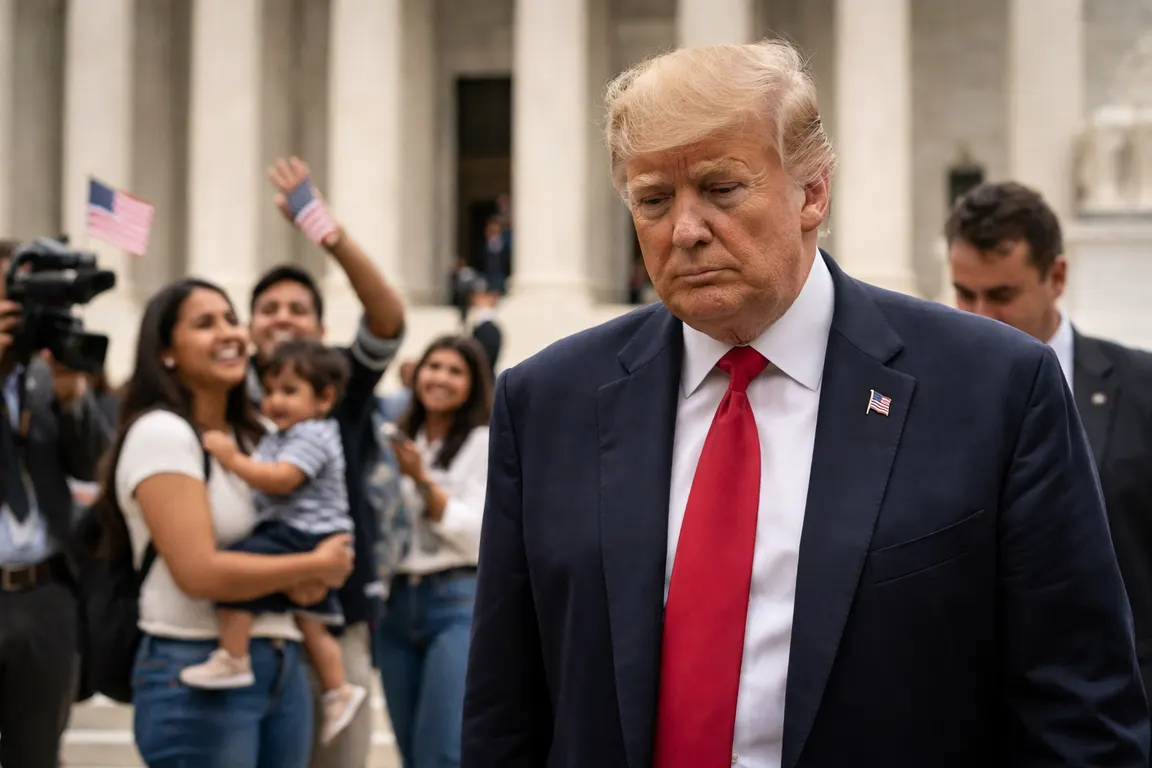
The Supreme Court has rejected President Trump's attempt to end automatic citizenship for children of undocumented immigrants born in the US, upholding a core constitutional principle of birthright citizenship. This decision has significant implications for immigration policy and the president's authority.
The Court's ruling brings an end to its term, which has delivered the president some key victories, in addition to the birthright citizenship decision. The Supreme Court's decision is seen as a demonstration of constitutionalism, with the Court standing by the principle that anyone born in the US is entitled to citizenship.
President Trump slammed the Supreme Court's decision, but the Court's term has shown that it is willing to both expand and limit the president's power. Children of undocumented immigrants born in the US will continue to be granted automatic citizenship, thanks to the Supreme Court's decision. The ruling may affect the president's immigration policy and authority, as well as have implications for the US immigration system as a whole.
The decision affects thousands of children born to undocumented immigrants in the US each year. According to NBC News, the Supreme Court has dealt heavy defeats to Trump, while also expanding his power in other areas. The Court's decision on birthright citizenship is a significant blow to the president's immigration agenda.
As the Supreme Court's term comes to a close, the implications of the birthright citizenship decision will continue to be felt. One key question is how the president will respond to the decision, and what steps he will take next. The ruling may also lead to further challenges and debates over immigration policy in the US. The Supreme Court's decision upholds the Constitution's guarantee of citizenship to all people born in the US, regardless of their parents' immigration status.
The Court's ruling is a significant development in the ongoing debate over immigration policy in the US. The decision has been welcomed by advocates for immigrants' rights, who argue that it upholds a fundamental principle of American law. The president's attempt to end birthright citizenship was seen as a key part of his immigration agenda, and the Court's rejection of this effort is a significant setback for the administration.
The Supreme Court's decision is also notable for its implications for the president's authority. The Court has shown that it is willing to limit the president's power in certain areas, while also expanding it in others. This has significant implications for the balance of power in the US government, and for the president's ability to implement his policy agenda.
In the coming weeks and months, the implications of the Supreme Court's decision will continue to unfold. The president may attempt to respond to the decision through legislation or executive action, although it is unclear what steps he will take. The decision may also lead to further challenges and debates over immigration policy in the US, as advocates for immigrants' rights and opponents of the president's agenda continue to push for their respective positions.