

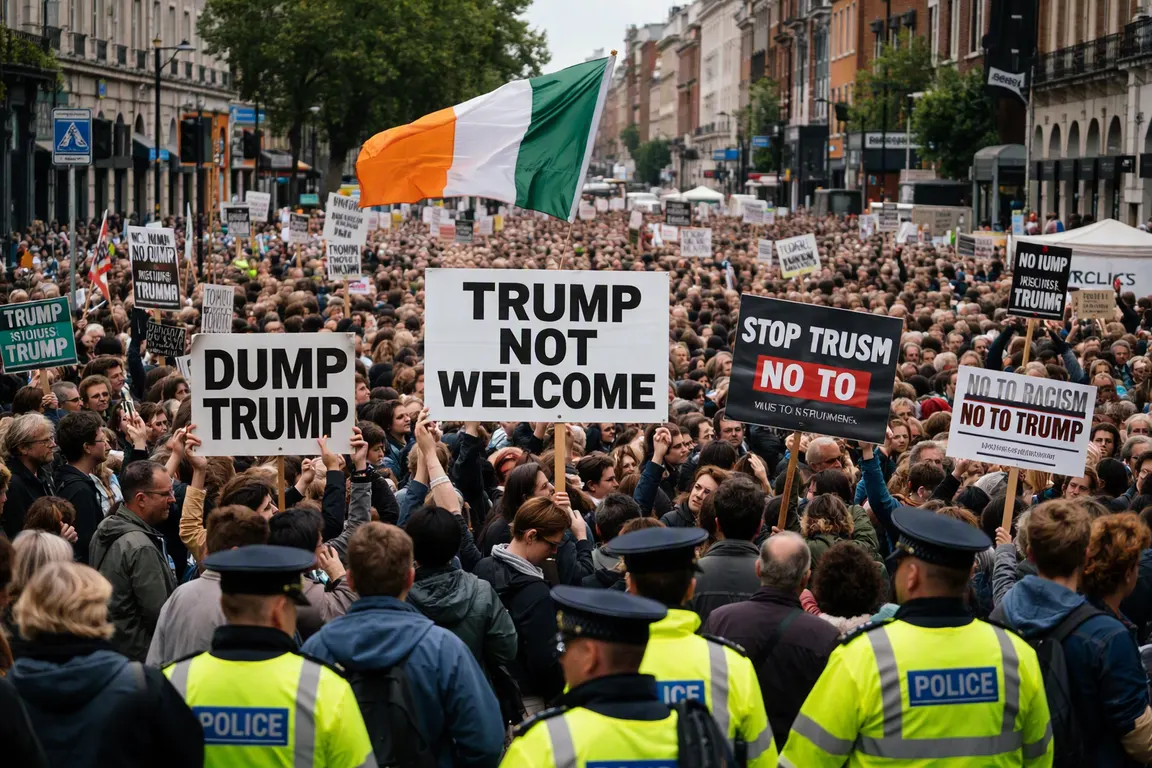
President Donald Trump arrived in Dublin on Saturday for a two‑day visit that combines a meeting with Taoiseach Micheál Martin and a round at the Irish Open. The Trump Dublin summit has prompted coordinated protests across the city, adding security and traffic challenges for authorities.
The itinerary began with a reception at the Farmleigh estate, where Trump is expected to discuss "mutual interest" with Martin, according to a statement from the Irish government. Officials said the talks will reaffirm economic, cultural and people‑to‑people ties but did not disclose specific policy proposals. The meeting follows a series of U.S.–Ireland trade discussions that have been ongoing for years, and analysts say any concrete agreements are likely to emerge after the visit.
Security for the visit is being coordinated by the Garda Síochána in partnership with the U.S. Secret Service. Officers have been deployed along the route to Farmleigh, at the Irish Open venue in County Meath and at designated protest sites in Dublin. Climate‑action and human‑rights groups have announced marches with slogans such as "We don’t want him here," planning to gather outside the hotel where the president is staying and along the main thoroughfares leading to the golf resort.
The Irish Open, held at a resort linked to Trump’s business interests, is expected to draw international spectators and media crews. The tournament typically boosts local hotels, restaurants and transport services. Early estimates suggest the two‑day visit could add several hundred thousand euros to Dublin’s tourism revenue. At the same time, large protest crowds may deter some visitors and create traffic congestion, prompting the Garda to reroute buses and adjust public‑transport schedules.
Residents have reported altered traffic patterns and a noticeable increase in police presence. While some commuters appreciate the heightened security, others worry that routine policing resources are being diverted from neighbourhood patrols. Community leaders have called for clear communication from the city council about road closures and protest routes to reduce inconvenience.
Media coverage varies. The Guardian highlighted the diplomatic meeting, emphasizing the potential for renewed bilateral cooperation. The Independent foregrounded the protests, describing them as a dominant narrative that could shape public perception. The New York Post focused on the golf tournament, noting the commercial link to Trump’s brand. None of the reports provided definitive crowd‑size figures, reflecting the difficulty of measuring protest participation in real time.
The dual‑track nature of the visit—official state business alongside a high‑visibility sporting event—has prompted Dublin’s emergency services to review coordination protocols. Lessons from the deployment may inform future planning for events that combine political and recreational elements.
As Trump prepares to play the final round of the Irish Open on Sunday, security officials will continue to monitor protest activity and adjust deployments as needed. The outcome of the talks between Trump and Martin remains uncertain, leaving observers to watch for any statements on trade or cultural initiatives that may follow the meeting.