

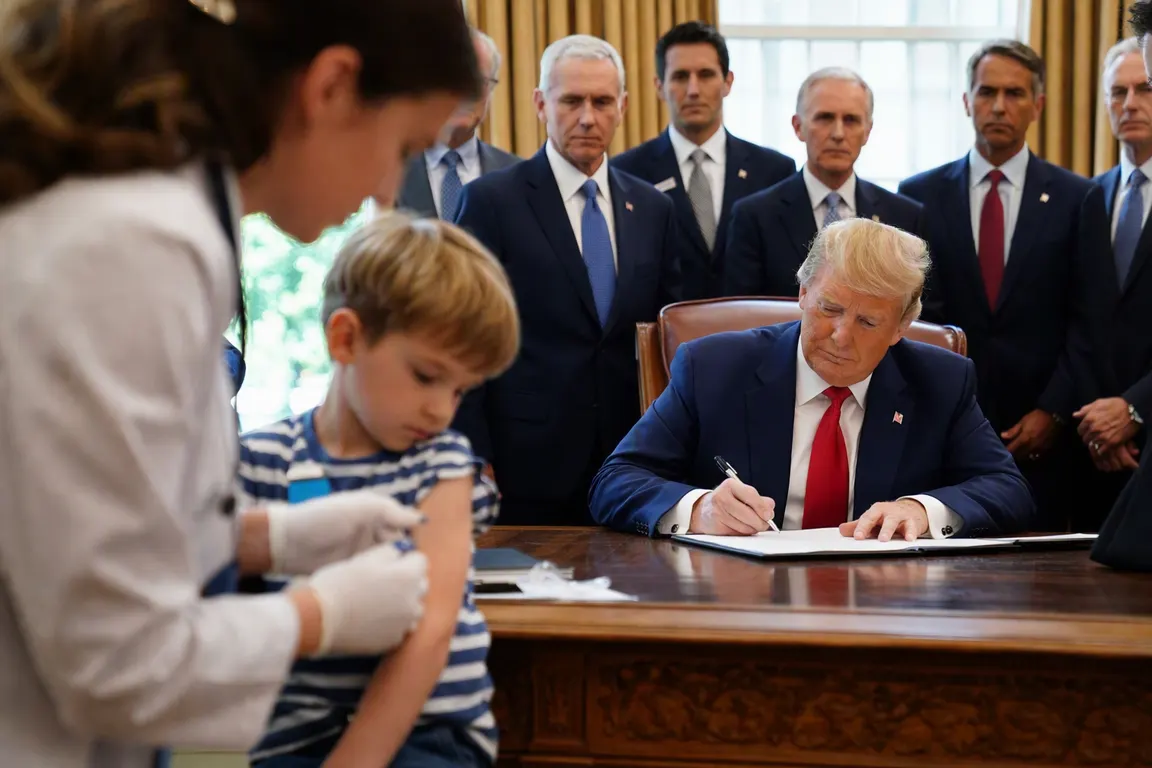
President Trump signed an executive order on August 10, 2026, calling for changes to the childhood vaccine schedule, sparking controversy among public health experts. The order recommends administering the measles, mumps, and rubella (MMR) vaccine in three separate shots, which has raised concerns about the potential impact on public health and safety.
The American Academy of Pediatrics has criticized the move, citing decades of scientific research that supports the current vaccine schedule. The Centers for Disease Control and Prevention (CDC) and other health organizations have also expressed concerns about the potential risks of delaying vaccinations, including an increased risk of infectious diseases.
The executive order has significant implications for children and families who rely on vaccinations to prevent infectious diseases. States have the authority to require vaccinations for schoolchildren, not the federal government, which has led to questions about the potential impact of the order on state-level vaccination requirements and regulations. The Department of Justice, Department of Education, and Department of Health and Human Services have been directed to ensure compliance with constitutional and federal statutory obligations.
As the new school year begins, public health experts and lawmakers will be closely watching the impact of the order on vaccination rates and the spread of infectious diseases. The CDC and other health organizations will likely play a crucial role in monitoring the effects of the order and providing guidance to states and healthcare providers. The order has been criticized by some lawmakers, who argue that it could put children's health at risk.
The controversy surrounding the order highlights the ongoing debate about vaccine safety and efficacy. While some people have raised concerns about the potential risks of vaccines, the overwhelming scientific evidence supports their safety and effectiveness. The CDC and other health organizations have consistently stated that vaccines do not cause autism, and that the benefits of vaccination far outweigh the risks.
As the situation unfolds, it is likely that the order will face legal and legislative challenges. The impact of the order on public health and safety will depend on how states and healthcare providers respond to the changes. The CDC and other health organizations will play a critical role in monitoring the effects of the order and providing guidance to ensure that children and families receive the vaccinations they need to stay healthy and safe.