

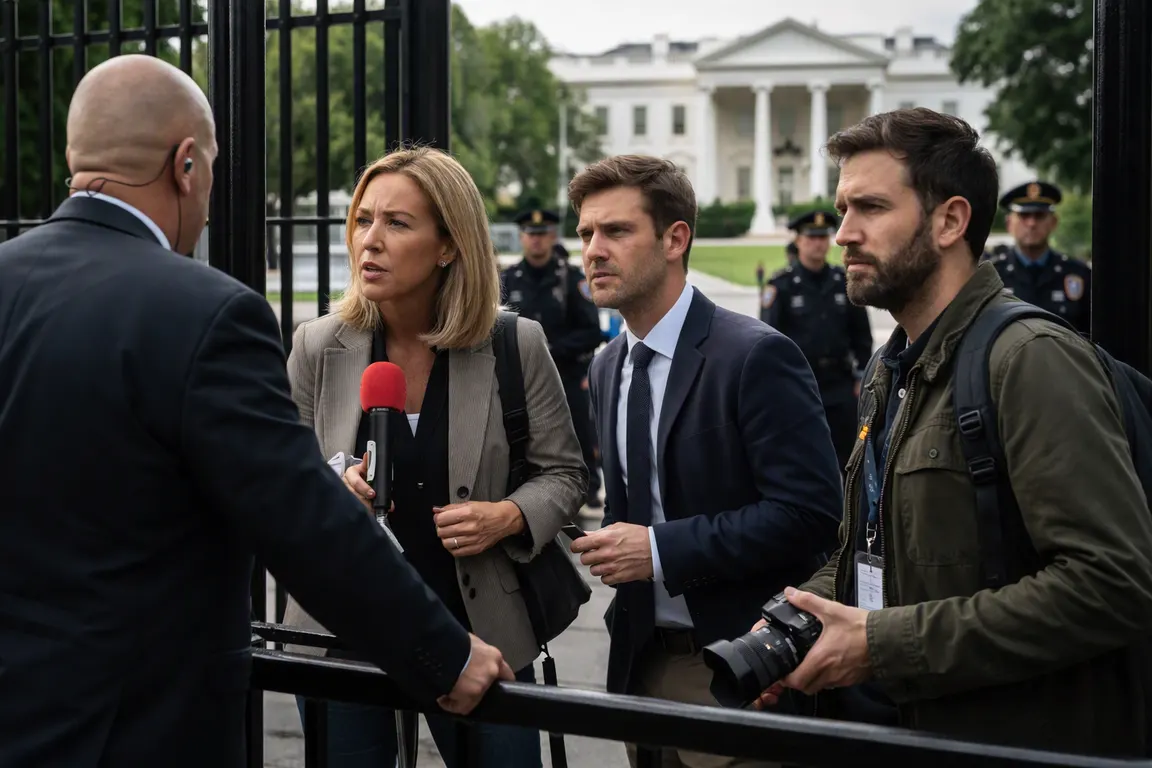
President Donald Trump announced on September 18, 2026 that CNN, MS NOW and Politico are barred from White House press facilities. The notice, posted on his Truth Social account, took effect immediately and adds the three outlets to a list of organizations previously excluded from certain presidential spaces. This action, described as "Trump bans CNN Politico," marks the latest restriction on media access.
The ban comes as the White House press pool operates without a press secretary and daily briefings have been irregular. Removing three members of the pool reduces the number of journalists who can ask questions in real time and may alter the flow of information to the public.
Trump’s post quoted his own language: "constant ‘reporting’ FAKE NEWS!" No official comment was available from the White House or from representatives of the three outlets at the time of reporting. The post did not specify the incidents that prompted the action, and sources differ on whether the ban applies only to physical access to the West Wing or also to participation in press‑pool rotations. The Independent World emphasizes the latter, while BBC and Al Jazeera describe the action as a broader "White House ban."
The decision follows a pattern established in 2024 when Trump barred the Associated Press after a dispute over the outlet’s style guide. A federal judge later issued a preliminary injunction, finding that ban violated the First Amendment. In mid‑2025 an appeals court partially lifted that injunction, allowing the ban to remain in the Oval Office and on Air Force One but restoring AP access to the East Room. Legal scholars note that the precedent remains unsettled; courts recognize a president’s discretion over certain press spaces but warn that exclusions cannot be used to punish unfavorable coverage.
For journalists at CNN, MS NOW and Politico, the immediate impact is loss of on‑site access to the president and senior staff, limiting opportunities for follow‑up questions during briefings. The outlets will likely rely more on secondary sources, remote feeds or social‑media monitoring to cover White House activity. Media‑monitoring firms expect short‑term shifts in audience metrics as viewers adjust to altered coverage, and advertising rates could be affected if viewership patterns change.
The broader public interest lies in how the ban influences transparency. With fewer reporters able to press the administration directly, the public may receive fewer real‑time accounts of policy announcements and briefings. Advocacy groups have called for a prompt judicial review, arguing that the action tests the limits of First‑Amendment protections for the press.
The White House has not issued a formal statement clarifying operational details, and it is unclear whether the ban will extend to other press‑pool activities such as daily briefings or the distribution of briefing materials. Trump hinted that additional bans could follow, though no further outlets were named.
The next step is likely a legal challenge from the excluded organizations. Both CNN and Politico have historically litigated access disputes, and MS NOW’s legal team is expected to file a suit within weeks. Courts will have to balance the president’s authority over security‑sensitive spaces against established First‑Amendment jurisprudence, a question that could shape press‑government relations for future administrations.