

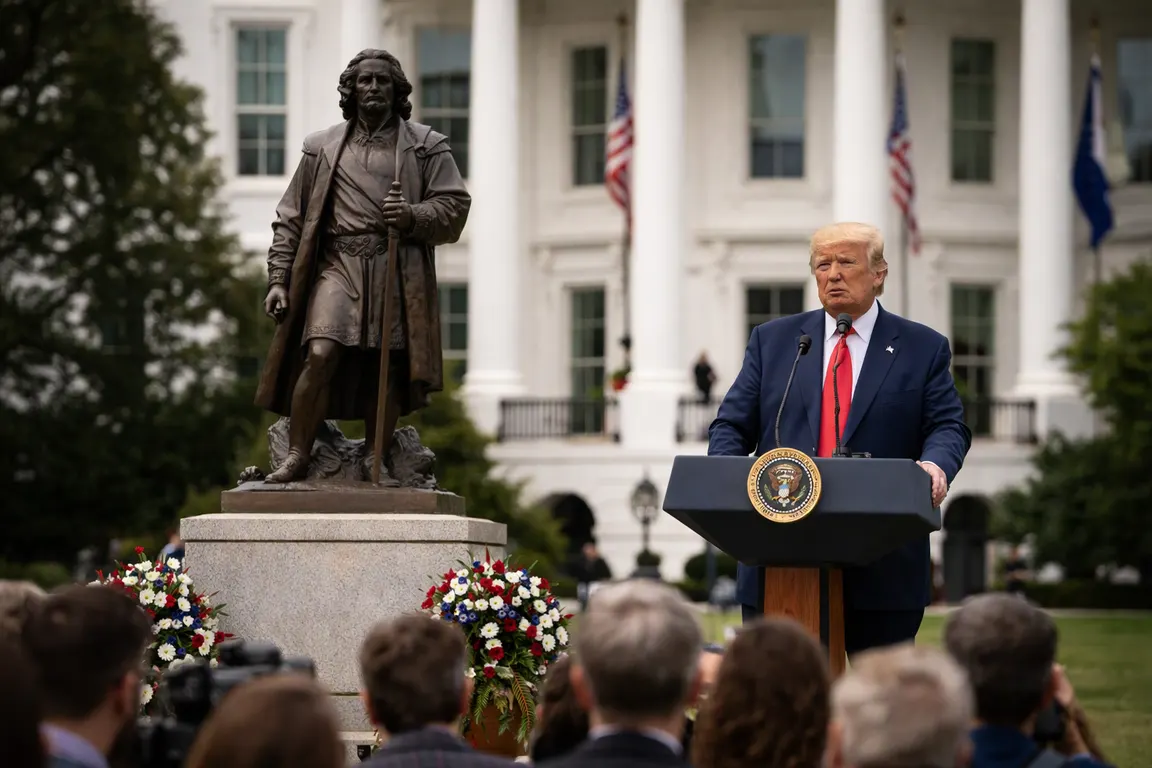
President Donald Trump issued a Columbus Day proclamation on Oct. 8, 2026, designating Oct. 12, 2026 as Columbus Day. The same administration placed a replica of a Columbus statue, removed during the 2020 George Floyd protests, in front of the White House in March. Both actions signal a federal effort to revive a holiday that has been contested for years.
The proclamation carries symbolic weight. While it does not change pay or legal status for federal workers, it could influence school curricula, state and local holiday calendars, and the push for Indigenous Peoples’ Day. Republican lawmakers and conservative commentators have framed the move as a defense of American heritage. Indigenous groups and many Democratic officials argue that honoring Columbus marginalizes Native histories.
The statement praises Columbus as a “legend” whose voyages “unleashed a dynamic of history,” contrasting with a 2021 Biden administration message that emphasized apologizing for Columbus’s legacy and highlighted Indigenous perspectives. No legislation has been introduced to make Columbus Day a paid federal holiday; the decree remains ceremonial.
The statue’s placement has already prompted local governments in New York, Ohio and Texas to review their own holiday observances, though decisions are still pending. School districts are weighing whether to adjust lesson plans or holiday schedules, a process that could affect teachers’ planning cycles and student learning about early American history. Indigenous advocacy organizations are preparing events for Indigenous Peoples’ Day in September and warn that the federal proclamation may dilute public attention and funding for those initiatives.
The controversy is likely to surface in future legislative debates about how the nation commemorates its past. Lawmakers may cite the proclamation as a precedent when proposing changes to the federal holiday calendar, and community leaders will watch local responses for signs of broader public sentiment. As municipalities consider dual observances or alternative recognitions, the coming weeks will reveal whether the symbolic move translates into concrete policy shifts or remains a contested cultural statement.