

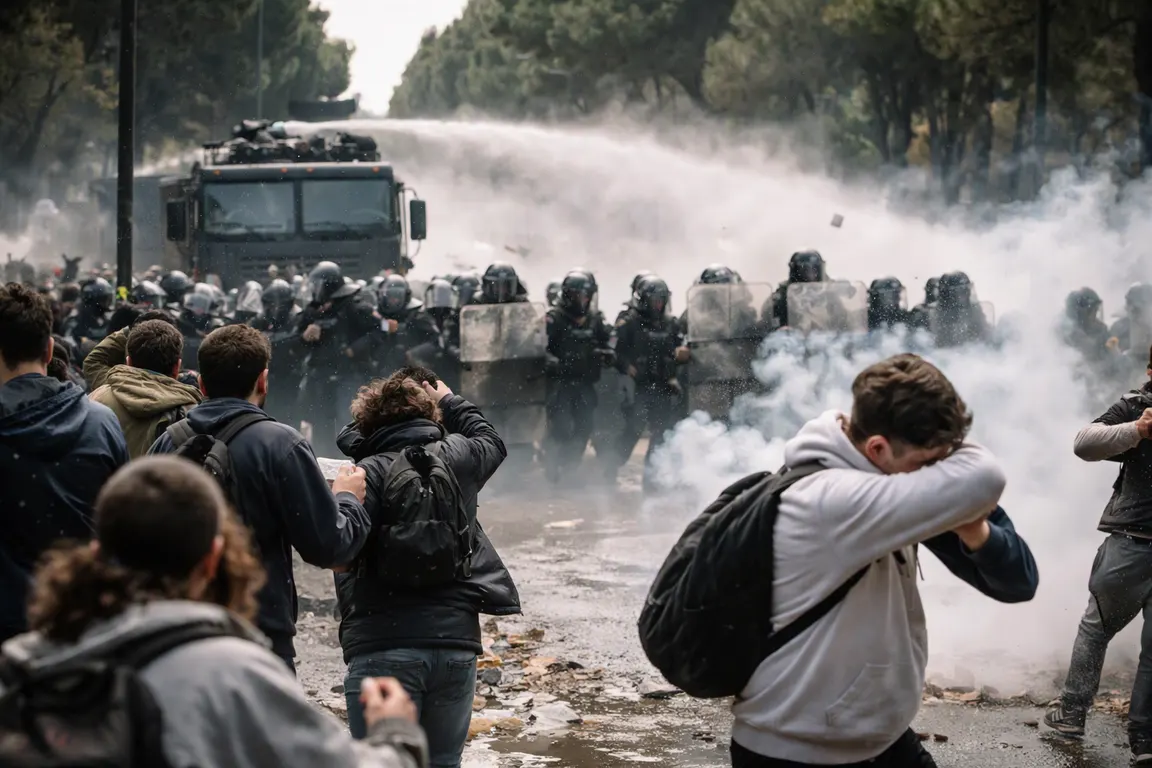
Police confronted student demonstrators in Tirana on Tuesday, using rubber bullets, water cannons and tear‑gas canisters as hundreds of students called for Prime Minister Edi Rama’s resignation. The clash marked the sixth consecutive day of unrest in the capital and was accompanied by the removal of paving stones outside the prime minister’s office, a visual sign of the escalation.
The protests pose an immediate public‑safety risk, disrupt commerce and transport in central Tirana, and could be cited by European Union officials as evidence of political instability that threatens Albania’s accession timetable. While the EU has not directly linked the demonstrations to the membership process, the turmoil arrives at a critical stage of the country’s reform agenda.
Student groups launched the protests over grievances that include perceived corruption and a lack of transparent governance. Their core demand is Rama’s resignation, which they say is needed to keep Albania on track for the reforms required for EU integration. Over the past five days, police response intensified from standard crowd control to the use of rubber‑bullet projectiles, high‑pressure water streams and tear‑gas canisters.
The heightened tactics forced the closure of several central streets, halted public‑transport routes and limited foot traffic to shops and cafés that rely on daily customers. On the sixth day, footage showed excavators pulling up paving stones outside the prime minister’s office, a step authorities have not publicly explained. The removal coincided with Rama’s comment to The Independent that the protests constitute a “threat to the country’s EU accession.”
Local residents report heightened anxiety and difficulty navigating the city. Commuters face detours and delays, while businesses in the affected zones have seen a sharp dip in patronage. Some shop owners describe broken windows and damaged storefronts, though no official tally of property damage exists. Health officials have not released casualty figures, and police have not confirmed any arrests.
International investors are watching the situation closely. Albania’s EU bid is tied to economic and governance reforms that attract foreign capital. Prolonged street violence could dampen confidence, potentially slowing the flow of EU‑linked funding and delaying projects that depend on a stable investment climate.
The protests have not yet prompted a shift in government policy. Rama’s administration maintains its current course, and the EU has not issued a formal assessment linking the unrest to accession criteria. As the capital remains on edge, the next steps hinge on whether dialogue between student leaders and authorities can de‑escalate the situation, or whether police measures will intensify further. The unresolved question—whether the street‑level clash will translate into concrete political change or remain a temporary disruption—remains central to Albania’s near‑term trajectory.