

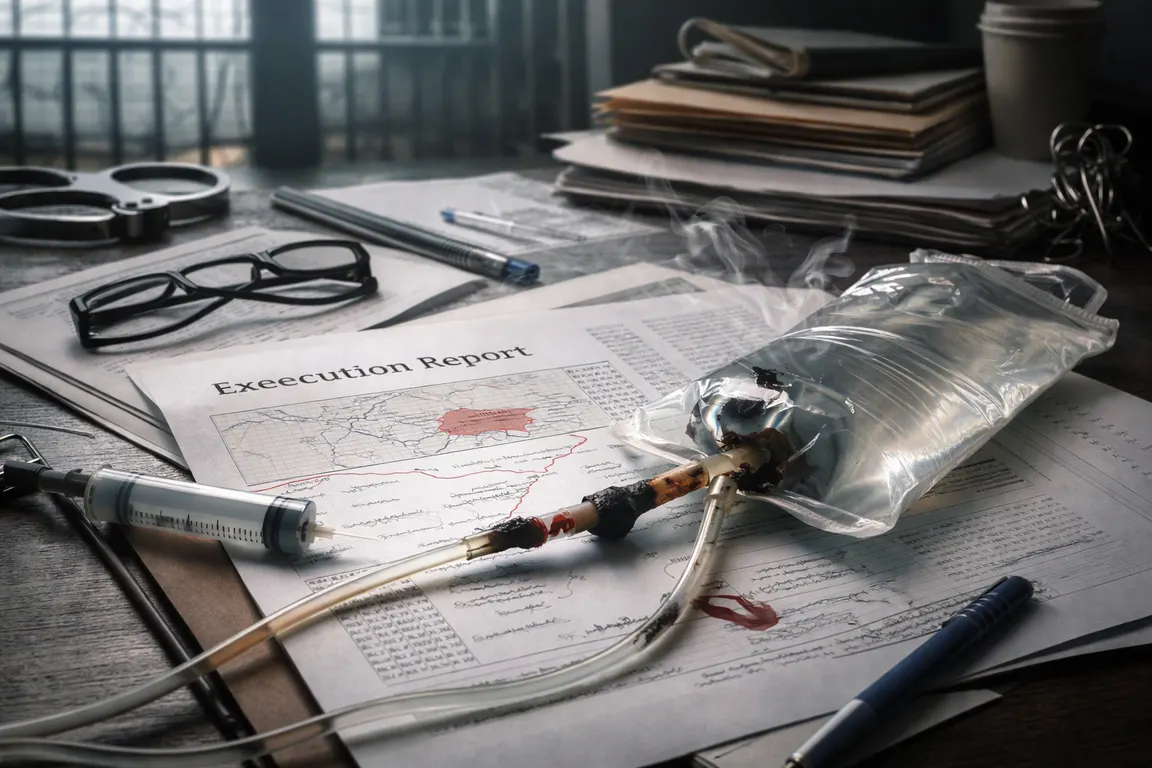
Tennessee's execution of convicted murderer Christa Pike on Sept. 30, 2023, failed when the pentobarbital infusion did not enter her bloodstream, resulting in a botched Tennessee execution. The drug pooled in her arm tissue, causing severe burns and a hospital stay that lasted more than a week.
Pike, 50, was sentenced to death for the 1995 beating and stabbing of classmate Colleen Slemmer. Prison officials placed two doses of pentobarbital in an intravenous line that, according to medical experts cited in news reports, was misplaced. The resulting reaction blistered her arms, required emergency care, and left her on a ventilator until Oct. 2. By Oct. 5 she was walking with assistance and eating on her own.
Governor Bill Lee postponed the state's only other scheduled execution, ordered a comprehensive review of the lethal‑injection protocol, and accepted the resignation of the prison chief. Pike's attorneys have asked Lee to commute her sentence to life without parole, but no decision on a second execution attempt has been announced.
The botched injection adds to a growing list of lethal‑injection failures across the United States. Legal scholars note that a failed execution can trigger Eighth‑Amendment challenges, arguing that repeated attempts may constitute cruel and unusual punishment. Courts have not yet ruled on Pike's case, but the incident underscores the legal risk of continuing the practice.
State law bars medical professionals from participating in executions, yet their expertise is needed to diagnose procedural flaws. The lack of an official explanation for the IV error leaves a gap in accountability and fuels calls for transparent, science‑based protocols—or for abandoning lethal injection altogether.
Tennessee's prison system faces immediate operational changes. Staff must revise training, secure reliable drug supplies, and consider alternative methods while addressing public concern and the expectations of victims' families. The financial cost of the botched execution—hospital care, legal challenges and administrative reviews—adds pressure to a system already strained by budget constraints.
Nationally, the Pike case could influence other states that rely on similar drug cocktails. If Tennessee's review leads to stricter safeguards or a moratorium, it may set a precedent that reshapes execution practices, affecting legal strategies, prison operations and public confidence in the criminal‑justice system.
The review panel is expected to release its findings in the coming weeks. The governor's office has not indicated when—or if—a second attempt will be scheduled. Meanwhile, Pike's attorneys continue to pursue commutation, and advocacy groups are preparing potential lawsuits that could further delay any future execution.
The episode illustrates how a single procedural failure can reverberate far beyond a condemned inmate's hospital bed, forcing lawmakers, courts and the public to confront the mechanics of state‑sanctioned death.