

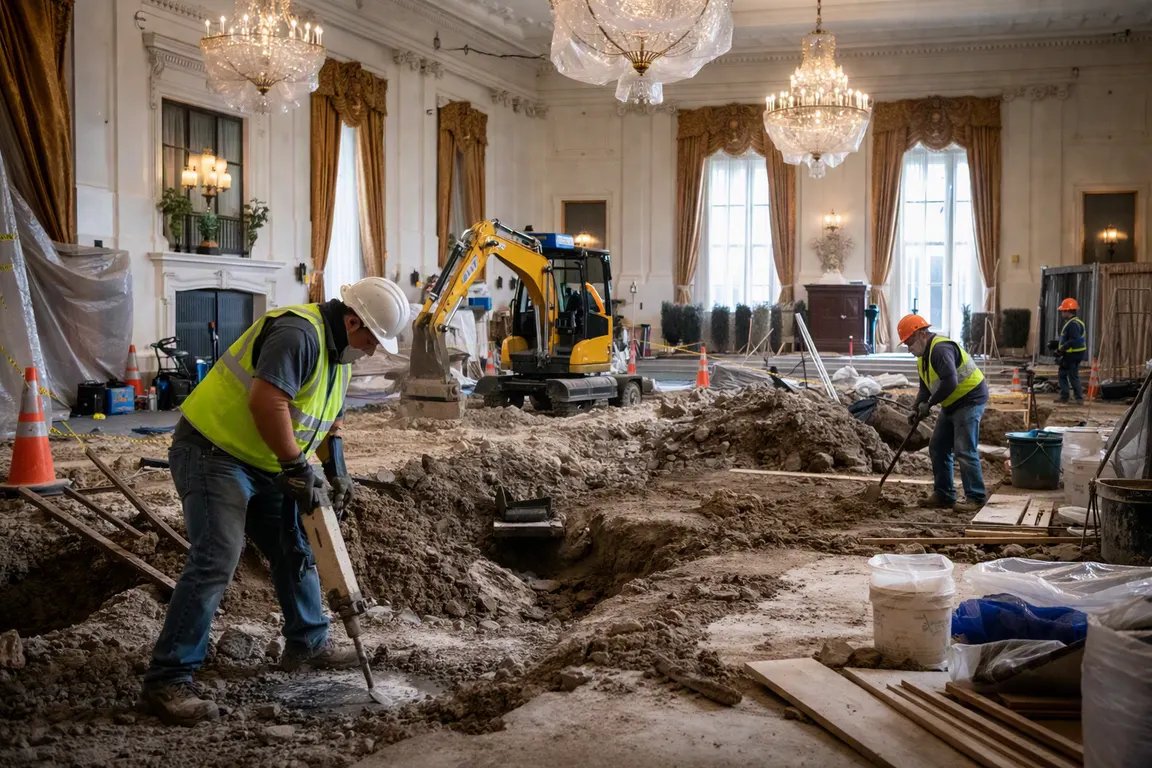
The U.S. Supreme Court on Aug. 31 issued a 5‑4 stay of a lower‑court order that had stopped work on the White House East Wing ballroom renovation, allowing construction to resume while a historic‑preservation lawsuit proceeds.
The stay does not resolve the case but temporarily broadens the administration’s ability to alter a nationally protected landmark. Preservation groups argue the project may violate the National Historic Preservation Act, while the White House says the halt would expose the unfinished steel frame to weather, risking costly damage.
Construction began in September 2025 after a portion of the East Wing was demolished. The new ballroom, planned at 90,000 square feet, would accommodate up to 1,000 guests—significantly larger than the original 650‑guest design. Initial cost estimates were $200 million; sources say the budget has since doubled, though the exact figure remains undisclosed.
Two lower courts had ruled the renovation illegal and ordered a stop‑work, citing the White House’s historic status. In an unsigned eight‑page opinion, the Supreme Court majority held that it could not intervene while the underlying suit is pending, granting the stay. Chief Justice John Roberts joined a dissent written by the three liberal justices, calling the construction “likely unlawful” and warning that the White House’s symbolic significance demands strict adherence to preservation law.
The preservation lawsuit will continue in the district court, where judges will decide whether presidential construction authority can override federal historic‑preservation statutes. A definitive ruling could arrive in months, but the Supreme Court’s stay means work will proceed in the meantime.
If the ballroom is completed, the administration will still need to address security and maintenance costs that typically fall to the federal budget. Lawmakers have indicated that a future GOP‑controlled Congress could appropriate funds for any required upgrades, meaning taxpayers could ultimately bear some of the expense. Conversely, a final ruling against the project could force costly demolition or retrofitting to restore the historic fabric.
Preservation advocates warn that the exposed steel girders now jutting from the East Wing threaten the building’s architectural integrity and could set a precedent for future executive‑branch projects that sidestep preservation safeguards. Contractors and material suppliers, however, stand to benefit from the high‑visibility contract.
The next procedural step is a hearing in the district court handling the suit. Judges will assess whether the President’s construction authority can supersede the protections afforded by historic‑preservation law, a decision that will shape how federal historic sites are altered in the future.