

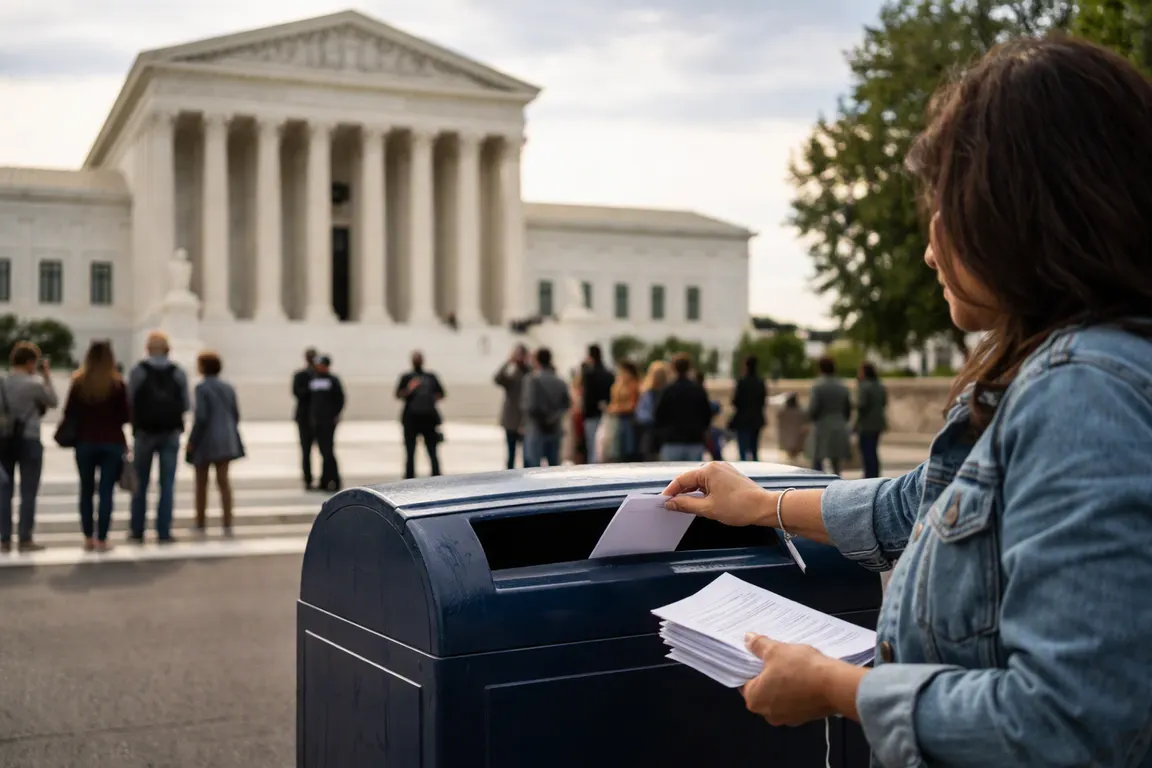
The U.S. Supreme Court on Monday denied the Trump administration’s request to lift a federal judge’s temporary injunction on the Supreme Court mail‑in ballot rule, keeping the existing framework in place for the November 2024 elections.
The decision comes weeks before voters head to the polls. By refusing to overturn the lower‑court order, the Court ensures that the procedures currently used by millions of Americans—particularly seniors, people with disabilities and voters in swing states—remain unchanged. Election officials, campaign staff and postal workers can continue to operate under a known set of rules rather than scrambling to implement a contested policy.
The rule at issue, approved by the Postal Service earlier this year, would have expanded handling procedures for mail‑in ballots in the upcoming midterms. The administration argued the change would improve ballot security and speed delivery, but a federal judge blocked it pending further review. The Supreme Court’s order did not address the merits of the rule; it simply left the injunction in place, preserving the status quo while litigation continues.
All three justices appointed by former President Donald Trump joined the majority in keeping the block. President Trump later posted on Truth Social that the decision was “a big loss for Republicans” and accused the Court of being “bullied by the Radical Left.” Those remarks were reported by several outlets, but the Court’s order itself carries no policy change—it merely maintains existing mail‑in voting procedures.
For voters who rely on absentee ballots, the ruling removes the uncertainty of a sudden procedural shift. Seniors and disabled voters, who often depend on the postal system to cast their ballots, can continue to follow familiar timelines for requesting, receiving and returning mail‑in ballots. State and local election officials also avoid the logistical challenges of retraining staff, updating voter‑information portals and reallocating resources on short notice.
Campaigns on both sides must now plan around the established mail‑in calendar. Strategies that anticipated new deadlines or altered ballot‑handling requirements will need to be adjusted, but core outreach efforts—such as early‑voting drives and targeted mailings—remain largely unchanged. The decision also spares the Postal Service from a potential surge in workload that the proposed rule might have imposed.
Legal analysts note that the Court’s refusal to intervene sets a precedent for future election‑law challenges. By allowing lower‑court injunctions to stand, the Court signals that abrupt, nationwide changes to voting procedures close to an election will face a high hurdle. The case will likely return to the district court for a full merits hearing, leaving the ultimate fate of the Postal Service rule unresolved.
As the midterm calendar tightens, election officials will monitor the ongoing litigation for any further developments. The next procedural milestone will be the district court’s decision on the merits of the rule, which could reopen the debate over mail‑in ballot handling in time for the 2026 election cycle. Until then, the current system remains the operative framework for millions of voters preparing to cast their ballots by mail.