

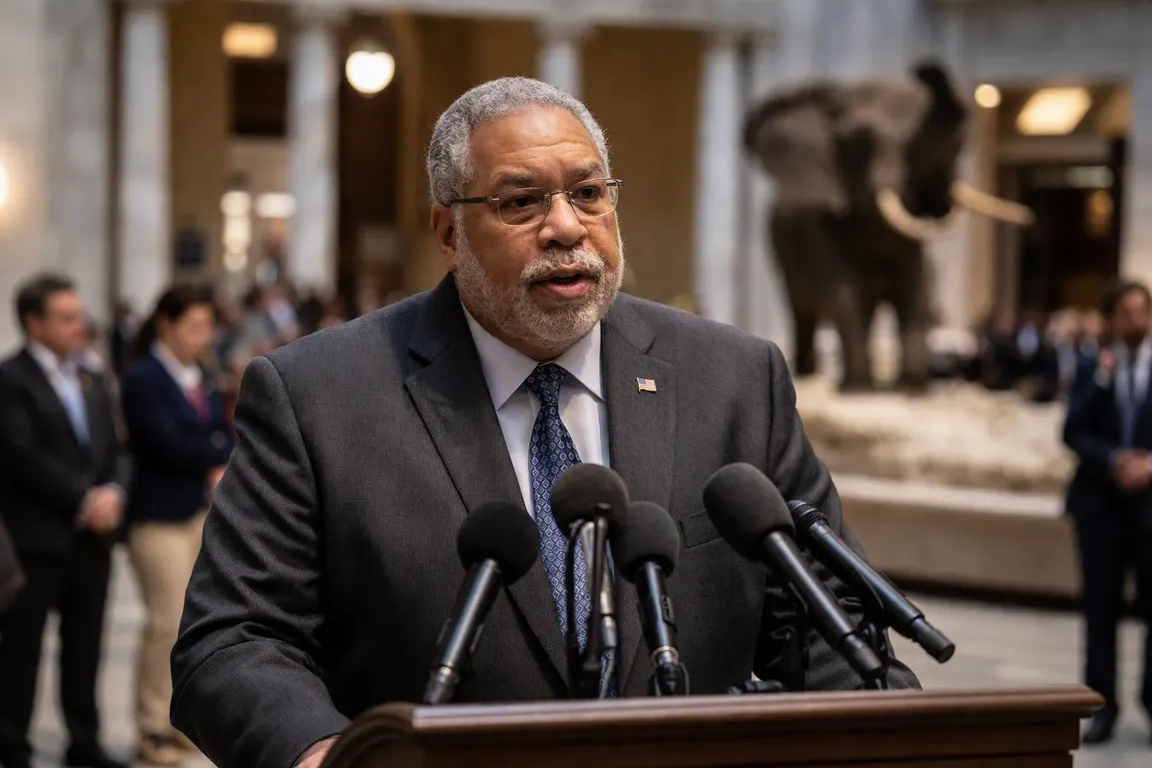
Smithsonian Secretary Lonnie G. Bunch III announced Tuesday that he will leave his post by the end of 2023, marking a Smithsonian leadership transition that comes amid political pressure.
Bunch, the museum complex’s first Black secretary, said the decision was made “with very mixed emotions,” ending a tenure that began with President Joe Biden’s 2021 appointment.
His departure follows repeated requests from the Trump administration for the Smithsonian to alter or remove exhibits that portray the United States in a critical light, including displays on slavery and the forced removal of Native Americans. NBC News and Al Jazeera reported those requests, placing the museum at a crossroads of editorial independence, federal funding and public confidence.
The Smithsonian operates on an annual budget of roughly $1.9 billion, a large share of which funds museum operations and exhibit development. A change in leadership could affect how the agency balances donor expectations, congressional appropriations and its mandate to present a comprehensive record of American history. With about 20,000 staff members awaiting guidance, the transition also raises questions about internal governance and the future of projects such as the National Museum of African American History and Culture, which opened under Bunch, and a $1.5 billion capital campaign that added new galleries and research facilities.
During Bunch’s tenure the Smithsonian completed the African American History and Culture museum, expanded digital outreach and exceeded its $1.5 billion fundraising goal. At the same time, former President Donald Trump publicly labeled certain displays “unpatriotic.” While news reports have documented those comments, the precise nature of any formal policy demands remains unclear. The Independent framed the resignation as a response to “Trump attacks,” but other outlets emphasized Bunch’s mixed feelings, leaving the balance of personal versus political factors open to interpretation.
The Board of Regents, which governs the Smithsonian, has not yet named a successor. It will conduct a nationwide search that will likely weigh experience in museum administration, commitment to scholarly integrity and ability to navigate political pressure. The choice could shape how the agency responds to future exhibit‑revision requests and may affect donor confidence. Private contributions have historically complemented federal appropriations, and any perception of political interference could sway both streams.
Scholars, educators and the millions of annual visitors rely on the Smithsonian’s exhibits to inform curricula and public understanding of contentious chapters such as slavery, indigenous displacement and civil‑rights struggles. A shift in editorial policy could alter that understanding, and congressional oversight of federal funding may respond if lawmakers view the agency as either resistant or compliant with external pressures.
The next steps are clear: the Board of Regents will launch a search for a new secretary, while senior museum leaders continue day‑to‑day operations. Observers will watch whether contested displays are revised before year‑end and how Congress and private donors react to the leadership change. The Smithsonian’s ability to maintain its scholarly mission amid political scrutiny remains an open question.