

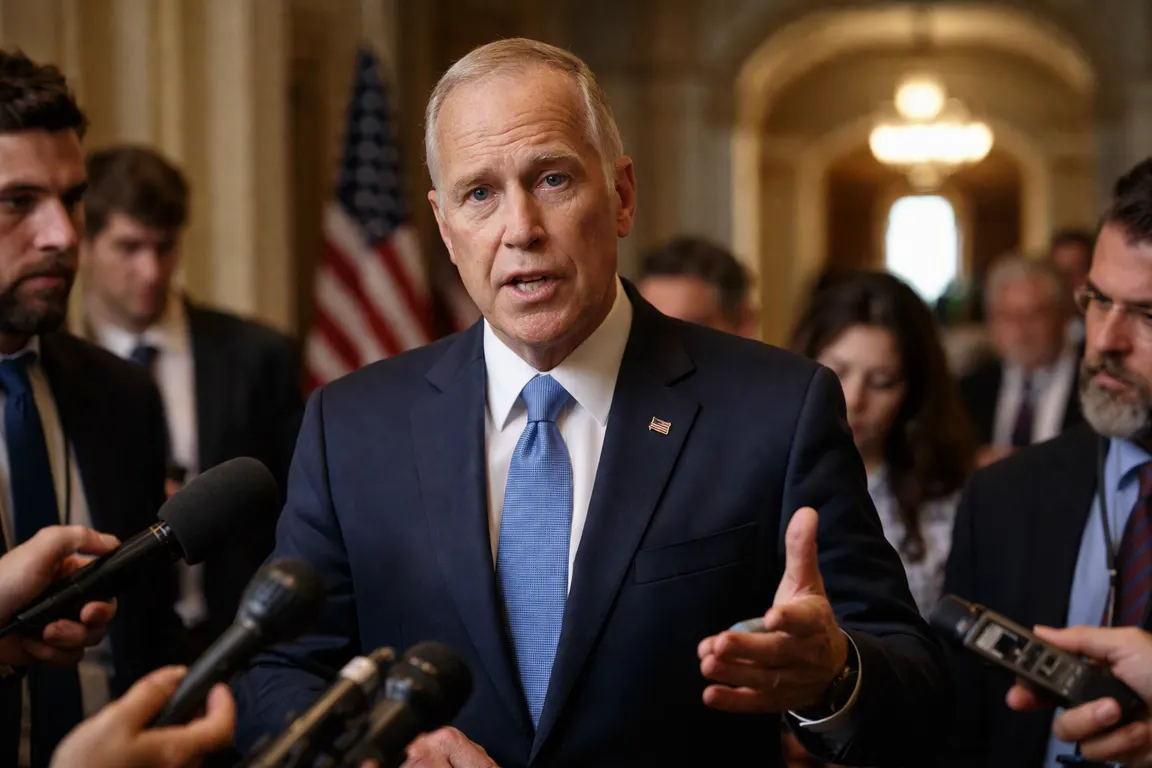
Republican Sen. Thom Tillis of North Carolina urged President Donald Trump on Tuesday to fire Defense Secretary Pete Hegseth, accusing the Pentagon chief of "inept mismanagement" as the United States confronts an escalating war with Iran. Tillis’s demand comes about 18 months after he voted to confirm Hegseth to the post.
The call arrives while the Pentagon is already stretched by heightened air‑defense alerts, expanded logistics missions and other operational pressures tied to the Iran conflict. Hegseth’s confirmation in early 2023 was backed by Tillis and other Republicans. Since then, the war with Iran has increased demands on U.S. forces in the region.
In a recent interview, Tillis described the secretary’s management as “inept,” linking perceived shortcomings to the strain on service members. The senator offered no specific examples of policy failures or operational errors, and officials consulted did not cite concrete directives that would substantiate the claim.
The criticism occurs against a backdrop of recent resignations and dismissals at senior levels of the Army and the Defense Department. Al Jazeera called the latest departure the "latest loss at the top" of the military hierarchy, raising questions about institutional stability. Analysts caution, however, that a single leadership change is unlikely to alter ongoing operations in a decisive way.
If Hegseth were removed, the Defense Department would need to name an interim secretary and possibly reshuffle senior staff. Such a transition could briefly divert attention from operational planning, affect morale among troops who perceive leadership turmoil, and create uncertainty for defense contractors about procurement priorities. U.S. allies monitoring the Iran confrontation might also reassess the reliability of American command structures, potentially influencing joint exercises and intelligence sharing.
Congressional support for Tillis’s demand appears limited. No other senators have publicly echoed the call for dismissal, and the statement seems isolated rather than part of a broader bipartisan effort. The lack of a coordinated legislative push suggests the issue is more political maneuvering than a policy‑driven initiative.
President Trump has not responded, and the Defense Department has made no indication that a leadership change is forthcoming. As the conflict with Iran evolves, the Pentagon will continue to balance operational imperatives with the political dynamics surrounding its senior leadership.
Observers will watch for any formal action—whether a resignation, a dismissal or a reaffirmation of Hegseth’s authority—that could reshape the command environment and, by extension, the United States’ ability to sustain its military posture in the region.