

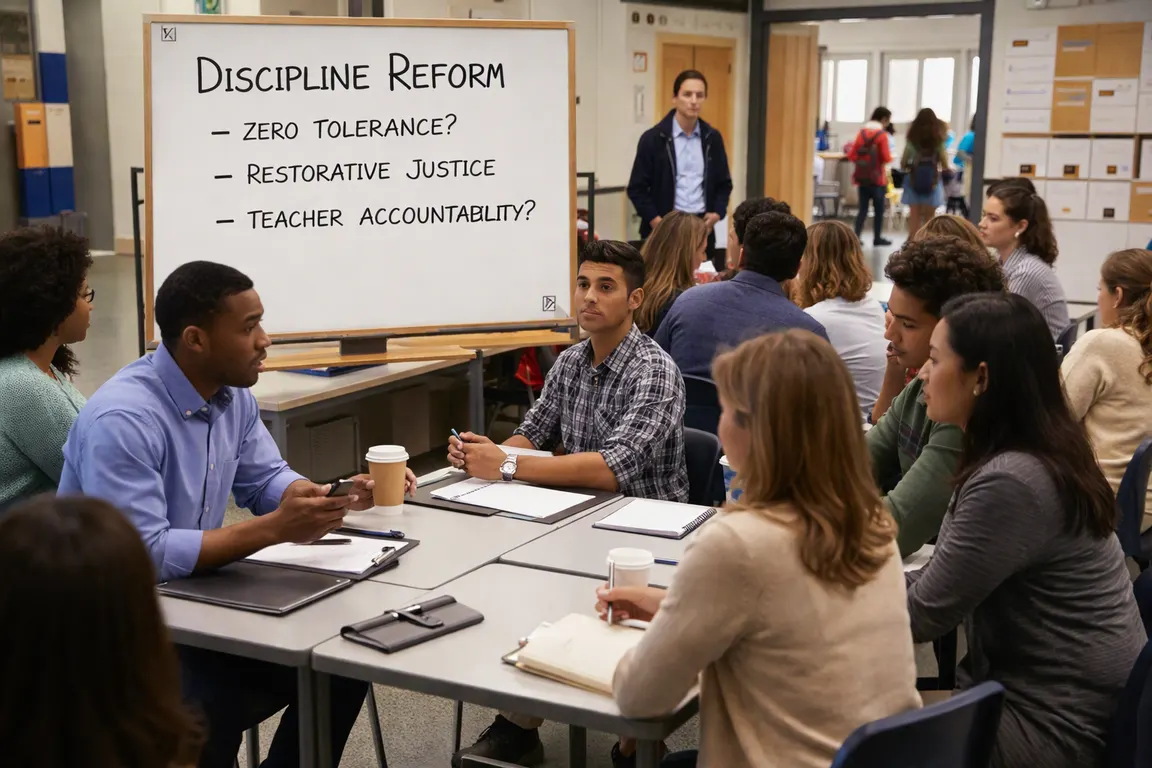
Calls for stricter school discipline reform and tighter teacher accountability are gaining traction as opinion pieces question the impact of Nikole Hannah‑Jones’s high‑profile advocacy for low‑income Black urban schools. The debate pits a handful of editorial columns against a growing chorus of educators and lawmakers who argue that concrete policy levers, not celebrity narratives, should drive reform.
Policymakers and educators are wrestling with persistent achievement gaps, and the discussion has sharpened around whether well‑known voices are crowding out actionable changes that could affect thousands of students now. Discipline policies and teacher‑evaluation systems directly shape school climate, resource allocation and student outcomes in districts where resources are already stretched thin.
Two RealClearPolitics opinion pieces – “Nikole Hannah‑Jones Is a Good Mom With Bad Theory” and “So What Are Democrats Supposed To Do About Schools?” – argue that Hannah‑Jones’s public statements divert attention from what the authors call “discipline, accountable teachers, and a reduction in ideology that excuses chaos.” A National Review column, “Nikole Hannah‑Jones’s Daughter Is Not the Only Victim,” expands the critique to a broader progressive agenda, suggesting that racial‑justice framing places collective goals above individual student needs. None of the pieces cite specific bills, budget lines or district‑level initiatives linked to Hannah‑Jones’s advocacy, nor do they provide data on test scores, graduation rates or teacher‑performance metrics.
The three columns share a common limitation: they are editorial commentary, not investigative reporting, and they reflect the political leanings of their outlets – centrist‑right for RealClearPolitics and conservative for National Review. The absence of empirical support leaves a gap that policymakers must fill with research‑based proposals.
Opinion writers cite tighter behavior codes, expanded use of out‑of‑school suspensions and performance‑based teacher contracts as alternatives. Proponents point to studies that link clear expectations and consistent enforcement to reduced disruptions and higher test scores in some urban districts. Critics warn that punitive approaches can increase absenteeism and widen racial disparities when applied without due‑process safeguards.
Several districts have experimented with the levers highlighted by the critics. Chicago Public Schools introduced a revised discipline framework in 2022 that paired restorative practices with clear consequences for repeated infractions. Early reports showed a modest decline in suspension rates, but the impact on academic achievement remains mixed. Dallas Independent School District piloted a teacher‑evaluation model that tied bonuses to student growth metrics, prompting praise for incentivizing performance and concerns about teaching to the test.
The conversation raises practical questions for teachers. Stricter discipline rules may increase administrative workload, while performance‑based contracts could shift instructional focus toward measurable outcomes at the expense of broader learning goals. Unions and educator groups have called for balanced reforms that combine accountability with professional development and support services.
State education commissions in several states are slated to hear testimony on discipline reform and teacher evaluation next month. Those hearings will likely become the next arena where the clash between celebrity‑driven advocacy and policy‑focused solutions plays out, offering legislators a chance to weigh anecdotal criticism against evidence‑based strategies.