

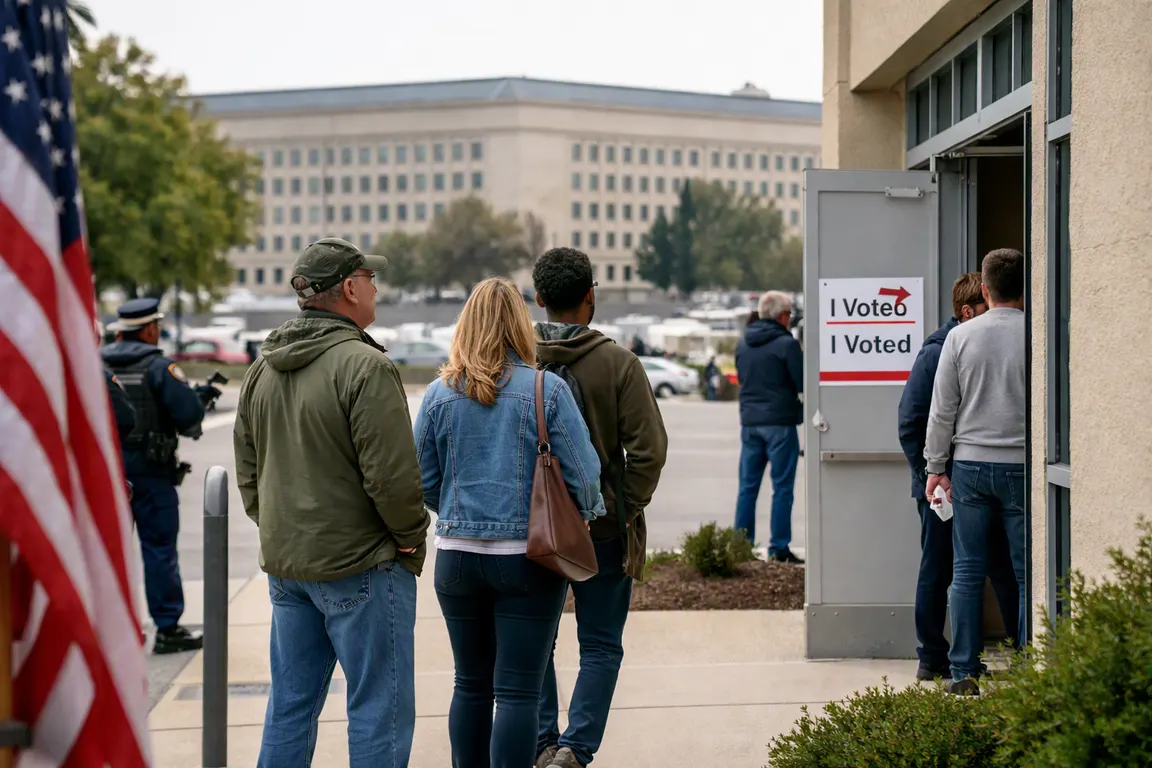
The Pentagon election troop deployment clarification came Wednesday when the Joint Chiefs of Staff confirmed the U.S. military has no plans to send federal troops or federalized National Guard units to polling places for the November 2026 midterm elections. In a letter to Senate candidate Elissa Slotkin, Chairman Gen. Dan Caine stated that the Joint Force will not be deployed to voting sites, nor will it seize ballots, voting machines or any other election‑related material.
The clarification follows rumors that the Trump administration might enlist the armed forces to monitor or influence voting. Those rumors have raised anxiety among voters, election officials and civil‑rights groups, who fear a military presence at the polls could intimidate citizens or blur the line between civilian governance and the armed services. By denying any deployment, the Pentagon’s top officer offers a concrete reassurance that the military will remain neutral during a pivotal national election.
Gen. Caine’s response was prompted by a written request from Sen. Elissa Slotkin (D‑MI), who asked the Pentagon to confirm whether any directive existed to place troops at polling locations. Slotkin, a former intelligence officer, raised the issue after observing growing speculation on social media and among some partisan commentators that the administration might weaponize the military to sway the vote. The letter, obtained by The Guardian and first reported by the Associated Press, was echoed by NBC News and Al Jazeera, each noting the absence of any planned military involvement.
No other Pentagon officials have contradicted Caine’s statement, and there has been no announcement of a new policy that would alter the existing legal framework. Under the Posse Comitatus Act and related statutes, the armed forces are barred from participating in domestic law‑enforcement activities, including election administration, unless expressly authorized by Congress. Department of Defense guidance reiterates that active‑duty personnel may only assist in a limited, non‑partisan capacity—such as disaster response or protection of federal facilities—when directed by civilian authorities.
Historically, the military has provided occasional logistical support to election officials, such as transporting voting equipment or securing federal buildings, but such assistance has always required a request from civilian leaders and has been transparent. The current denial mirrors similar assurances given before the 2020 presidential election, when the Pentagon also emphasized its non‑partisan role.
Election administrators across the country have welcomed the statement, saying it removes a potential source of confusion for poll workers and voters. "Knowing that there will be no federal troops on the ballot box allows us to focus on ensuring a smooth, secure voting process," said a representative of the National Association of State Election Directors, who asked to remain anonymous pending an official release.
The assurance does not eliminate all concerns. State‑level National Guard units, which operate under state authority unless federalized, could still be called upon for crowd control or emergency response if a crisis arises at a polling site. Civil‑rights advocates continue to scrutinize the legal distinction between federalized and state‑controlled Guard members.
As the nation approaches the November midterms, the Pentagon’s denial provides a data point for voters questioning the integrity of the electoral process. Whether the reassurance will translate into measurable confidence at the polls remains to be seen, but the clear statement from the highest‑ranking military officer sets a baseline expectation: the armed forces will not be used as a voting‑day police force.