

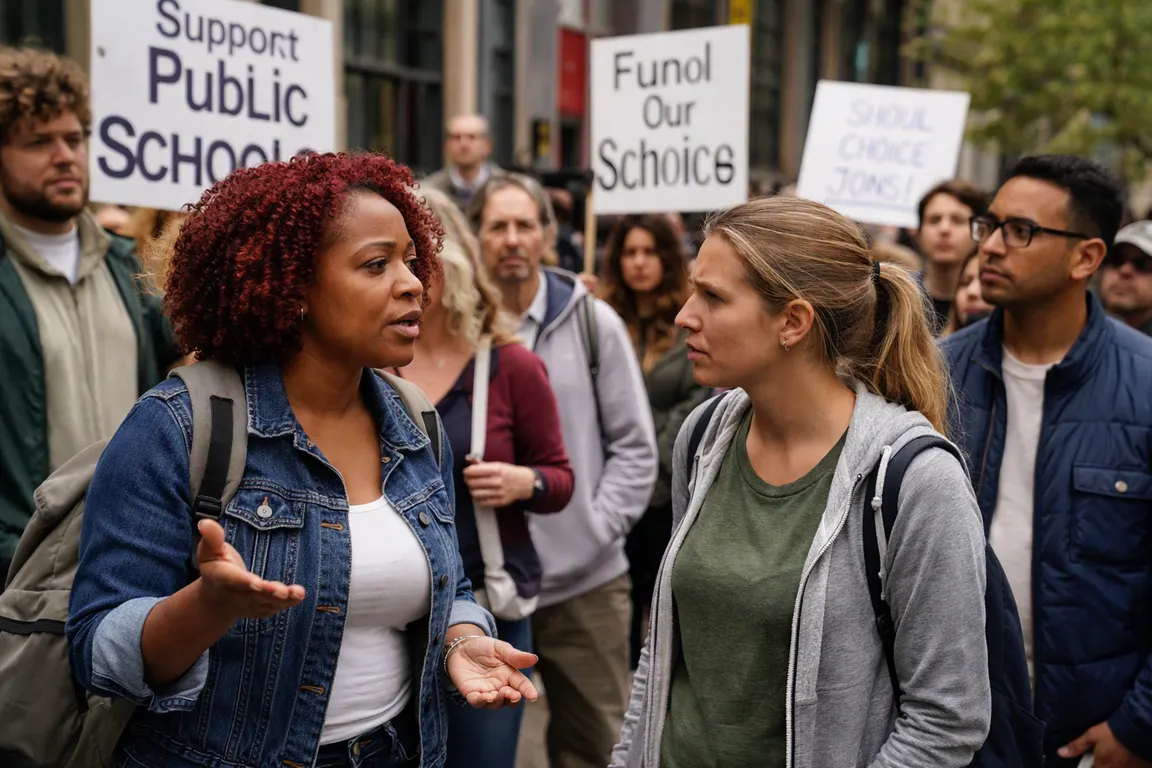
Nikole Hannah‑Jones’ recent essay about enrolling her daughter in a New York City school she called “bad” has sparked a citywide NYC school choice debate over parental choice, charter expansion and public‑school funding. The piece, posted online and highlighted by the New York Post on Sept. 24, 2026, prompted a flood of reader comments questioning the practicality of sending a child to a struggling school while demanding better options.
City officials are reviewing legislation that could broaden charter‑school authorizations and alter funding formulas for public schools. Hannah‑Jones’ personal account, which uses NYC schools as a case study, has been seized on by both school‑choice advocates and critics who warn that encouraging enrollment in low‑performing schools may undermine broader reform efforts. The essay adds a human face to abstract policy arguments and could influence constituent pressure on upcoming votes.
In the New York Post story, the journalist described the “failed woke experiment” of placing her daughter in a school she labeled “bad,” noting that the experience left her questioning whether parents should be urged to seek alternatives or remain committed to improving existing institutions. Readers responded with a mix of empathy and criticism, many pointing to immediate challenges such as transportation, safety and academic outcomes that families face in the city’s fragmented school landscape.
RealClearPolitics published two analytical pieces shortly after. One framed the essay as a “new version of ‘The Jungle,’” suggesting it could bolster charter‑school supporters who argue that competition raises standards. The other explored the tension Hannah‑Jones raises: fighting systemic inequities while using the very system she critiques to secure a better education for her child. Neither article presented new performance data for the schools mentioned, nor cited any pending legislative proposals directly tied to the essay.
Education Committee Chair Maria Torres told reporters that the council will continue its review of charter‑school caps and state‑aid allocation, emphasizing that “community voices are an important part of the conversation, but any change must be grounded in evidence.” The United Federation of Teachers warned that celebrating individual choices to enroll in underperforming schools could distract from collective efforts to raise district‑wide outcomes.
Parents in Harlem and the South Bronx expressed mixed reactions. Some said the essay validated their own dilemmas about applying to a charter versus staying in a neighborhood school. Others argued that focusing on a single family’s decision oversimplifies systemic barriers such as limited seats, transportation costs and enrollment lotteries. A parent‑advocacy group, Parents for Public Schools, organized a town hall last week to discuss how the debate might affect upcoming funding formulas, stressing that any reform must address resource gaps that contribute to low performance.
The discussion mirrors a national conversation about balancing charter growth with investment in traditional public schools, especially in high‑need districts. While Hannah‑Jones’ essay is personal, it has become a flashpoint that forces educators, legislators and families to confront the moral and practical dimensions of school choice.
No legislation currently references the essay, and the council’s charter‑expansion proposals remain under review. The next public hearing, scheduled for early November, will likely feature testimony from parents, charter operators and public‑school advocates, providing a concrete venue for the questions raised by Hannah‑Jones’ experience to be examined in policy terms.