

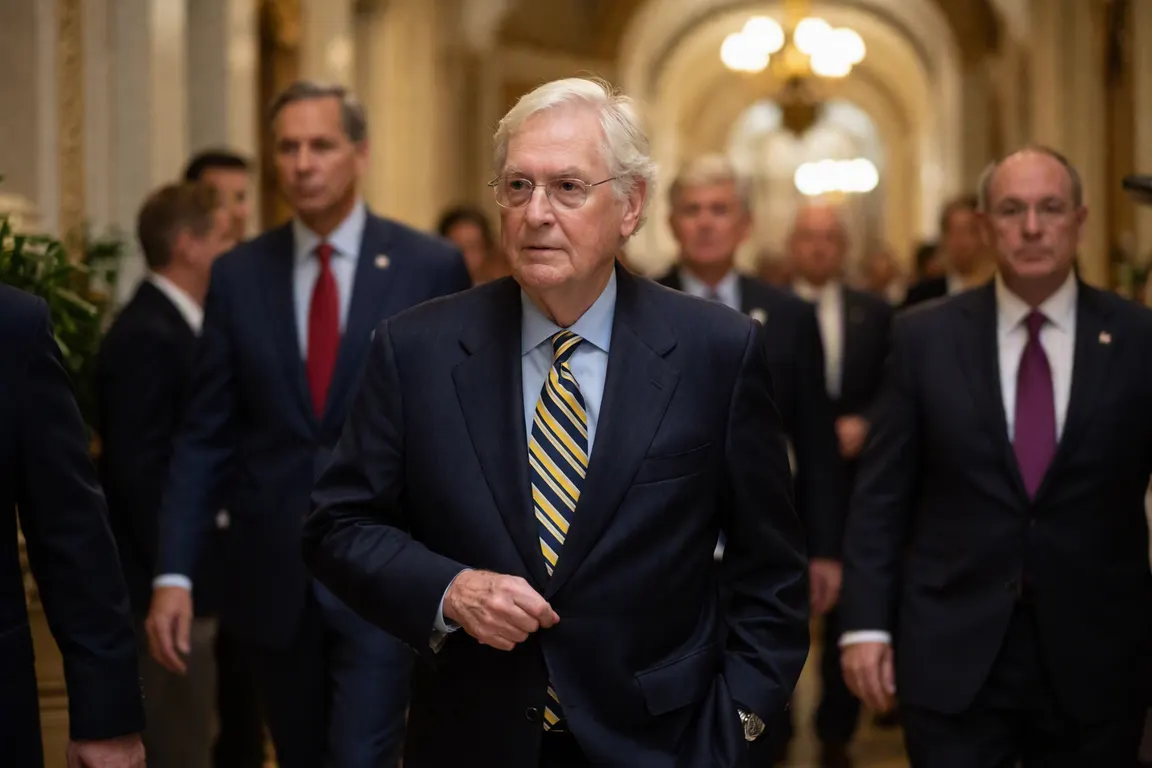
Senator Mitch McConnell made his Mitch McConnell Senate return on Monday after a three‑month health‑related absence, casting his first vote since mid‑June. The 84‑year‑old Kentucky Republican’s presence restores a reliable vote for a GOP majority that has been operating with a one‑vote deficit on tight fiscal measures.
McConnell’s return comes as Senate leaders prepare to move a $1.6 trillion budget reconciliation package and a bipartisan infrastructure bill through the chamber. With Republicans holding a 51‑49 edge, every vote can be decisive, especially on legislation that requires a 60‑vote supermajority.
The senator fell in mid‑June, suffered a brief loss of consciousness and was hospitalized for several days. He later contracted mild pneumonia, recovered in a rehabilitation center, and was discharged in late August. On Monday he entered the chamber, greeted colleagues and voted on a procedural motion, the details of which were not disclosed.
While the procedural vote did not change any legislation, it signals that McConnell can again participate in floor debates and committee work. Senate Republicans have been adjusting their schedule to accommodate his absence, delaying or re‑sequencing votes that depend on the full Republican count.
McConnell’s seniority also matters for Kentucky. The state’s interests in transportation funding and agricultural policy have long been advocated by the senator, and state officials welcomed his return, noting the need for senior representation on federal projects.
In a brief statement, McConnell said he is “back to work to finish the job for this Congress.” His return adds a known variable to an otherwise tight partisan arithmetic, but the outcome of the pending bills will still hinge on how individual senators vote.
Analysts note that the margin on the reconciliation and infrastructure measures could be as narrow as a single vote, particularly if any Democrats break ranks. McConnell’s expertise in vote‑counting and party strategy is expected to be a factor as the Senate moves toward final votes before the end of the year.
The Senate is slated to schedule additional votes on the reconciliation package in the coming weeks, with the infrastructure bill expected to reach the floor before the November elections. Observers will watch whether McConnell’s health remains stable enough for sustained participation and whether the chamber adopts any new transparency guidelines for senior lawmakers’ medical conditions.
Lawmakers will now gauge how McConnell’s participation shapes the next round of votes, while the Senate’s calendar presses toward finalizing the fiscal package before the year’s end.