

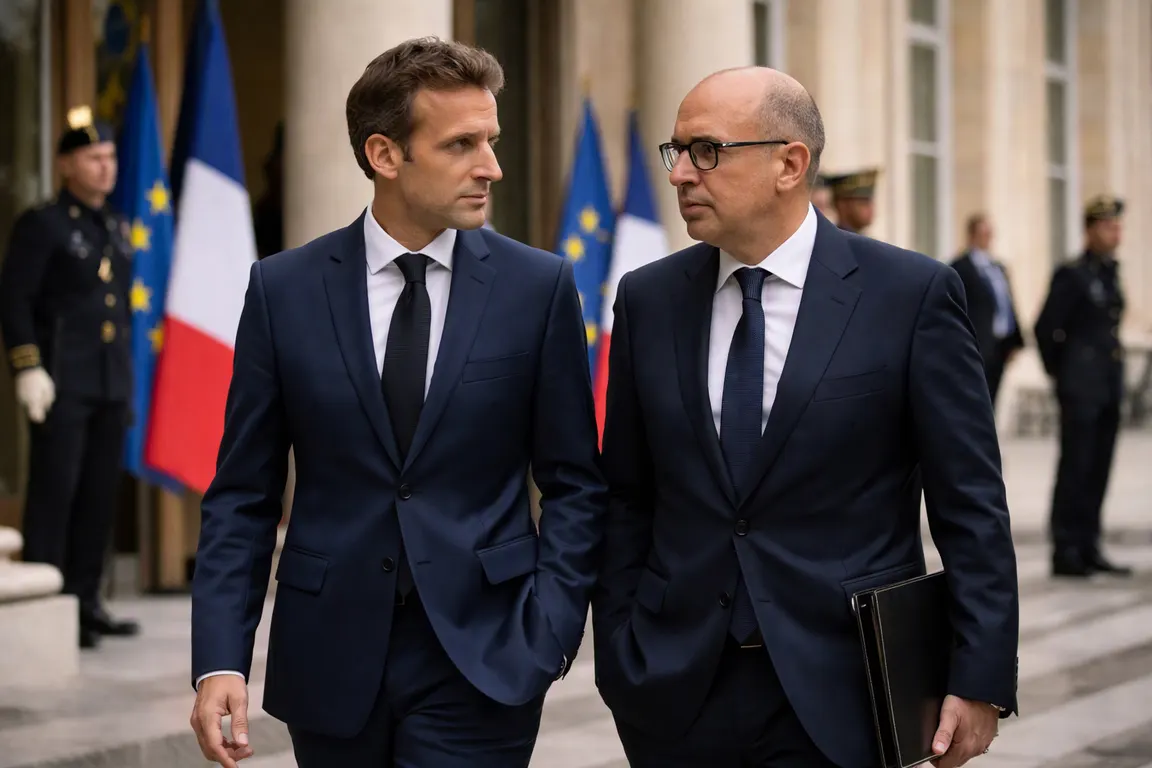
President Emmanuel Macron publicly declined Interior Minister Laurent Nuñez’s offer to resign after a weekend of violent protests that left shops looted, cars set ablaze and more than 2,400 people arrested across France. By keeping Nuñez in place, the government signaled a priority on continuity within the interior ministry rather than a symbolic shake‑up.
The unrest erupted in several cities, including Marseille, where the mayor imposed a ban on public gatherings as a precaution. Demonstrators smashed storefronts, torched vehicles and clashed with police, who later admitted they had lost control of the situation. By the end of the weekend, police reported roughly 2,400 arrests nationwide, according to The Guardian.
Nuñez tendered his resignation after the disorder, acknowledging the scale of the violence. At a press briefing, Macron condemned the “unbridled” attacks and said there were “failures in anticipation and intelligence,” but he emphasized the need for an uninterrupted chain of command and refused the resignation.
Keeping Nuñez at the helm has immediate operational implications. The interior ministry oversees police deployments, intelligence services and emergency measures such as curfews. Avoiding a ministerial turnover prevents a disruption that could delay the deployment of additional officers to hot spots, the reallocation of resources to intelligence analysis, and the implementation of localized security plans. No new legislation or policy shift was announced; the focus remains on the on‑the‑ground response.
The riots have tangible effects on residents and businesses. In Marseille and Paris, storefronts bear the cost of broken glass and charred merchandise, while curfews limit nighttime movement, raising safety concerns for commuters and families. Local merchants report revenue losses and higher insurance premiums, and the broader French economy faces a potential dip in consumer confidence and tourism if the violence continues.
Law‑enforcement agencies are under scrutiny for their preparedness. The admitted intelligence lapses have prompted internal reviews that could reshape future threat assessments and lead to a reallocation of resources toward predictive policing and inter‑agency coordination.
Macron’s decision also hints at the administration’s longer‑term security strategy. By refusing Nuñez’s resignation, the president placed continuity above political optics, suggesting that systemic shortcomings will be addressed without reshuffling leadership. Observers note that while concrete reforms have not been outlined, the admission of intelligence failures may trigger audits and adjustments to how threats are identified and acted upon.
As France works to restore order, the next steps are likely to include a sustained police presence in affected neighborhoods, continued enforcement of gathering bans where deemed necessary, and a review of intelligence protocols. Whether these measures will be enough to quell the unrest and rebuild public trust remains uncertain, leaving citizens and businesses to watch closely for any shift in the government’s operational approach.