

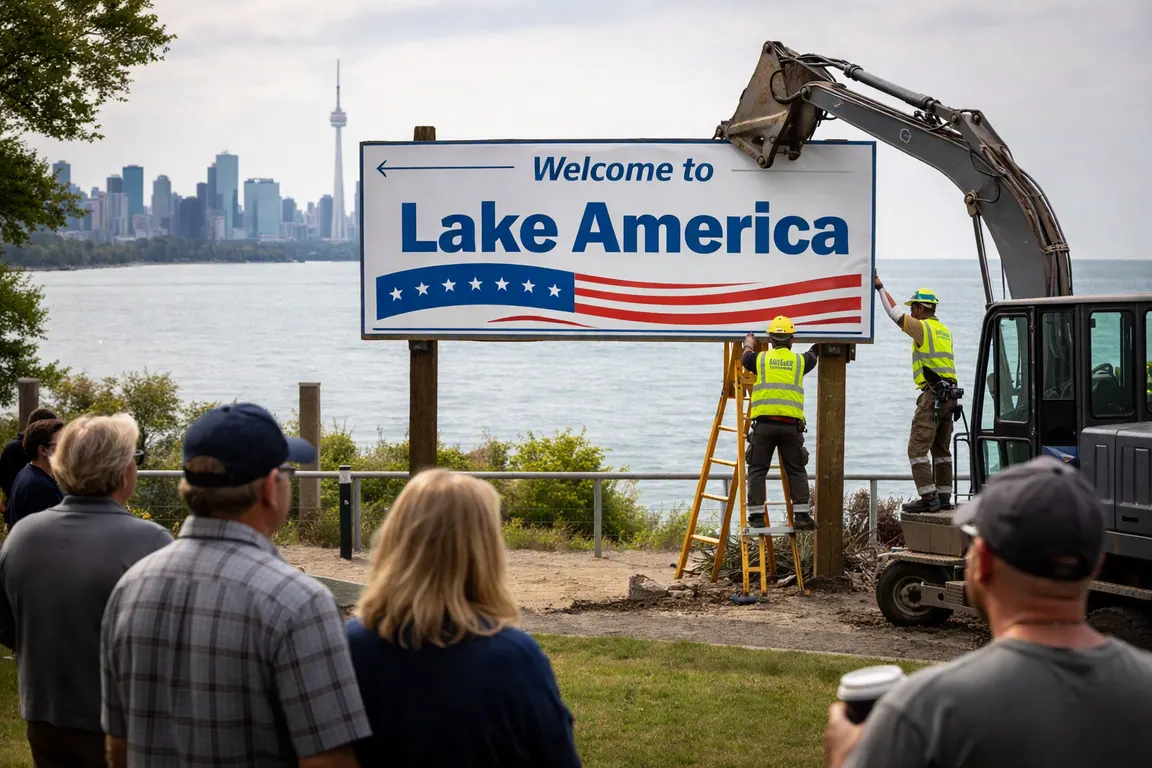
President Donald Trump signed an executive order Thursday directing the Interior Department to change the name of Lake Ontario to “Lake America” in U.S. federal geographic databases. The move coincides with the United States and Canada each imposing 50% tariffs on $20 billion of the other’s goods, raising the stakes in an already tense trade dispute.
The order requires the U.S. Geographic Names Information System to update the entry within 30 days. The change applies only to U.S. federal records; Canada’s authorities have no jurisdiction over the name, and no international body governs naming of trans‑boundary water bodies. Canadian Prime Minister Justin Trudeau publicly rejected the rename, noting that “Ontario” comes from the Huron word for “lake of shining waters.” Ontario Premier Doug Ford called the action rhetoric, emphasizing its cultural significance for Indigenous peoples.
The renaming follows a series of retaliatory tariff measures. Last week the United States announced 50% tariffs on $20 billion of Canadian imports, targeting steel, aluminum, dairy and other sectors. Canada responded with matching 50% tariffs on an equivalent value of U.S. goods, including farm equipment and appliances. Industry groups warn the combined tariff burden could add several percentage points to consumer prices and disrupt supply chains that have long relied on an integrated North American market.
Analysts say the symbolic gesture is intended to pressure Canadian negotiators by showing a willingness to use every tool at its disposal. “Changing a map entry does not affect trade flows, but it sends a political signal,” said a trade policy expert at a Washington think tank. Critics argue that such gestures risk inflaming public sentiment without delivering concrete policy benefits, especially as Indigenous communities on both sides of the border view the name change as an erasure of cultural heritage.
For residents of the Great Lakes region, the practical impact is limited. Boaters, fishermen and tourists will continue to refer to the water body as Lake Ontario, and U.S. agencies such as the Coast Guard will retain the historic name for operational purposes. Nonetheless, the episode adds diplomatic friction that could influence upcoming negotiations on broader issues, including agricultural subsidies and environmental standards.
As both governments prepare for the next round of trade talks, the question remains whether symbolic actions like the “Lake America” rename will become a recurring tactic or fade as negotiators focus on substantive tariff reductions. The outcome will shape not only the $20 billion dispute but also the tone of U.S.–Canada relations for years to come.