

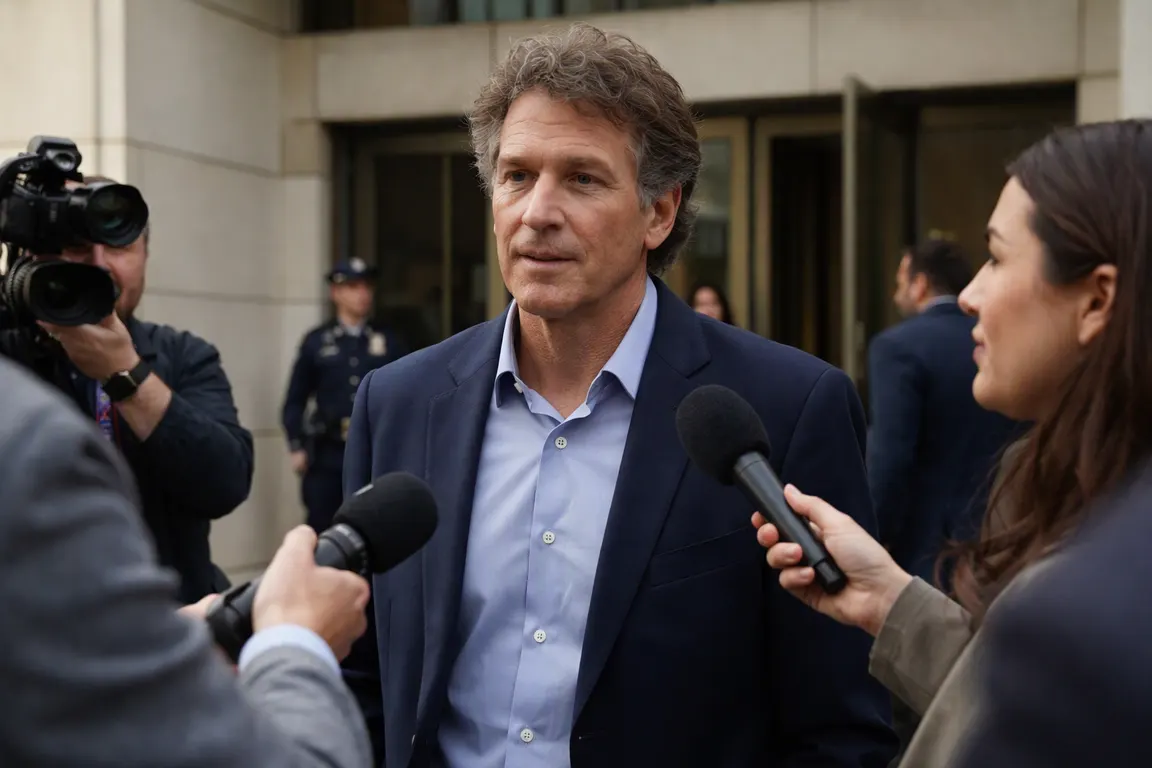
A Washington D.C. Superior Court judge on Wednesday issued a final dismissal of the David Hearn vandalism dismissal case against former Olympic canoeist David Hearn and barred U.S. Attorney Jeanine Pirro’s office from filing the charge again.
The decision ends a dispute that began when the Justice Department dropped the case after Hearn was accused of damaging the Lincoln Memorial Reflecting Pool during a protest. Former President Donald Trump publicly criticized the dismissal and urged the department to pursue new charges. The judge rejected that request, calling the effort “fanciful” and “without merit.”
In a written order, the judge invoked the court’s equitable authority to issue a permanent dismissal with prejudice and an injunction preventing the government from re‑bringing the same allegation. Legal scholars note that once a case is dismissed with prejudice, the government cannot relitigate the identical factual claims without a new, compelling evidentiary basis.
Hearn, who competed in the 2004 and 2008 Olympics, faced a single count of vandalism for allegedly damaging the Reflecting Pool. The Justice Department had initially closed the investigation, but after Trump’s comments, officials considered reopening it. The judge’s order emphasizes that prosecutorial decisions must be insulated from political pressure and that the judiciary can act as a check on attempts to revive dismissed cases for partisan reasons.
The ruling has immediate practical effect: Hearn faces no further legal exposure from the Reflecting Pool incident. The court did not address whether any damage actually occurred, and no repair cost estimates have been released. The focus was on procedural propriety rather than a factual determination of guilt.
Legal analysts say the order reinforces the principle that the Justice Department must provide a clear evidentiary justification before seeking to overturn a permanent dismissal. In this instance, the judge found that standard was not met.
The case highlights the tension that can arise when high‑profile political figures seek to influence prosecutorial discretion. By blocking the attempt to resurrect the charge, the judge underscored the separation of powers that underpins the legal system.
Going forward, the Justice Department may review its policies on handling politically sensitive prosecutions, especially those involving historic federal sites. Whether the court’s stance will deter future efforts to revive dismissed charges remains to be seen, but the decision sets a clear precedent that judicial oversight will not be sidestepped for partisan advantage.
The permanent dismissal also sends a signal to other federal prosecutors that attempts to revive cases solely on political grounds are likely to be blocked unless new, substantive evidence emerges.
No further comments were made by the Justice Department or by Hearn’s legal team at the time of the ruling.