

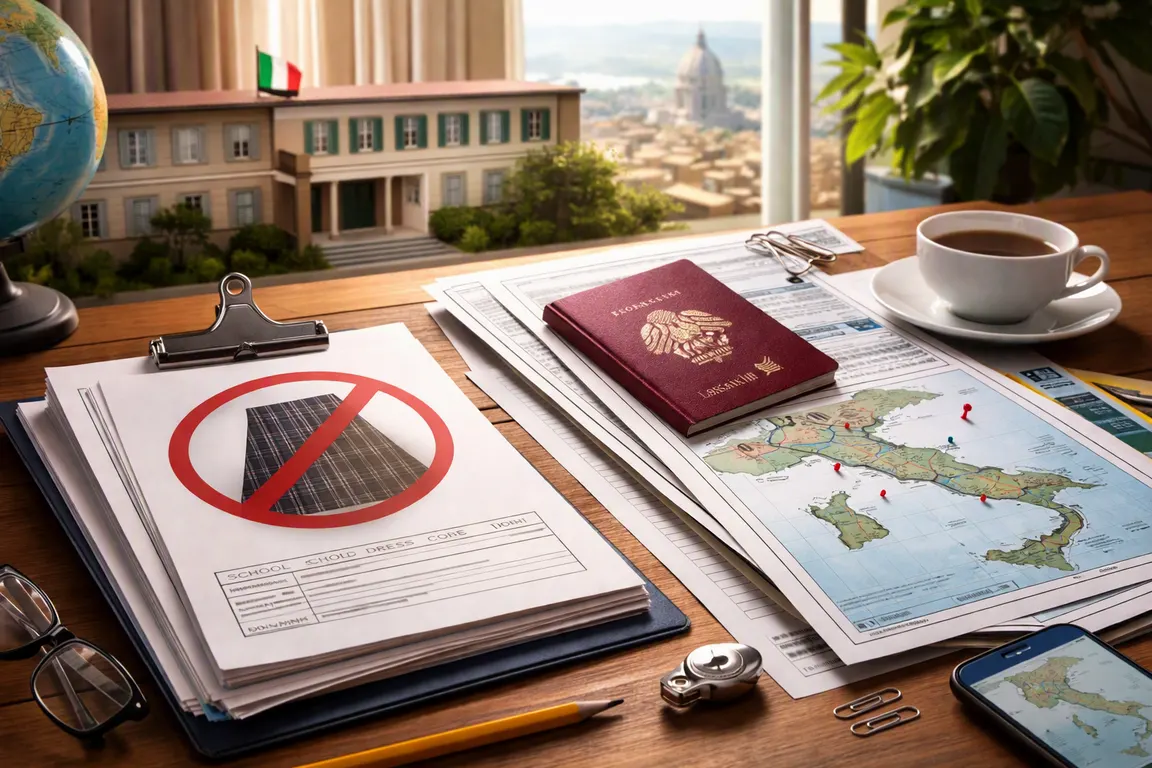
Rome – Prime Minister Giorgia Meloni announced a package of school reforms that would bar face‑covering garments in classrooms, set a ceiling on the proportion of foreign‑born students per class and require parents of immigrant pupils to pay for Italian‑language tuition. The proposal, dubbed the Italy school dress code ban, is slated for parliamentary submission within 60 days, with debate scheduled for mid‑November.
If approved, the measures could affect thousands of families as the ruling coalition prepares for a pivotal parliamentary vote. Meloni outlined the plan at a youth event organized by her Brothers of Italy party. The dress‑code provision targets "face coverings" such as burqas and niqabs, though it does not mention other religious headwear. The proposal does not specify the exact percentage or number that will define the foreign‑student cap; it merely states that a limit will be established for each classroom.
According to research institute Fondazione ISMU, foreign‑born students currently make up about 11.6 % of Italy’s school population – roughly one in nine pupils. The language‑tuition component would shift the cost of Italian lessons onto the parents of foreign‑born children, but details on fees, curriculum or enforcement have not been released.
Government officials link the three elements to a broader effort to curb illegal immigration and promote "assimilation" of non‑European newcomers, a framing echoed in several media reports. Critics argue that the measures target specific communities, particularly Muslims, without providing evidence of a security threat tied to school dress codes.
If the bill passes, schools would need to draft dress‑code guidelines, monitor classroom composition and set up mechanisms to collect tuition payments. Administrators and teachers could face added administrative burdens, while immigrant families may confront new expenses and possible restrictions on class placement.
Legal scholars warn that the dress‑code ban could be challenged under Italy’s constitution, which guarantees freedom of religion, and under EU anti‑discrimination rules. Similar bans in other European nations have been subject to court rulings that balance security arguments against individual rights.
The proposal arrives as Meloni, Italy’s longest‑serving uninterrupted prime minister since World War II, positions immigration policy as a central pillar of her agenda. While she cited security concerns, no independent verification of a specific threat linked to face coverings in schools has been presented.
Parliament must receive the reform package by mid‑November, after which legislators will debate its provisions and vote on adoption. Should the bill be enacted, schools would likely need to issue detailed regulations before the start of the next academic year, though the exact timeline remains unclear.
Key unanswered questions include the precise threshold for the foreign‑student cap, how authorities will verify parental payment for language tuition, and whether the dress‑code ban will apply to all face‑covering garments or only those named by the prime minister. The answers will determine how Italy’s classrooms evolve in the months ahead.