

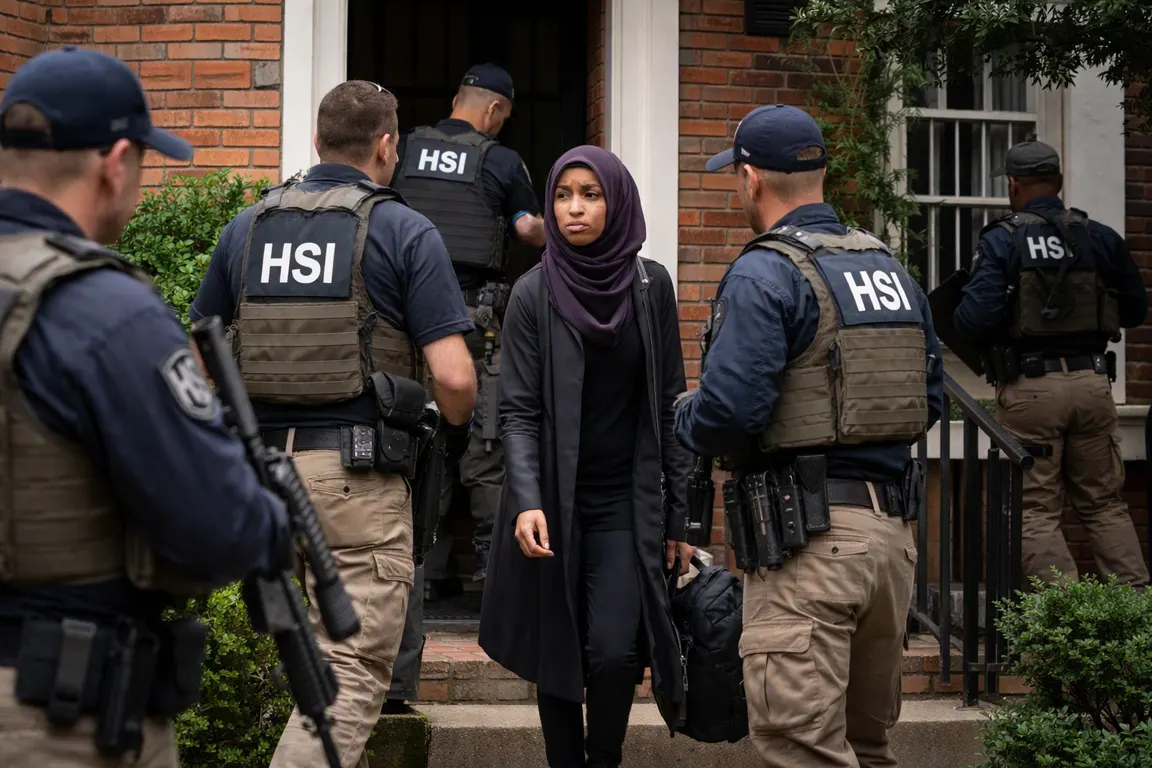
Homeland Security Investigations agents executed a court‑authorized search warrant at Democratic Rep. Ilhan Omar’s Washington, D.C., residence on Monday, Oct. 2, 2023. The warrant is part of a criminal probe into alleged immigration‑paper fraud tied to a filing made by Omar’s late father when she was a child. The Justice Department confirmed the search, said the investigation is ongoing, and stressed it is unrelated to any political activity. No charges have been filed.
President Donald Trump posted on social media that Omar is “a terrible person” and suggested the investigation was “very careful.” House Democratic leader Hakeem Jeffries called the raid “deeply disturbing,” warning of a “weaponization of the federal government.” Minnesota Gov. Tim Walz said the administration is abusing power, while Rep. Nancy Mace, a Republican, argued that if fraud were proven, Omar’s citizenship should be revoked. None of the statements provide new factual details about the case.
Federal searches of sitting members of Congress are rare but not unprecedented. In 2018 the FBI obtained a warrant at a congressman’s home in a corruption probe, and in 2020 a senator’s residence was searched in a financial‑fraud investigation. Those operations were subject to Justice Department guidelines requiring probable cause and review by an independent magistrate. The department has not disclosed whether the same safeguards applied in Omar’s case, prompting questions about procedural transparency.
Legal scholars note that the Justice Department’s Office of the Attorney General follows a “political vetting” protocol intended to prevent the appearance of partisan influence. The protocol involves senior officials who are not involved in the day‑to‑day investigation reviewing the warrant. Critics argue that the timing—weeks before the November 2024 elections—heightens the risk that the search will be perceived as politically motivated, potentially eroding public confidence in federal law‑enforcement agencies.
For constituents in Minnesota’s 5th District, a largely Somali‑American community, the search raises practical concerns. Omar posted on X that the raid was “a political attack” and pledged to continue serving her district while the investigation proceeds. Her district office reported no interruption to constituent services, but the episode may influence voter perceptions of both the representative and the federal system.
The political fallout could extend to the upcoming midterms. Voters who view the search as selective enforcement might alter turnout or swing undecided voters, while the lack of disclosed evidence could temper any electoral impact. The Justice Department said it will release additional information if it becomes relevant, but offered no timeline.
As the probe continues without charges, the central question remains whether it will culminate in formal accusations against Rep. Omar and how any outcome will intersect with the 2024 election calendar.