

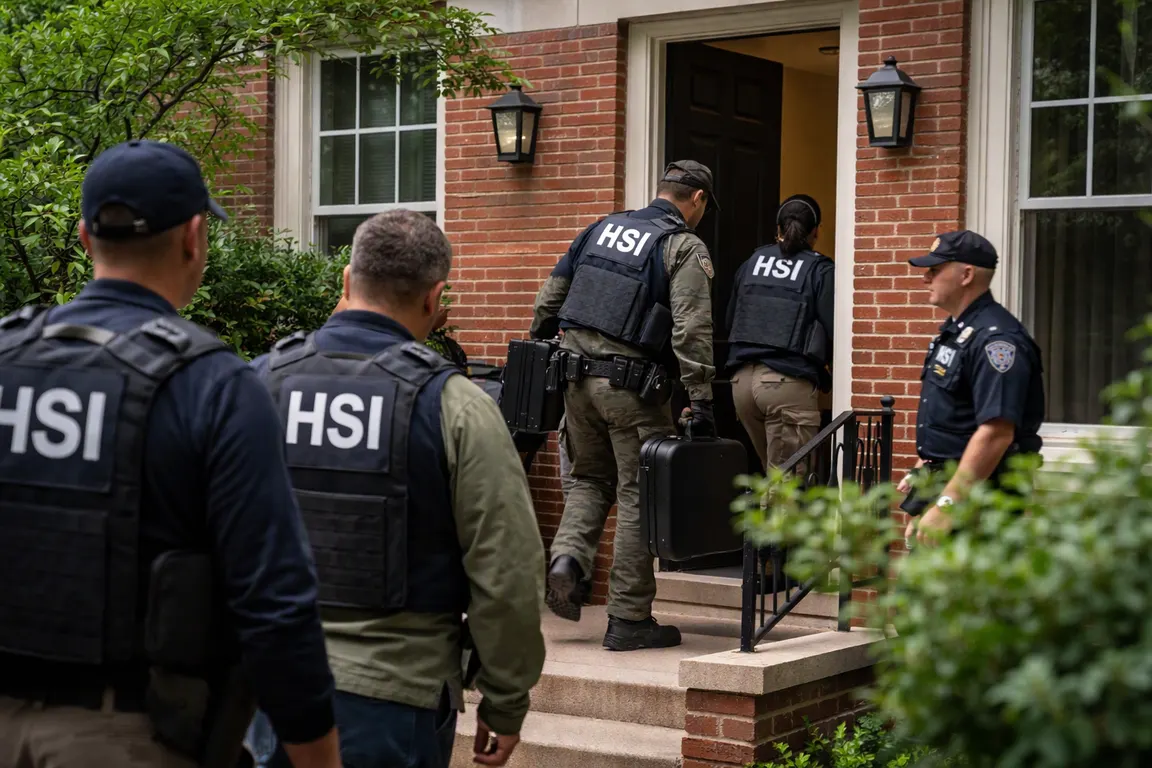
Federal agents entered Rep. Ilhan Omar's Washington, D.C., residence on Monday morning, the Justice Department confirmed. Homeland Security Investigations (HSI) officers carried out the search under a warrant issued by a federal magistrate as part of a criminal investigation into alleged immigration‑related wrongdoing.
The raid comes as the 2024 election cycle intensifies, prompting questions about the scope of the probe, the evidence that justified the warrant and the potential impact on public confidence in law‑enforcement neutrality. For constituents in Minnesota’s 5th District, the search raises concerns about the continuity of representation while the investigation proceeds.
Omar, a Democrat first elected to the House in 2018, has faced criticism from former President Donald Trump and his allies, who have accused her of immigration fraud and called for her expulsion. No formal charges have been filed, and the Justice Department has not disclosed the specific allegations or evidence that led to the warrant, leaving a gap in public understanding of the investigative basis.
Multiple outlets—including the BBC, The Guardian, Al Jazeera, NBC News and International Top News—reported the search. All noted HSI involvement and DOJ confirmation; NBC highlighted the timing as unusual given its proximity to the upcoming election. None provided a clear motive beyond the generic description of an immigration‑related probe.
Legal authority for the search stems from a warrant based on probable cause, a standard procedure when investigators present sufficient evidence to a magistrate. HSI, a division of U.S. Immigration and Customs Enforcement, typically handles complex cross‑border crimes, including fraud involving immigration benefits. Its participation suggests the investigation likely concerns alleged misuse of immigration programs rather than a purely political matter.
Federal searches of sitting members of Congress are rare but not unprecedented. In 2015, the FBI executed a search of a congressional office in a corruption probe, and in 2020 a Capitol Hill staffer’s home was raided in a fraud investigation. Those cases proceeded without overt partisan framing, underscoring that the legal process can extend to elected officials when warranted.
The immediate impact on Omar’s office includes disruption of staff operations and a potential shift in legislative focus as resources are diverted to address the investigation. Constituents may experience reduced advocacy on district issues until the matter is resolved. More broadly, the episode tests public perception of the Justice Department’s independence; if the probe is seen as politically motivated, confidence in federal law‑enforcement could erode ahead of a tightly contested election.
At this stage, the Justice Department has not announced any further steps, and no indictment has been filed. The next procedural milestone will be the filing of an affidavit or an indictment, if investigators determine sufficient evidence. Until then, the warrant’s existence and the agents’ presence remain the only confirmed facts.
Unanswered questions remain: what specific conduct prompted the warrant, how the case will progress, and whether the timing will influence voter sentiment. Observers will watch for any judicial filings that clarify the scope of the probe and its implications for both the representative’s duties and the broader principle that no public official is above the law.