

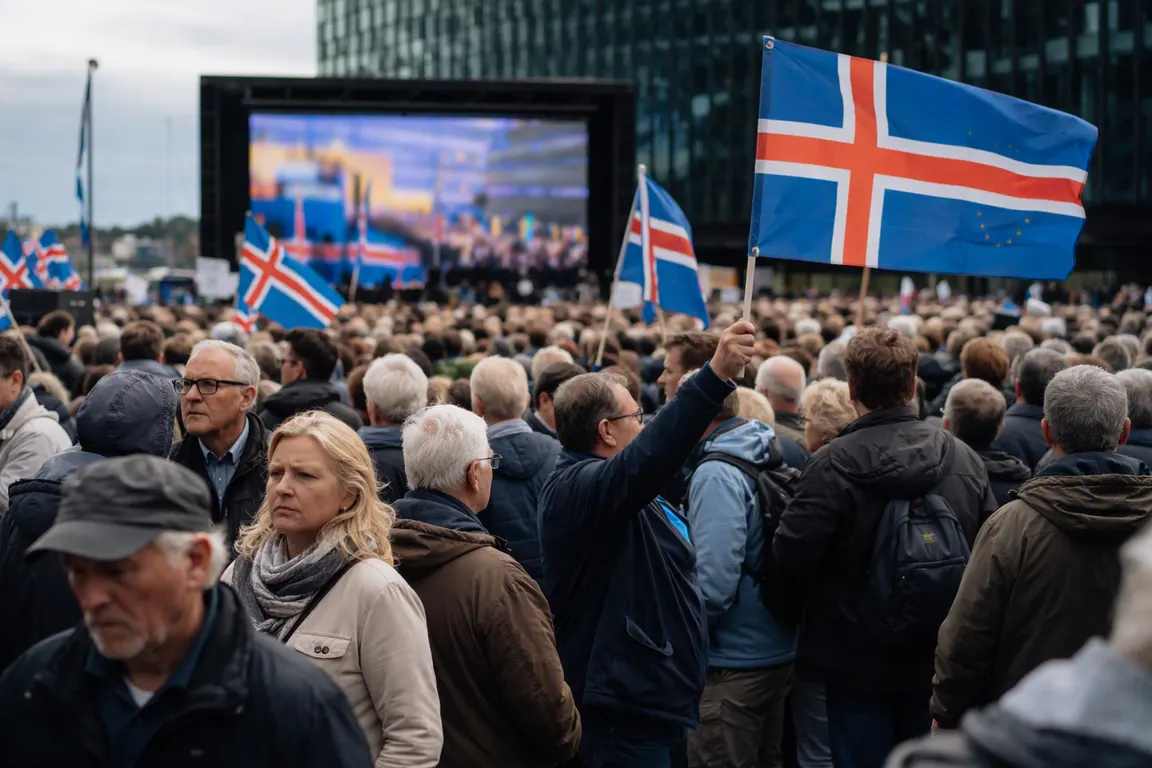
Reykjavik – In a June 2024 Iceland EU referendum, 52.5% of voters rejected restarting formal negotiations with the European Union, ending the government’s plan to reopen accession talks. The result freezes Iceland’s relationship with the EU at its current European Economic Area (EEA) level and leaves the country’s trade, fisheries and security policies unchanged.
The vote, counted by public broadcaster RÚV on Sunday, was confirmed by major outlets including The Guardian, the Wall Street Journal, Reuters and Al Jazeera. With a population of about 400,000, the margin represents only a few thousand votes, underscoring how a small swing could have kept the accession process alive.
The referendum capped a year‑long campaign. The “No” camp warned that EU membership would erode control over Iceland’s lucrative fisheries and raise taxes, while the “Yes” side argued for broader market access and deeper security cooperation. Some analysts linked voter sentiment to recent U.S. rhetoric about Greenland, suggesting heightened concerns over Arctic security, though the direct impact of that debate remains unclear.
In practical terms, Iceland will continue to operate under the existing EEA agreement, which already grants access to the EU single market for most goods and services. Bilateral fisheries quotas with the EU remain in place, and tourism – a key driver of GDP – proceeds under the status quo. No immediate changes to trade rules or investment frameworks are expected.
Politically, the outcome weakens the ruling coalition, which had built its credibility on the EU initiative. Party leaders now face internal pressure to recalibrate their agendas, while opposition parties can claim a mandate to scrutinise any future EU‑related proposals. The vote also signals to Brussels that Iceland, despite its strategic North Atlantic location, is not ready to deepen institutional ties at this time.
For investors, the referendum confirms short‑term regulatory stability. Foreign firms in fisheries, renewable energy and technology can expect no abrupt policy shifts, reducing uncertainty in the market.
The next step is for the Icelandic parliament to repeal the legislation that would have triggered accession talks, a process that could take several weeks. EU officials have reiterated that the door remains open for future dialogue, but any renewed push will have to address the domestic divisions laid bare by the vote.
The narrow margin leaves the question of Iceland’s EU future unresolved, but for now the country will maintain its existing economic and security arrangements while domestic politics adjust to the referendum’s outcome.