

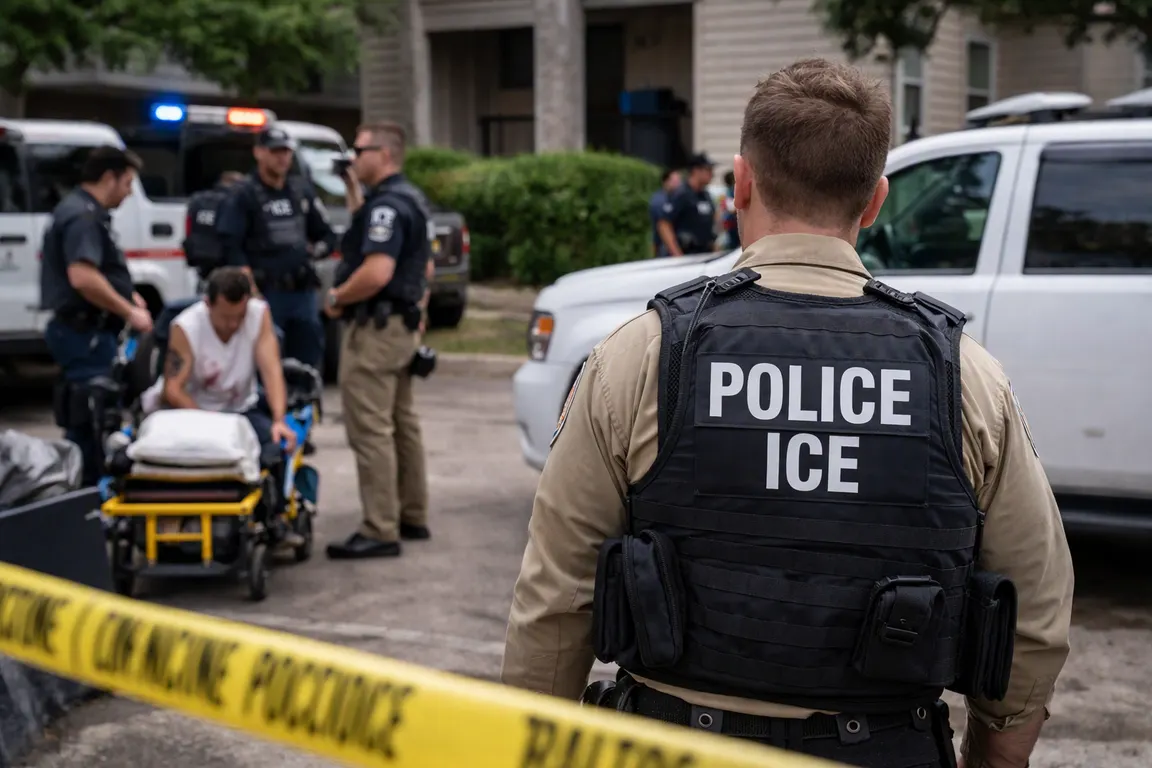
An ICE body camera shooting in Austin, Texas, left a Venezuelan man wounded after an officer fired while his body camera was off. The incident has revived scrutiny of Immigration and Customs Enforcement’s use‑of‑force and body‑camera policies.
The lack of video from the shooting officer’s camera, combined with only a brief clip captured by a second ICE officer, leaves investigators without a complete visual record. Without that evidence, oversight bodies and the public cannot fully reconstruct the encounter, a gap that fuels community mistrust and raises questions about whether current policies adequately protect citizens and ensure accountability.
According to NBC News, the shooting occurred after ICE officers confronted the Venezuelan man on a city sidewalk. The officer fired, and the projectile remained embedded in the victim’s back. The man fell and reported injuries to his head, neck and teeth in addition to the gunshot wound. Emergency responders arrived, but Department of Homeland Security officials declined to comment on the victim’s medical condition or why officers did not render immediate aid. The agency also did not explain why the shooting officer was not wearing the body camera issued to him.
A colleague’s body‑camera feed captured only a fragment of the encounter, showing the moment the gun discharged but not the events leading up to or following the shot. That limited view prevents a full reconstruction of the sequence and leaves key questions unanswered, such as whether the officers followed de‑escalation protocols or provided timely medical assistance.
The incident comes as ICE’s operational transparency faces heightened public scrutiny. Community leaders in Austin have expressed concern that the absence of comprehensive video evidence undermines trust in federal law‑enforcement actions. Policy experts note that ICE agents are required to wear body cameras during enforcement activities, but enforcement of that rule appears inconsistent. The agency’s silence adds uncertainty about internal compliance mechanisms.
Advocates are urging the Department of Homeland Security to review its body‑camera enforcement procedures and consider stricter penalties for non‑compliance. They also call for a formal investigation into the medical response provided to the victim, who remains with the bullet lodged in his back and faces ongoing treatment. The case underscores broader implications for how federal agencies document and justify the use of force, especially in densely populated urban settings.
As the investigation proceeds, unanswered questions about the officer’s decision not to wear his camera, the incomplete footage, and the DHS response will likely shape future policy discussions. Stakeholders await a clear statement from the department on whether procedural changes will be implemented to close the transparency gaps highlighted by this shooting.