

Greenland Arctic Pact Mirrors 2019 Deal, Raises Policy
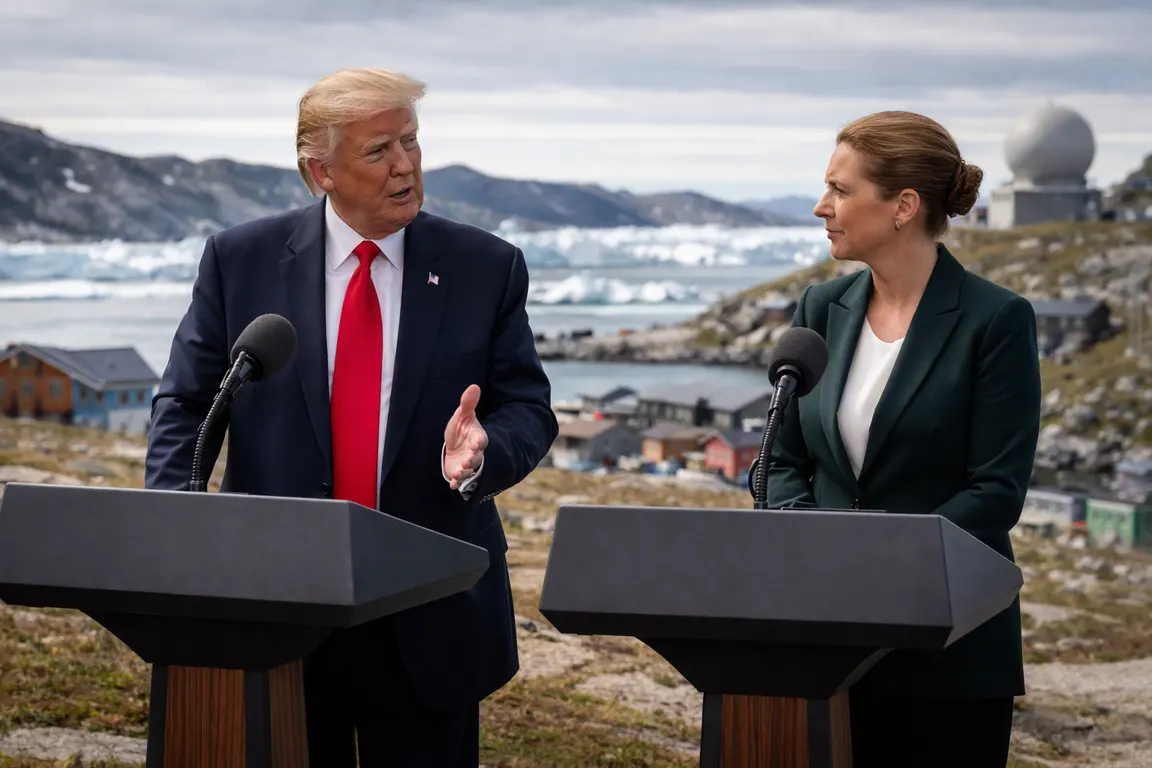
President Donald Trump and Danish Prime Minister Mette Frederiksen announced a "new" Greenland Arctic pact on Tuesday, framing it as a breakthrough for U.S. access to the Arctic. In substance, the agreement repeats the 2019 U.S.–Denmark treaty that already permits American forces to use Thule Air Base and other Greenland facilities.
The lack of new provisions matters because the Arctic remains a flashpoint for security, climate and community concerns. Policymakers, Indigenous residents and environmental groups need to know whether the deal alters strategic posture, economic benefits or ecological safeguards as geopolitical interest in the region intensifies.
The 2019 accord formally granted U.S. forces the right to operate from Thule and to use additional Greenland infrastructure for defense purposes. No fresh financial terms, operational clauses or environmental stipulations were disclosed when Trump declared the "new" arrangement in 2020. The announcement drew mixed reactions: UK Labour leader Andy Burnham praised the Danish prime minister for securing the deal, while UK Foreign Secretary Sir Ed Davey called it a "pretend victory," noting its near‑identical wording to the earlier treaty.
Media commentary echoed Davey’s assessment. RealClearPolitics described the statement as an example of Trump’s "bluff & bluster," and Al Jazeera reported that the agreement appears to be a continuation of prior terms rather than a novel commitment. Neither outlet provided the text of the 2020 announcement, and the exact date of the declaration was not specified in the sources.
The continuity raises three policy questions. First, the strategic balance in the Arctic remains largely unchanged. The United States retains its existing rights at Thule, a critical early‑warning site for missile detection, but no additional bases or expanded logistics capabilities were granted. For Denmark, the pact reaffirms its partnership with Washington without altering sovereign control over Greenland.
Second, the environmental implications are uncertain. Greenland’s fragile ecosystem and its role in global climate regulation are sensitive to any increase in military activity or infrastructure development. Environmental NGOs note that, without explicit climate‑mitigation clauses, the agreement offers no new safeguards against potential ecological disruption.
Third, the economic stakes are modest but tangible. U.S. defense contractors could benefit from maintenance or upgrades at Thule, while Danish suppliers might see incremental contracts. Conversely, Indigenous communities that depend on the land and sea for subsistence could face indirect effects if increased activity alters local conditions.
Stakeholders continue to monitor the situation. The United States and Denmark have not released a detailed text of the 2020 agreement, leaving analysts to rely on public statements that provide little insight into operational changes. As Russia expands its Arctic presence and other nations vie for influence, the lack of clarity may complicate diplomatic calculations.
The next step is likely a formal briefing by the U.S. Department of Defense or the Danish Ministry of Foreign Affairs that could disclose any implementation plans. Until such information emerges, the Greenland Arctic pact remains a political headline with limited policy impact, prompting observers to question whether the ink truly moved at all.