

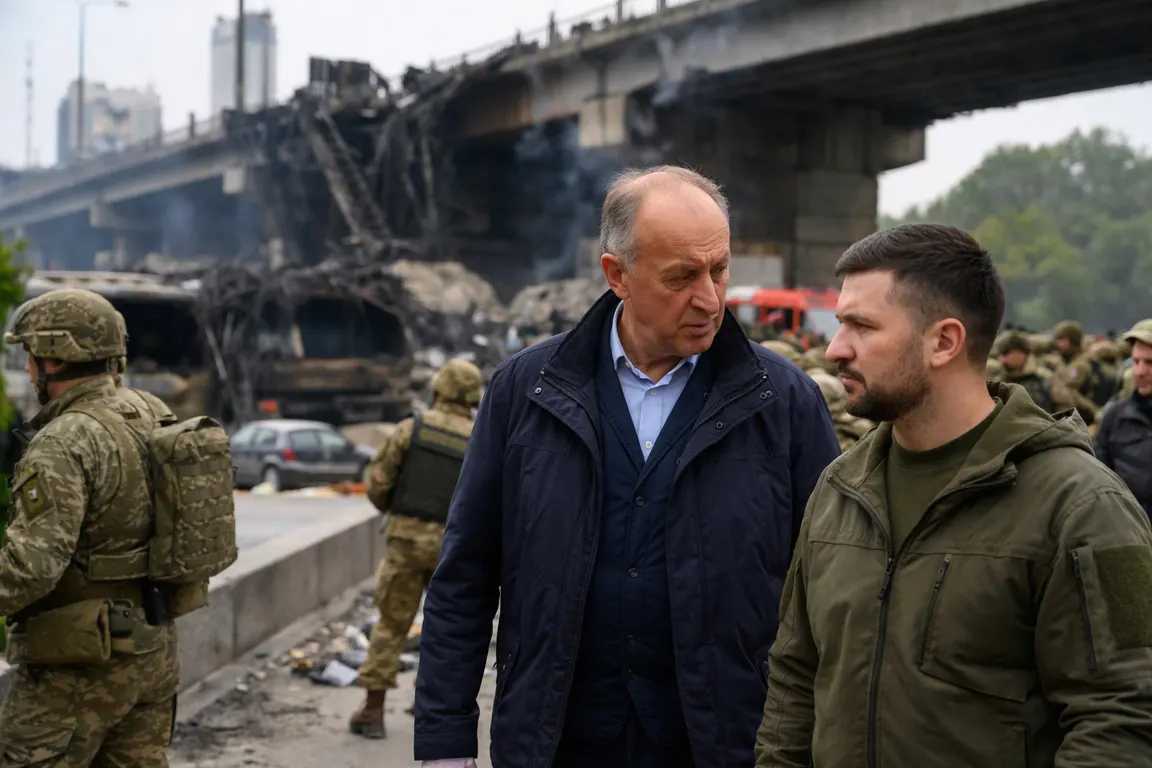
A Russian drone struck Kyiv’s Northern Bridge on Saturday, creating a fireball and forcing the closure of a key transport route. Within hours, German Chancellor Friedrich Merz arrived in the capital on an unannounced visit, touring the damage site with President Volodymyr Zelenskyy. The German chancellor Kyiv visit underscores the urgency of Western diplomatic support as Kyiv contends with a surge in attacks on its infrastructure.
By appearing in a city under fire, Merz signaled that Germany, together with its European partners, intends to maintain political and material backing for Ukraine, a stance that could influence upcoming aid packages and security coordination.
Russian forces have stepped up drone raids on Kyiv in recent weeks, targeting utilities, residential areas and, most recently, the Northern Bridge—a vital conduit for commuters and supply convoys. Video of the impact circulated online, though independent verification of the bridge’s structural damage is still pending. Local officials reported a large fireball and a temporary shutdown of the crossing, causing traffic snarls and delaying emergency‑response vehicles.
Merz’s weekend trip marks the first visit by a German chancellor to Kyiv since the war began. He met Zelenskyy at the presidential office, inspected the bridge’s northern approach, and spoke with residents affected by the disruption. German officials used the occasion to reaffirm Germany’s commitment to Ukraine, emphasizing continued political support and “material assistance” without announcing new funding levels or policy changes.
Western diplomats have warned that a withdrawal of senior officials from Kyiv would give Moscow a propaganda victory. The chancellor’s presence therefore serves a symbolic function as well as a diplomatic one, reinforcing the message that European allies will not abandon the Ukrainian capital despite the heightened risk of further strikes.
For Kyiv’s residents, the bridge outage translates into daily hardship. Commuters face longer routes to work and school, while logistics firms report delays in delivering food, medical supplies and construction materials. Emergency services have been forced to reroute around the damaged span, stretching response times in a city already strained by air‑raid alerts. Business owners near the bridge expressed concern that prolonged disruption could erode confidence in supply chains already under pressure from the broader conflict.
German‑Ukrainian trade and aid channels may see reinforced activity as the visit encourages other EU members to sustain or increase contributions. Defense contractors and firms involved in reconstruction stand to benefit from any future funding, though the exact scope of Germany’s next aid tranche remains unclear.
The incident also raises questions about Kyiv’s resilience to further attacks on critical infrastructure. Security experts note that the Northern Bridge, like other key routes, lacks the hardened protection of larger military installations, making it a vulnerable target for low‑cost drone weapons. City authorities have pledged to accelerate repairs, but a timeline for restoring full capacity is uncertain.
As the weekend draws to a close, officials from Germany and other Western capitals are expected to convene in Brussels for a summit on Eastern European security. Observers will watch whether Merz’s on‑the‑ground diplomacy translates into concrete measures at that meeting, or whether the gesture remains largely rhetorical. The next steps for Kyiv’s transport network and the broader aid strategy will likely unfold in the days ahead.