

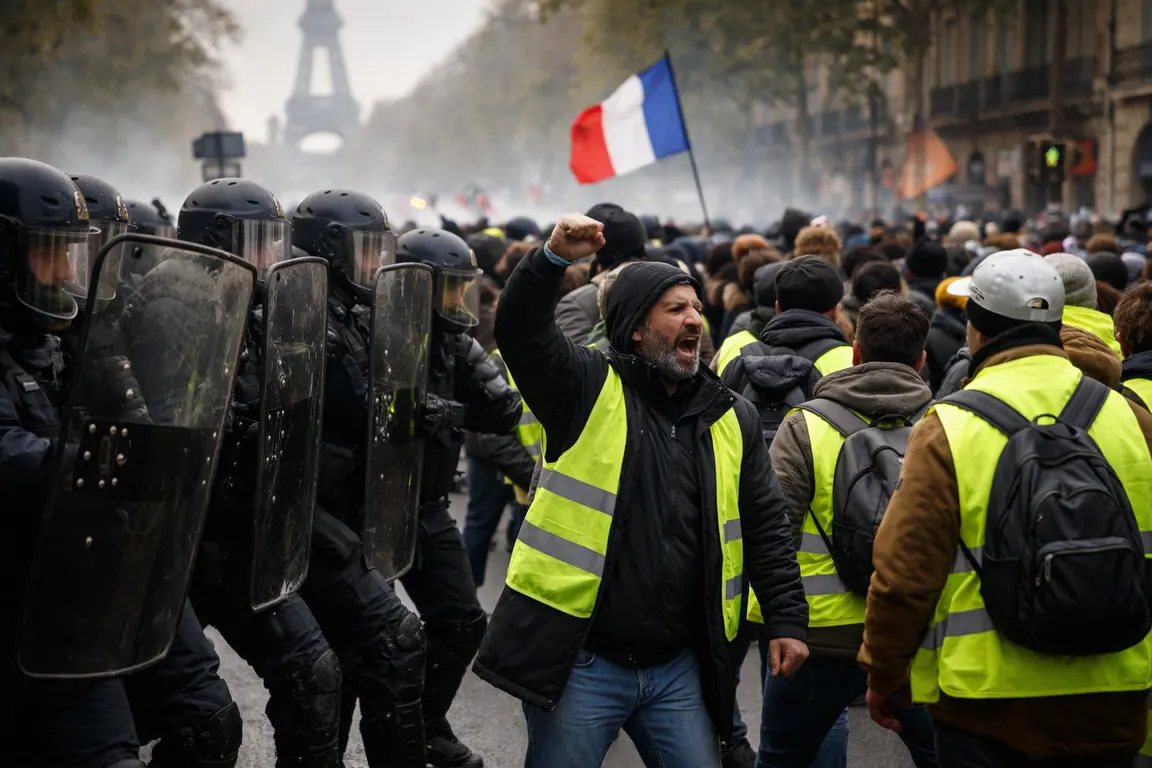
More than 270 people were arrested on Oct. 17 as the French CDS spread surged alongside the revived Yellow Vest movement, which joined students, teachers and trade unions across France. Police clashed with demonstrators in Paris, Lyon, Marseille and dozens of smaller towns, while the interior ministry warned of “hundreds of actions” ranging from toll‑booth blockades to service‑station sit‑ins.
The unrest coincided with a jump in France’s five‑year sovereign credit‑default‑swap spread to roughly 79 basis points – up from about 30 basis points a month earlier and the highest level since 2013. The widening spread reflects investors’ growing perception of fiscal risk as Prime Minister Sébastien Lecornu faces pressure to meet a 5 % of GDP budget‑deficit target by 2027, a goal not achieved since 1973.
Organisers said the Oct. 16‑17 demonstrations were coordinated by a coalition of the CGT union, student groups and remnants of the Yellow Vest movement that first erupted in 2018. Interior Minister Laurent Nunez estimated around 90 separate marches and warned that “hundreds of actions” were being planned, including blockades that could disrupt transport and commerce.
Police deployed riot gear and water‑cannons in several hotspots. The Independent World, Al Jazeera and the BBC reported more than 270 arrests nationwide and highlighted intense clashes in Paris’s central districts. While crowd‑size estimates vary, observers described “tens of thousands” on the streets, a scale comparable to the peak of the original Yellow Vest protests.
Financial markets reacted quickly. Within hours of the demonstrations, France’s sovereign CDS spread widened to about 79 basis points, signaling higher risk premiums demanded by investors. Analysts said the spread’s movement, the widest in a decade, could raise borrowing costs for the French state and limit fiscal flexibility at a time when the projected deficit exceeds the 5 % target.
Politically, the protests have given Marine Le Pen’s National Rally a platform to promote its shadow budget, which calls for deep spending cuts and positions the party as a fiscally responsible alternative ahead of the 2027 presidential election. Le Pen’s team released the document on Oct. 17, just as President Emmanuel Macron issued a public appeal for calm on an AFP‑verified tweet, urging citizens to avoid violence while promising to address “the real causes of the crisis.”
Authorities have taken steps to limit disruption. The interior ministry ordered increased police presence on major highways and at key transport hubs, and the Ministry of Transport announced contingency plans for toll‑booth blockades, including mobile units to keep traffic flowing. Local officials in several regions have set up hotlines for businesses affected by the protests.
The situation remains fluid. The CGT has confirmed its participation in upcoming actions, but the extent of Yellow Vest involvement versus student‑led initiatives is still being clarified by on‑the‑ground reporters. As the CDS spread stays elevated and the protest calendar fills with planned marches, the next few weeks will test the government’s ability to balance public order, fiscal stability and the political demands of an increasingly restless electorate.