

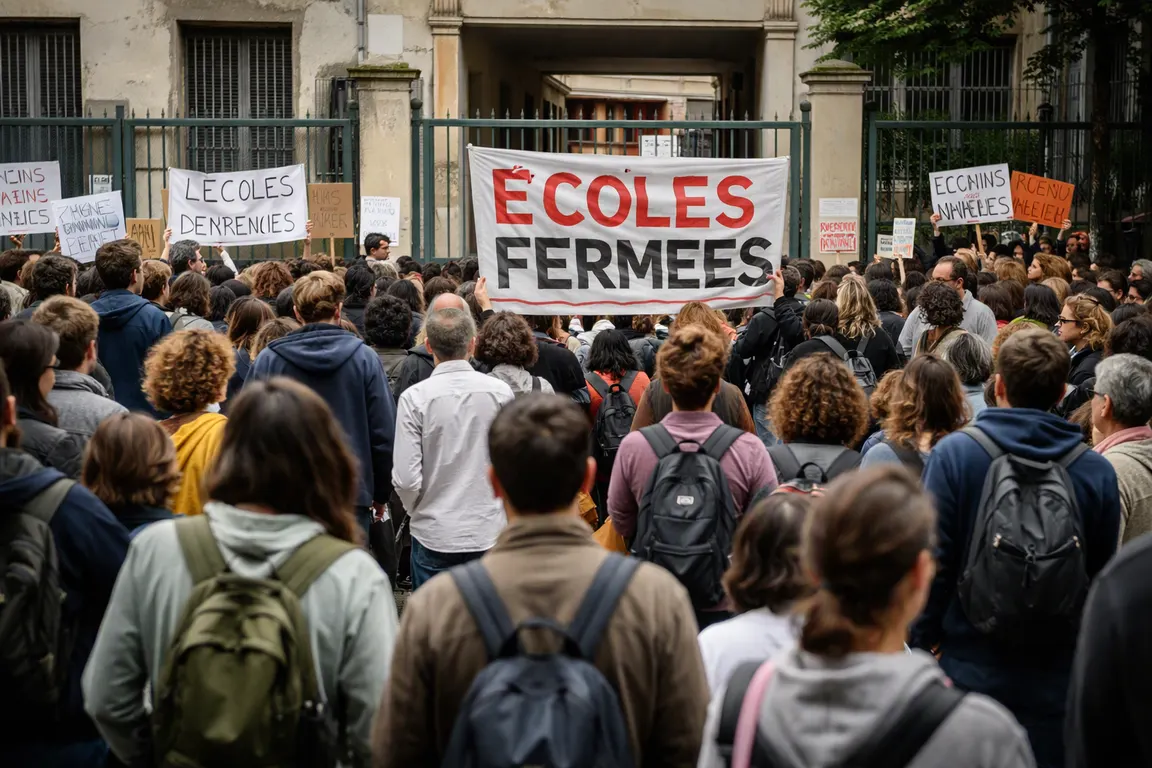
France school closures protests will affect up to 500 schools on Monday, marking the first nationwide shutdown since the demonstrations began in mid‑September. Education minister Édouard Geffray announced the measure after weeks of protests over staffing shortages, dilapidated facilities and a perceived funding gap.
Interior minister Gérald Darmanin said more than 5,000 people were arrested last week, about 85 % of them minors. The education ministry reported 170 pupils and 78 school staff injured since the protests started, and 24 schools either burnt or ransacked. Police have focused on blockades of school entrances and clashes in Paris‑area suburbs, where the movement originated in Créteil.
The immediate impact is severe. With up to half a thousand schools closed, thousands of students will miss classroom time on Monday and many parents will face unexpected childcare needs. School transport, canteens and local vendors that rely on daily foot traffic are also disrupted. For teachers and administrators, the threat of violence has created a climate of insecurity that could linger beyond the current unrest.
Students say the protests stem from long‑standing funding gaps. France’s education budget for 2027 is set at €65.5 billion, only slightly higher than the €63.4 billion allocated to defence. Critics argue the modest increase does not keep pace with rising enrolment, ageing infrastructure and the need for more staff and heating. Some pupils have also called for a reduction in the length of compulsory school days, which in many high schools run from 8 a.m. into the early evening, among the longest in the EU.
The government’s response is two‑fold: law‑enforcement actions to restore order and a pledge to review education spending. Police have used crowd‑control measures, resulting in injuries to both protesters and officers, though details remain limited. On the political front, France Unbowed leader Jean‑Luc Mélenchon publicly backed the students, urging supporters to protect them from police. The CGT labor union announced a coordinated demonstration of teachers and other education workers for Tuesday, adding further pressure on the Macron administration.
The unrest comes at a sensitive moment for national politics. While it is too early to gauge electoral impact, the scale of the protests could shape public sentiment ahead of the 2027 presidential election, especially among younger voters directly affected by school closures.
As Monday’s closures take effect, attention turns to the CGT rally on Tuesday and any further announcements from the education ministry. Whether a combination of policing, budget negotiations and union action can de‑escalate the situation remains uncertain, leaving students, teachers and local economies in a state of flux.