

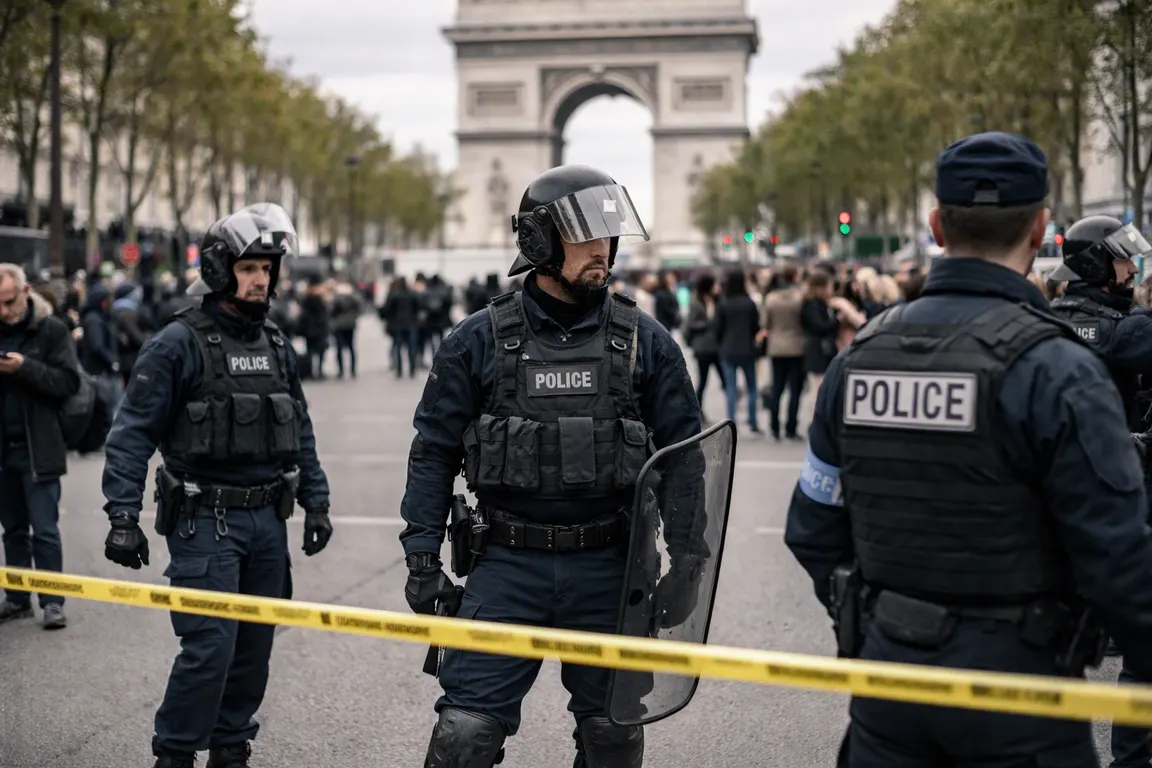
Paris – The government announced Thursday that a France protest ban is in place for Paris, Lyon, Lille and Grenoble until 8 p.m., with night‑time curfews enforced across the four cities. The decree follows a wave of riots that began with a high‑school walk‑out in Créteil, a suburb southeast of the capital, and has since spread to blockades, looting and clashes with police.
Over the weekend of Oct. 20‑22, more than 1,000 police officers were injured, 2,300 people were arrested and over 2,000 retail outlets were looted. At the same time, French sovereign bonds sold off sharply, pushing borrowing costs above those of Greece and raising concerns about a debt load that now stands at 119 % of GDP, the highest level since 1946, with a budget deficit of 5.1 % of GDP. With a presidential election six months away, the security crackdown carries immediate political weight.
The unrest began in early October when students at a Créteil high school staged a walk‑out over chronic staff shortages. The protest quickly resonated with broader grievances about education funding, prompting strikes that spread to other schools and public services. By mid‑month demonstrations moved into suburbs and city centres, where protesters set fire to a town hall, smashed shop windows and blocked major transport hubs. Prime Minister Sébastien Lecornu, speaking on Oct. 24, called the situation a “massive” security challenge and ordered a reinforced police presence to enforce the bans and curfews.
Authorities have deployed additional riot units, mobile police squads and surveillance drones to monitor the prohibited zones. Checkpoints have been erected around the Élysée Palace, the National Assembly and the main train stations in each city, and officers may stop and fine anyone found gathering after curfew. The measures aim to prevent a repeat of the weekend’s violence, which left more than 1,000 officers with injuries ranging from minor bruises to broken bones.
Economists note that the bond‑market reaction reflects deeper concerns about France’s fiscal trajectory. Yields now exceed Greece’s 10‑year rate, signaling investor anxiety that the country’s debt burden could strain eurozone stability. The market move underscores the fragility of France’s public finances ahead of the election.
Some commentators have pointed to organized extremist groups as drivers of the unrest. RealClearPolitics cited Islamist, antifascist and radical‑environmentalist factions, a claim not corroborated by other outlets that focus on student demands and socioeconomic pressures. The discrepancy highlights the difficulty of pinpointing the unrest’s root causes amid rapidly evolving events.
The yellow‑vest movement, which has staged periodic protests since 2018, is expected to join a large demonstration on Saturday, and unions have announced a further action for Nov. 5. Both events are likely to test the newly imposed restrictions and could reignite tensions.
For residents, the curfew means limited movement after dark and a heightened police presence in neighborhoods already strained by economic hardship. Business owners face losses from looted inventory and reduced foot traffic, while the broader public watches closely as the government balances order with civil liberties.
The next critical test will be Saturday’s security operation. Whether police can contain the planned demonstration without further escalation will shape public confidence in the government’s response and could influence voter sentiment as the presidential campaign ramps up.