

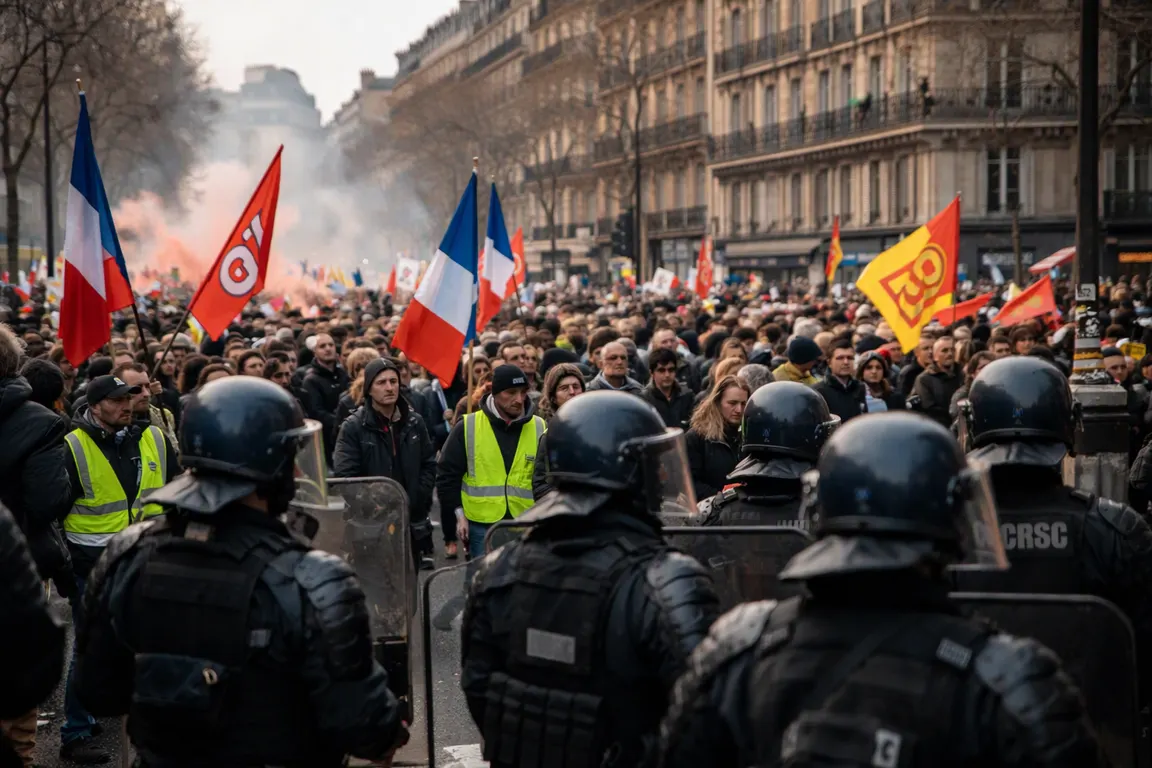
Paris – President Emmanuel Macron announced Thursday that the France protest ban will prohibit demonstrations not organised by recognised unions. The move follows weekend protests over the cost of living that escalated into some of the worst street violence in years.
Macron made the announcement after a meeting with intelligence chiefs and senior ministers. Under the new rule, only rallies approved by a union may take place, and police can alter protest routes. Cities including Paris, Lyon, Lille, Grenoble and Nice have already cancelled planned demonstrations that do not meet the criteria.
The policy reshapes the legal framework for public assembly at a time when thousands were prepared to demonstrate. By restricting protests to union‑approved events, the government says it aims to prevent spontaneous disruptions that threaten public safety, transport networks and local businesses.
Macron framed the decision as a response to “seditious” ultra‑left groups he blamed for the riots and looting that occurred over the weekend. Officials said the ban will be enforced through existing public‑order powers, but they have not detailed the legal mechanism or penalties. Police have been instructed to monitor gatherings and intervene if a protest falls outside the authorised union framework. The definition of “illegitimate” gatherings remains vague, leaving room for interpretation.
Union leaders have welcomed the ability to continue organised rallies but warned that the rules could marginalise spontaneous citizen action. Legal scholars note that French law traditionally protects the right to assemble and that any limitation must be proportionate and clearly justified. The ambiguous wording may invite challenges in French courts, where civil‑liberty groups have previously contested broad security measures.
For residents, the immediate impact is a loss of opportunity to stage impromptu protests. Police resources are being redirected to enforce the new limits, while businesses in the affected cities may see fewer disruptions to commerce and transport. However, the broader protest movement could experience a chilling effect, deterring future activism.
Authorities have not released figures on the number of cancelled protests or arrests linked to the weekend unrest. The government says its focus remains on preventing a repeat of the violence that saw shops looted and public spaces damaged, an episode described by multiple outlets as among the most severe street unrest in recent French history.
Local officials are preparing contingency plans to manage compliance, including deploying additional officers to monitor known protest hotspots and coordinating with municipal services to adjust routes. A formal review of the policy’s impact has not been scheduled.
Critics continue to question how the balance between maintaining public order and preserving democratic rights will be struck, leaving the future of France’s protest culture uncertain.