

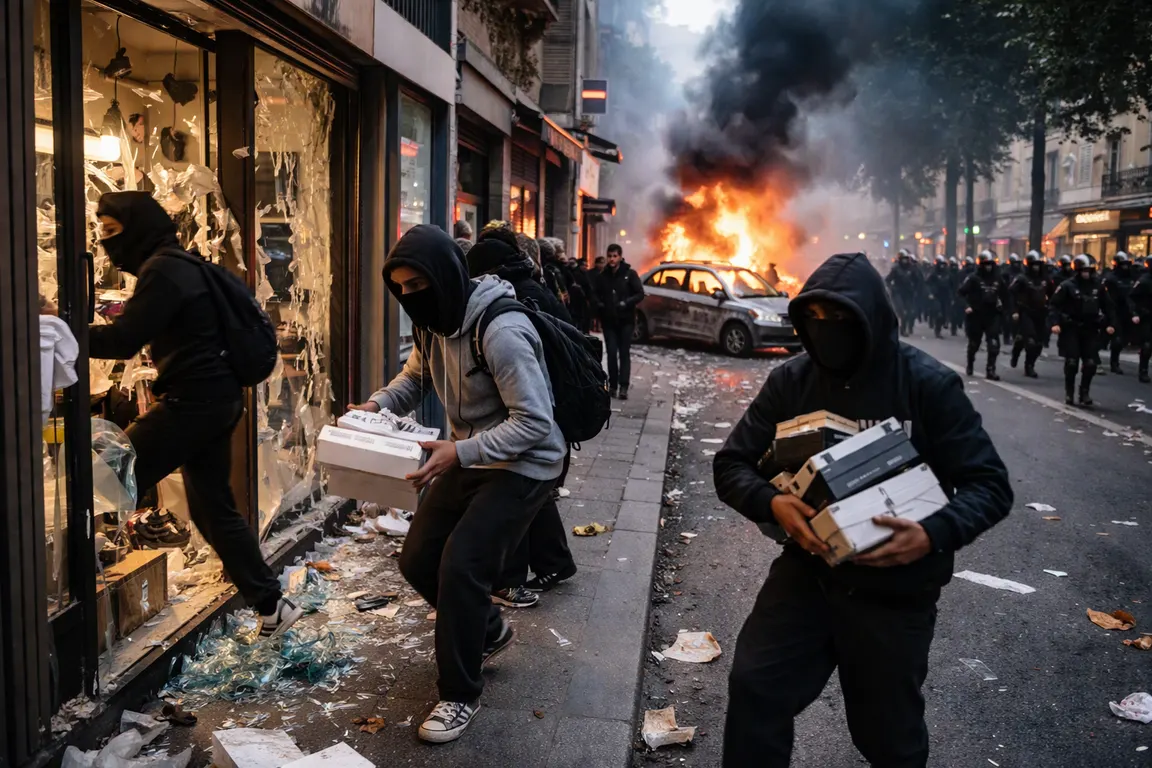
Police reported more than 500 injuries and 1,800 arrests after Saturday’s nationwide protests against rising living costs, and unrest spread to ten major cities on Sunday, where fires were set, shops looted and a police compound attacked. The violence has created an immediate public‑safety crisis just months before the 2027 presidential election.
The two‑day turmoil combines mass civil unrest with violent crime, threatening lives, commercial infrastructure and the political climate. Authorities are dealing with a surge in casualties among officers and firefighters, while business owners face losses from looted merchandise and destroyed property. With the election campaign heating up, public confidence in the government’s ability to maintain order could become a decisive factor for voters.
Saturday’s demonstrations began as a reaction to soaring energy bills and food prices. Interior Minister Laurent Nûnez told reporters that police, gendarmes and firefighters suffered “over 500 injuries” and that more than 1,800 people were detained. Prime Minister Sébastien Lecornu gave a lower figure on Sunday—1,200 arrests and 150 police injuries—citing a different reporting window and definition of “injury.” Both sets of numbers come from official statements.
Violence erupted in Paris, Marseille, Nice, Nantes, Bordeaux, Limoges, Lille, Toulouse and Strasbourg. In Paris, Mayor Emmanuel Grégoire described whole streets as “devastated” after crowds set fire to vehicles and smashed storefronts. A police compound in Marseille was attacked, and town halls in several cities were vandalised. Looters targeted supermarkets, electronics stores and boutique shops, while arsonists ignited trash bins and abandoned cars, creating smoke plumes that forced evacuations.
A stark incident occurred in Saint‑Étienne, where a 17‑year‑old boy lost his right hand after a crowd‑control grenade detonated nearby, according to the Manila Times. The injury underscores the intensity of confrontations between demonstrators and law‑enforcement units equipped with non‑lethal weapons.
Union representatives estimate that between 550,000 and 800,000 people participated in the protests, reflecting the difficulty of counting participants in a fluid, multi‑city movement. The demonstrations follow weeks of student strikes and come six months before the 2027 presidential election, a timing analysts say could shift voter sentiment toward candidates who promise tougher security measures.
International reaction has already emerged. U.S. Vice‑President JD Vance blamed immigration policy for the unrest, a claim echoed in some foreign media but not substantiated by French officials. Within France, the government has declared a state of heightened alert, deployed additional riot police to the hardest‑hit areas and opened investigations into looting and arson. Prosecutors say anyone caught looting faces up to five years in prison, while arson charges can carry harsher penalties.
The situation remains fluid. Police continue to process arrests and treat injured officers in field hospitals, while city councils assess damage and plan clean‑up operations. Questions linger about how the unrest will influence the upcoming election, whether new public‑order legislation will be introduced, and how quickly commercial activity can resume in the most affected districts.