

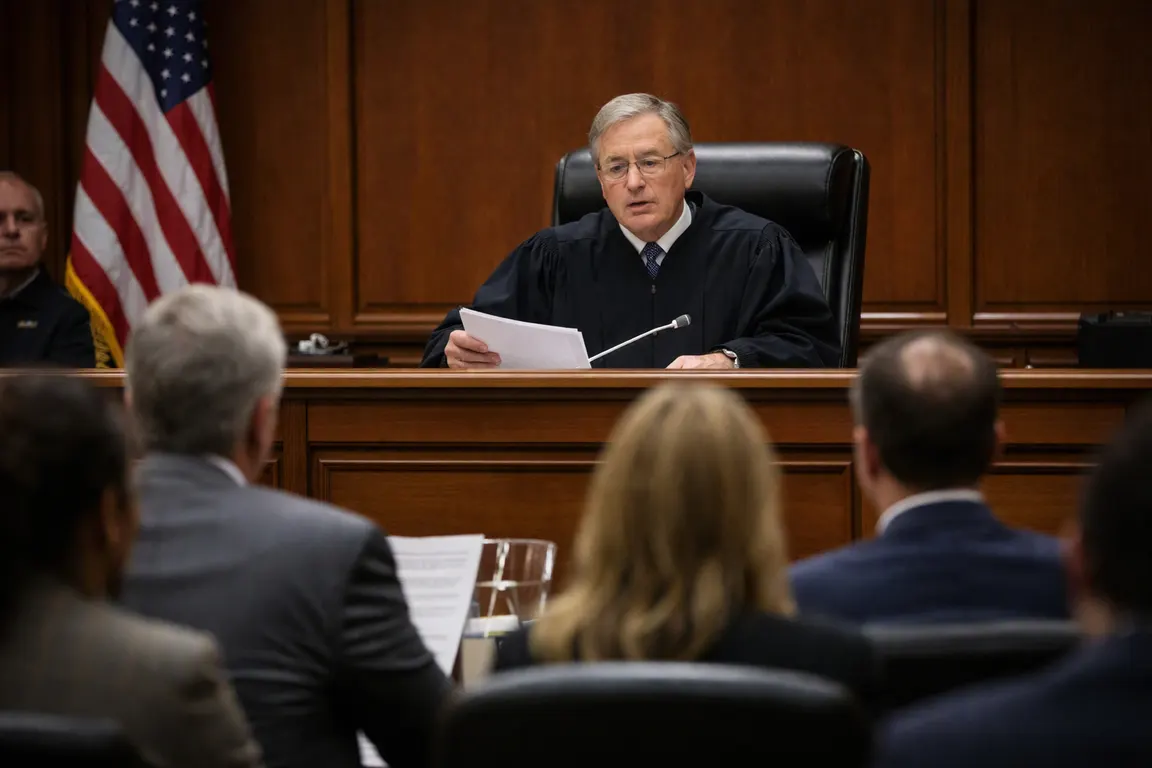
A federal judge in Washington issued a birthright citizenship injunction on Tuesday, stopping the Trump administration from enforcing its latest executive order that sought to limit citizenship for children of certain non‑citizen parents. The ruling relies on the Supreme Court’s June 2024 decision that struck down a similar order, finding the new “carve‑outs” likely unconstitutional.
The injunction preserves the 14th Amendment’s guarantee that anyone born on U.S. soil is a citizen, preventing an immediate legal shift that could have affected thousands of newborns and their families. By citing the Supreme Court’s 6‑3 ruling, the judge emphasized that the administration’s attempt to rewrite the constitutional provision conflicts with established precedent.
The contested order was drafted after the June decision and sought to create exceptions for children born to parents who are in the United States without lawful status. The precise criteria were not disclosed in the reports. In his opinion, the judge noted that the administration’s “carve‑outs” would likely violate the Constitution, echoing the Supreme Court’s reasoning that citizenship cannot be denied on the basis of a parent’s immigration status.
Legal analysts say the judge leaned on two arguments: first, the Citizenship Clause of the 14th Amendment provides an unequivocal rule of jus soli that cannot be overridden by executive action; second, the Supreme Court’s recent decision set a binding precedent that any similar restriction would be unconstitutional. By anchoring the injunction in that precedent, the court avoided a broader constitutional debate and focused on the immediate legality of the new order.
The practical impact is immediate. Newborns who would have fallen under the proposed carve‑outs remain citizens, and families avoid the uncertainty of having a child’s status contested in immigration courts. Immigration lawyers and advocacy groups have welcomed the decision, noting that it preserves established rights while they continue to monitor future attempts to modify citizenship policy.
The administration has not indicated whether it will appeal the injunction. A typical appellate process could extend the dispute for months or years, during which time the status quo would likely remain.
The case underscores the ongoing tension between the executive branch’s immigration agenda and the judiciary’s role in interpreting constitutional protections. While the administration may seek alternative legal pathways to achieve its policy goals, the current injunction makes clear that any effort to limit birthright citizenship must first survive rigorous judicial scrutiny. The next step will likely be an appeal to the U.S. Court of Appeals for the District of Columbia Circuit, where the arguments will be tested against the Supreme Court’s June precedent. Until then, the 14th Amendment’s guarantee continues to apply to every child born on American soil.