

EU offers Canada associate‑member status to secure critical
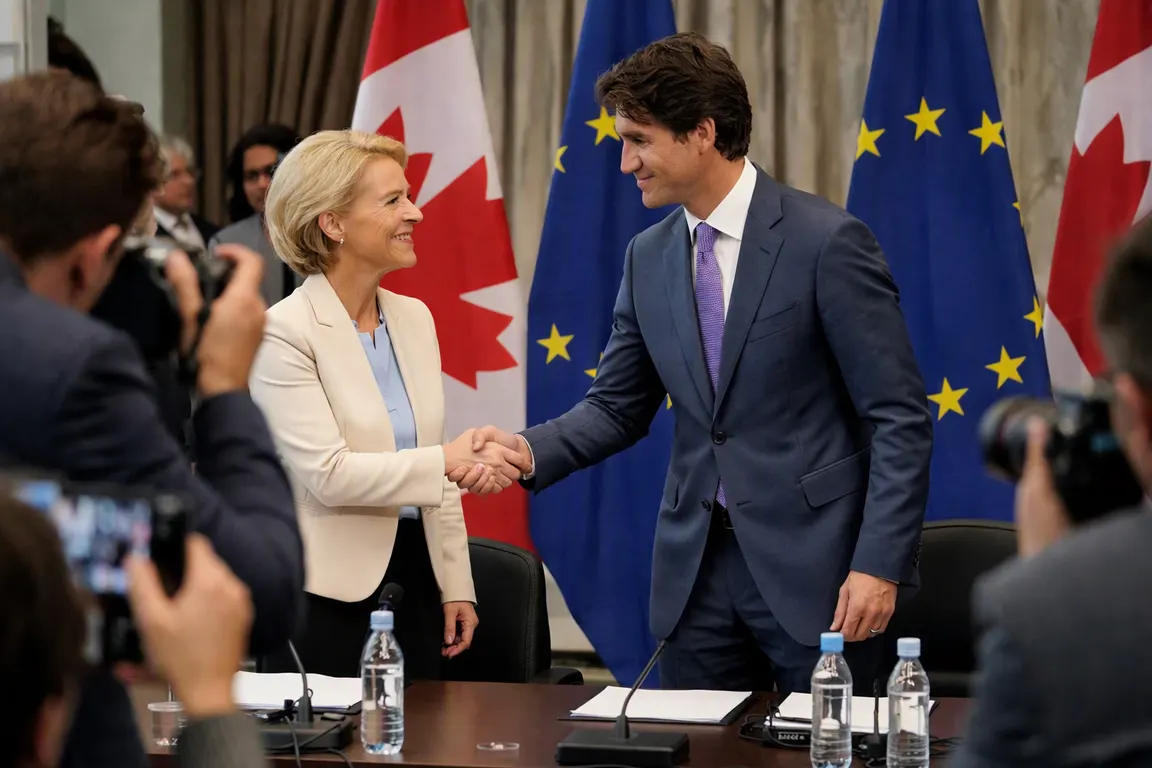
EU Commission President Ursula von der Leyen announced on 16 September 2026 that the European Union will extend an EU Canada associate membership to Canada, the bloc’s first such offer to a non‑European country.
The proposal comes as President Donald Trump’s tariff policy has pushed Canada to look beyond its traditional U.S. market, while Europe seeks reliable sources of nickel, lithium, uranium and other critical minerals that now flow largely from China.
Speaking at the State of the Union address in Strasbourg, von der Leyen was joined by Canadian finance minister Mark Carney, the first foreign head of government to sit in the audience. Carney called the initiative a "unique alliance" rather than a step toward full EU membership.
Canada already participates in the EU‑Canada SAFE defence procurement programme, a €150 billion framework signed in February 2026 and approved by the EU Council in June. The agreement lets Canadian firms bid on EU defence contracts; associate membership would broaden that access to commercial markets.
Under the Comprehensive Economic and Trade Agreement (CETA), in force since 2017, Canadian exporters enjoy tariff‑free access to most EU goods. Associate status could deepen that access, allowing firms in minerals, technology, artificial intelligence and defence to operate under EU procurement rules and tap the €18 trillion single‑market.
Von der Leyen highlighted Europe’s reliance on China for more than 80 % of critical raw materials – up to 90 % for certain rare‑earths – as a strategic vulnerability. Canada’s reserves of nickel, cobalt, lithium, uranium, potash and rare‑earth elements are presented as a counterweight that could diversify the bloc’s supply chain.
The associate‑member tier is not a pre‑defined legal category. All 27 EU member states must approve the arrangement, and negotiations will have to define rights, obligations and the level of regulatory alignment. Canadian companies could become "rule‑takers," adopting EU standards without voting rights, a scenario that may raise compliance costs.
Analysts note that roughly 70 % of Canadian exports currently go to the United States, making any rapid decoupling impractical. The new tier offers a diversification outlet, but the lack of a concrete timeline or draft framework leaves the practical benefits uncertain.
The proposal also raises questions about its interaction with CETA and the SAFE programme. While CETA governs trade in goods and services, associate membership could extend EU influence into AI standards, data protection and environmental regulations, potentially creating overlapping obligations for Canadian firms.
Negotiations are expected to begin in the coming weeks, with the EU Council required to secure unanimous consent before any formal agreement can be signed. Stakeholders on both sides will watch for details on regulatory scope, market access and implementation timelines, as the partnership’s ultimate shape remains unresolved.